
The oil market has entered a phase where price dynamics are determined less by the traditional balance of supply and demand, and more by a combination of geopolitical constraints, logistical disruptions, and expectations of further escalation. At NEWSCENTRAL, we note that the current rise in quotations is being driven by both a tightening of physical supply and an increasing risk premium that is being priced in faster than underlying fundamentals are changing.
At the beginning of the week, oil gained nearly 3%, continuing the strong momentum from previous sessions. Brent rose by $3 to $108.36 per barrel as of 08:28 GMT, reaching a three-week high. WTI increased by $2.45 to $96.85. This synchronized growth indicates a global reassessment of risk, where market participants are pricing in the probability of further supply disruptions rather than reacting solely to current production data.
An additional impulse came the previous week, when Brent rose by about 17% and WTI by around 13%. This marked the strongest weekly increase since the beginning of the conflict. In our assessment, such movements typically occur when the market transitions from relative equilibrium to a deficit expectation phase, where physical inventories cease to act as a price stabilizer.
Independent market observations suggest that commercial oil inventories in key consuming countries have been declining, while strategic reserves in certain economies have been used to smooth price spikes. However, the effect of these measures has been limited. At NEWSCENTRAL, we believe the reason is that structural supply is contracting faster than balance can be restored through reserves or rerouting of flows.
The production segment is also intensifying market tension. OPEC+ countries continue to pursue a cautious strategy of gradual output increases, while U.S. shale producers, despite high prices, are limiting drilling expansion, focusing instead on profitability and debt control. This confirms a trend observed over several quarters: the oil market is becoming less elastic to price signals on the supply side.
The political factor remains the key driver of the current rally. Negotiations between the United States and Iran have effectively stalled, while diplomatic rhetoric from both sides is increasing uncertainty rather than reducing it. NEWSCENTRAL analytical assessment indicates that the market no longer views diplomatic statements as a stabilizing factor and is instead pricing in a scenario of prolonged confrontation.
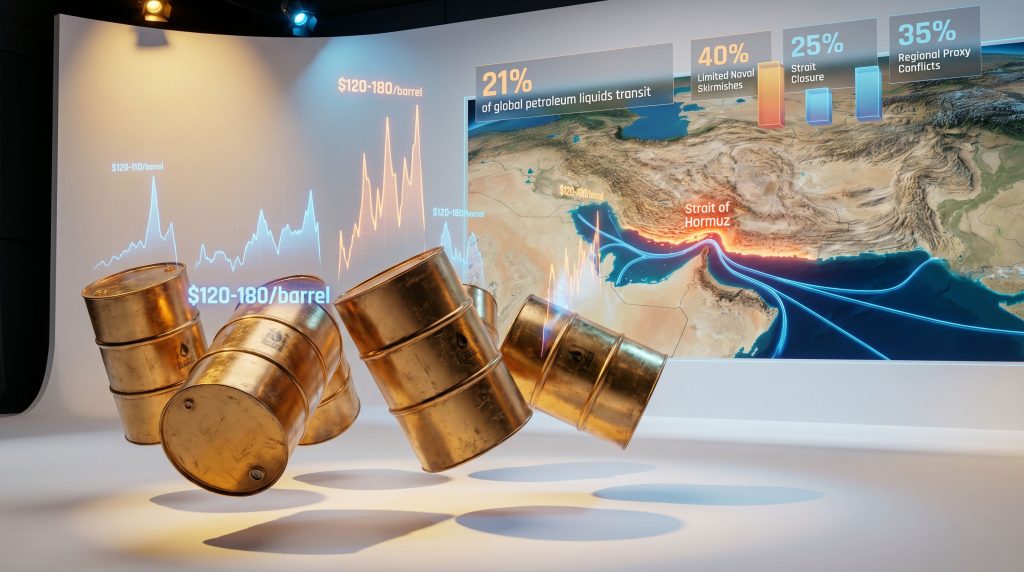
The most critical element remains the situation around the Strait of Hormuz, through which a significant share of global oil exports passes. Restrictions on maritime traffic have resulted in a loss of 10 to 13 million barrels per day from the market. This is comparable to the combined output of major producers outside OPEC. In our view, such volumes cannot be quickly compensated for either by rerouting flows or by increasing production elsewhere.
There has also been a rise in marine insurance costs and longer delivery times via alternative routes. These factors are rarely reflected in official statistics but have a direct impact on final oil prices. A hidden surcharge is forming within the supply chain and gradually becoming embedded in market structure. Freddy Miller, Senior Analyst at NEWSCENTRAL, notes that in conditions of limited key route capacity, even small logistical changes can trigger disproportionately strong price reactions, as the market loses its stability buffer.
Additional pressure comes from rising global demand for petroleum products, particularly in Asia, where industrial activity remains robust. At the same time, refining capacity in several regions is operating at high utilization levels, increasing competition for crude. We observe that this imbalance is supporting refined product prices even amid local fluctuations in crude oil.
Financial institutions have already begun revising forecasts. Expectations for Brent are shifting toward around $90 per barrel in Q4, with WTI around $83. However, given the current risk configuration, these estimates appear more like a baseline stabilization scenario rather than a reflection of potential stress conditions. We believe the market is underestimating the probability of a more prolonged period of supply constraints.
The global macroeconomic environment adds further pressure. Rising oil prices are increasing inflationary risks, especially in energy-importing countries. This limits the scope for monetary policy easing and increases the likelihood of a prolonged period of high interest rates. As a result, additional pressure builds on financial markets and corporate investment decisions.
Taking all factors into account, the oil market is entering a phase of structural volatility, where the key driver is not only supply-demand balance but also the resilience of logistical routes. We believe that in the coming months there will remain a high probability of sharp price movements, particularly in response to new restrictions or geopolitical escalation.
NEWS CENTRAL notes that even with partial normalization of the diplomatic situation, the physical oil market will recover with a lag. This implies the persistence of a geopolitical premium in prices and the formation of a structurally higher price floor. Under current conditions, a rational strategy for market participants involves adapting to high volatility, strengthening risk hedging, and revising long-term forecasts toward a tighter energy balance scenario.