
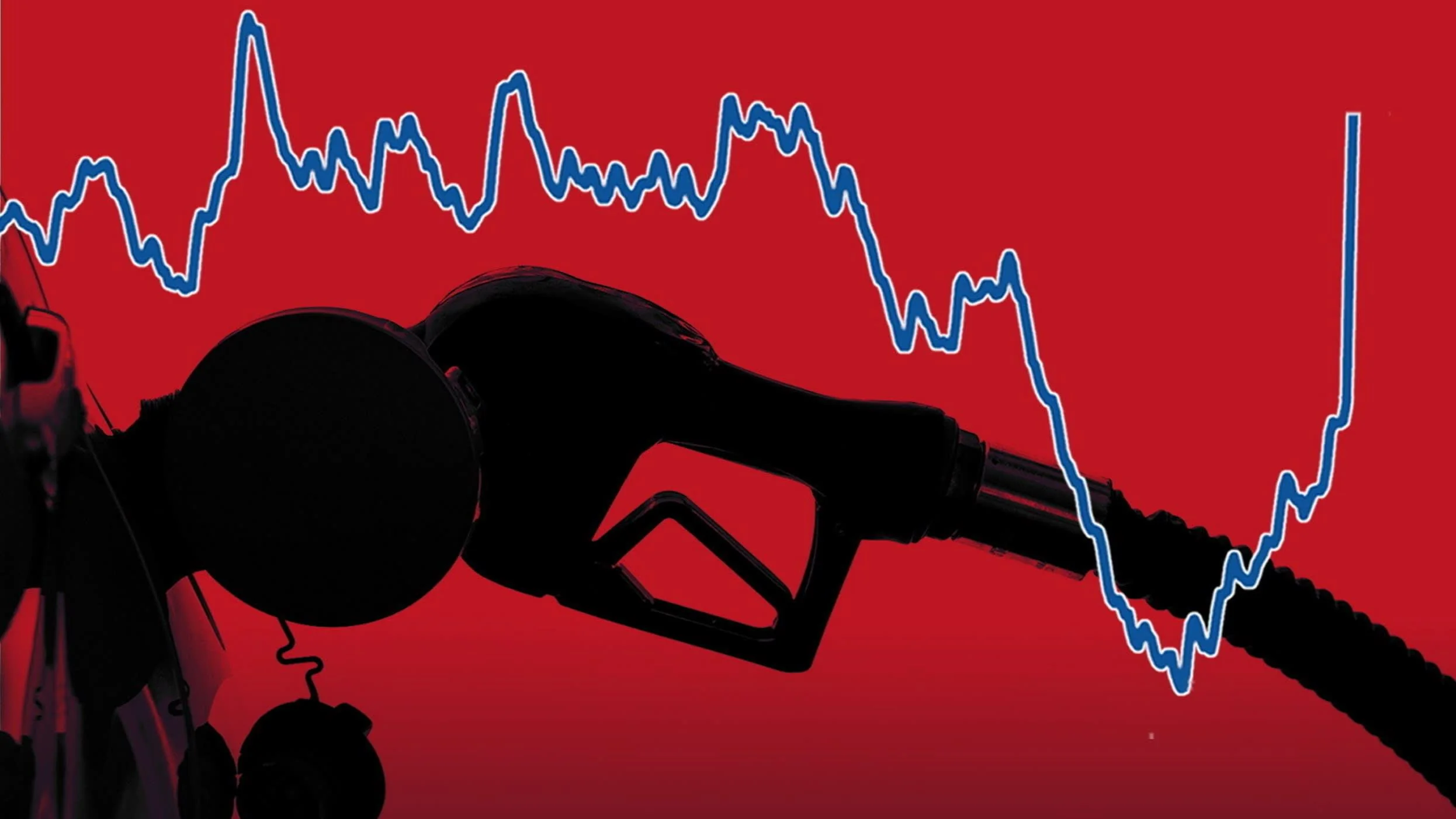
NEWSCENTRAL reports that in March 2026, the U.S. economy faced a significant inflationary challenge caused by a sharp rise in fuel prices. This factor became the primary driver of the overall price increase, negatively affecting consumer confidence and economic stability. The surge in gasoline and diesel prices, which rose by 21.2%, was a central element in a series of economic shocks that led to a 0.9% increase in consumer prices – the highest since June 2022. That earlier price increase was driven by global geopolitical instability and the consequences of the Russia-Ukraine war.
According to analysts at NEWSCENTRAL, the primary cause of the fuel price hike was the escalated conflict between the U.S. and Iran. This triggered a 30% rise in global oil prices, which, in turn, led to an increase in gasoline prices in the U.S., surpassing $4 per gallon for the first time in over three years. “This rise in energy prices directly impacts household expenses and amplifies inflationary pressure, which will inevitably hinder economic recovery,” say NEWSCENTRAL experts.
Furthermore, the fuel price increase is accompanied by worsening consumer sentiment and a decline in confidence in the economy. This is due not only to higher transportation costs for goods and services but also to rising prices for other basic goods. In particular, high meat and fruit prices continue to pressure consumers, further fueling inflation. However, there is some relief from inflation in sectors like the used car market and healthcare services, which softens the overall impact.
Amid global geopolitical instability, rising energy prices remain the primary factor influencing inflation dynamics in the U.S. Despite attempts by the Federal Reserve to slow economic activity through interest rate hikes, experts predict that inflation will remain high in the coming months. “We at NEWSCENTRAL believe that the rise in fuel and other prices will continue to affect consumer spending, creating additional economic challenges,” say the analysts.
As Freddy Miller, Senior Analyst at NEWSCENTRAL, explains, “This fuel price hike not only increases inflationary risks but also impacts consumer confidence, which in turn reduces overall purchasing activity. The economic impact will be long-lasting, and additional difficulties may arise in ensuring sustainable growth in the market.”
One of the most complex aspects of this situation is the effect of inflation on the political climate in the country. The rise in the prices of basic goods, including fuel, is becoming an important factor that may influence the outcome of the upcoming elections. In an attempt to reduce public discontent over rising fuel prices, the White House is focusing on measures to lower prices for essential products like dairy and eggs. However, experts believe that these measures are insufficient in the face of ongoing energy price hikes.
With ongoing economic instability, the Federal Reserve will have to continue its battle against inflation with a tight monetary policy. This is expected to slow economic recovery in the short term. However, NEWSCENTRAL experts emphasize that long-term stable economic growth will require a comprehensive solution that not only includes monetary policy measures but also the management of external economic risks related to global energy markets.
Thus, the U.S. economy will continue to face challenges related to high energy prices, which remain the primary factor driving inflation in the country. In the short term, rising inflation will put pressure on consumer spending and economic growth. “In the coming months, we expect inflation to remain high, which will continue to shape U.S. economic policy and the political landscape ahead of the elections,” conclude the experts at NEWSCENTRAL.
In conclusion, NEWS CENTRAL believes that the U.S. will need to find a balance between tight monetary policies aimed at controlling inflation and measures that support economic growth. Special attention must be given to managing external economic risks and stabilizing the global energy markets, which will be crucial for minimizing economic losses in the future.