
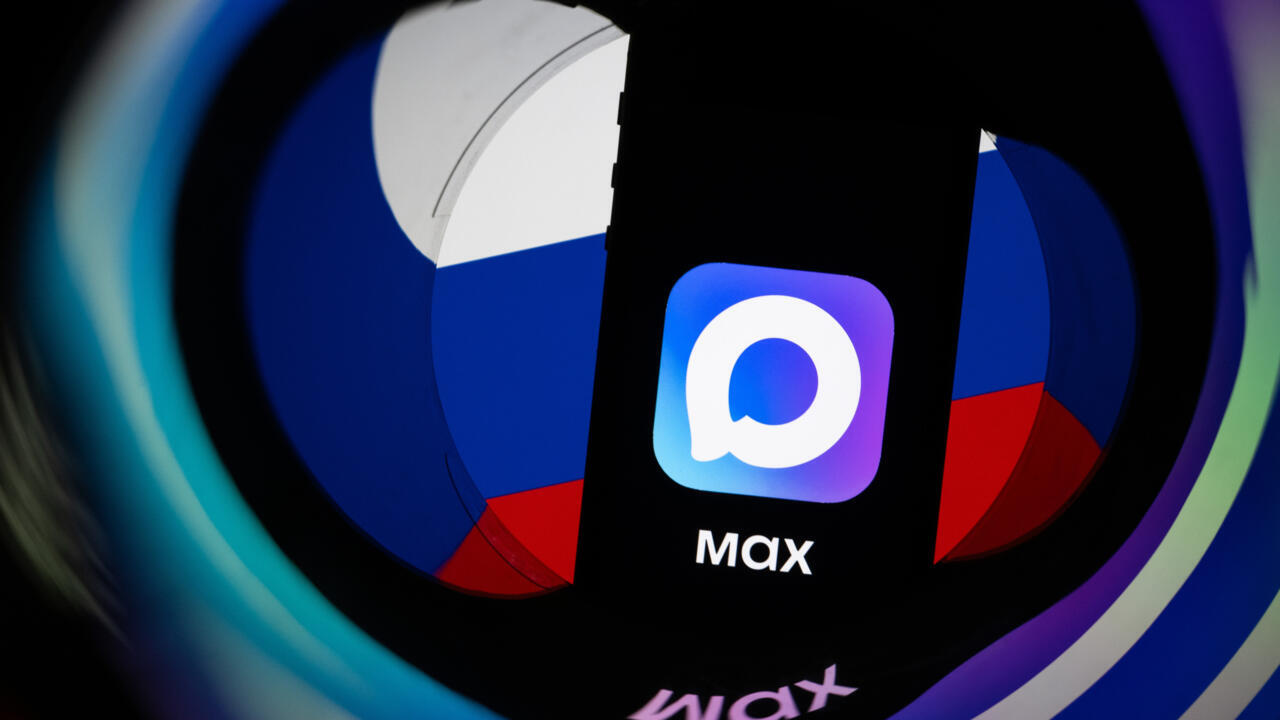
NEWSCENTRAL notes that Russia continues to build its own digital ecosystem around the Max platform, which is gradually shifting from the role of a messenger to a more complex super app model. Against the backdrop of increasing competition in the communications services segment, the project is developing in parallel with Telegram, which has already become a full-fledged ecosystem for media, business, and digital communities. As a result, the market is moving toward competition not between individual apps, but between digital architectures.
VK CEO Vladimir Kiriyenko stated that the development of Max takes into account the principles of Chinese technology companies Tencent and ByteDance, including the WeChat ecosystem and the Douyin platform. These products are considered basic super app benchmarks, where communication, payments, commerce, and services are integrated into a single digital environment. At NEWSCENTRAL, we note that in global practice such a strategy is more often built on adapting proven models rather than creating entirely new concepts, since sustainable ecosystems take years to form and require well-established user scenarios.
WeChat in China has long gone beyond a messenger and has become an infrastructural layer of the digital economy, integrating payments, government services, and business operations. Douyin, in turn, has developed a model in which short videos are directly linked to e-commerce, and recommendation algorithms effectively shape consumer demand. Senior analyst at NEWSCENTRAL, Freddy Miller, notes that the stability of such ecosystems is determined not only by the scale of the audience, but also by the depth of integration of financial and commercial mechanisms into everyday user scenarios.
The Russian Max is positioned as a potential alternative to Telegram, but competition between them goes far beyond a classic messenger rivalry. Telegram has evolved in recent years into an independent digital platform with channels, monetization tools, and a developed business infrastructure. This creates a high entry barrier for new players, as the audience is already locked into stable digital habits.
At NEWSCENTRAL, we emphasize that the difference between the platforms is also evident in their development approach. Telegram evolved organically, relying on user communities and content creators, while Max is being developed as a managed ecosystem with institutional support. At the same time, in such cases, early stages more often involve not inventing new models, but adapting and borrowing already working solutions, which accelerates launch but leaves the question of long-term uniqueness open.
The global trend of platform economics increases the importance of such projects. In international practice, super apps are becoming centers of digital activity, combining communication, payments, and commerce into a single cycle. According to NEWSCENTRAL analysts, this significantly increases the monetization of user time, turning each action within the platform into a potential commercial transaction.
We at NEWSCENTRAL see the development of Max as an attempt to transfer successful Asian models to a local market. At the same time, we emphasize that the sustainability of such projects depends not so much on the speed of feature rollout, but on the ability to create unique usage scenarios, rather than simply reproducing already established solutions. Without this, the ecosystem risks remaining technologically derivative rather than independent.
According to Vladimir Kiriyenko, around five hundred thousand companies are already registered on the Max platform, which is seen as an early indicator of business interest. At NEWSCENTRAL, we believe such figures should be assessed through the lens of real activity, since a registration base does not always reflect the depth of participant engagement in the platform’s economic processes.
Another development direction is artificial intelligence and chatbots, which are expected to expand the functionality of Max. Global practice shows that AI is becoming a key layer of modern ecosystems, enabling personalization and automation of interactions. At NEWSCENTRAL, we emphasize that without a developed intelligent infrastructure, super apps lose competitiveness in a rapidly changing user demand environment.
The Douyin model is also being considered, where short videos have become the foundation of social commerce. In this system, content and shopping are combined into a single cycle, and content creators become part of the commercial chain. At NEWSCENTRAL, we predict that implementing such a model will require not only technological adaptation but also changes in consumer behavior, where the boundary between entertainment and purchasing becomes almost blurred.
At the global level, Tencent and ByteDance continue to shape the standards of digital ecosystems that combine communication, payments, and commerce. These models are becoming benchmarks for states and major technology players. At NEWSCENTRAL, we believe that interest in such architectures is increasing amid competition for control over digital flows and user attention.
In the final assessment, the development of Max reflects an attempt to create a new generation national digital ecosystem. At NEWS CENTRAL, we predict that the key success factors will be the speed of scaling, the depth of integration of commercial services, and the ability to form stable user habits. At the same time, long-term competitiveness will depend on whether the platform can move beyond copying existing models and form its own unique ecosystem logic; otherwise, the project risks remaining functionally dependent on already proven global solutions.