
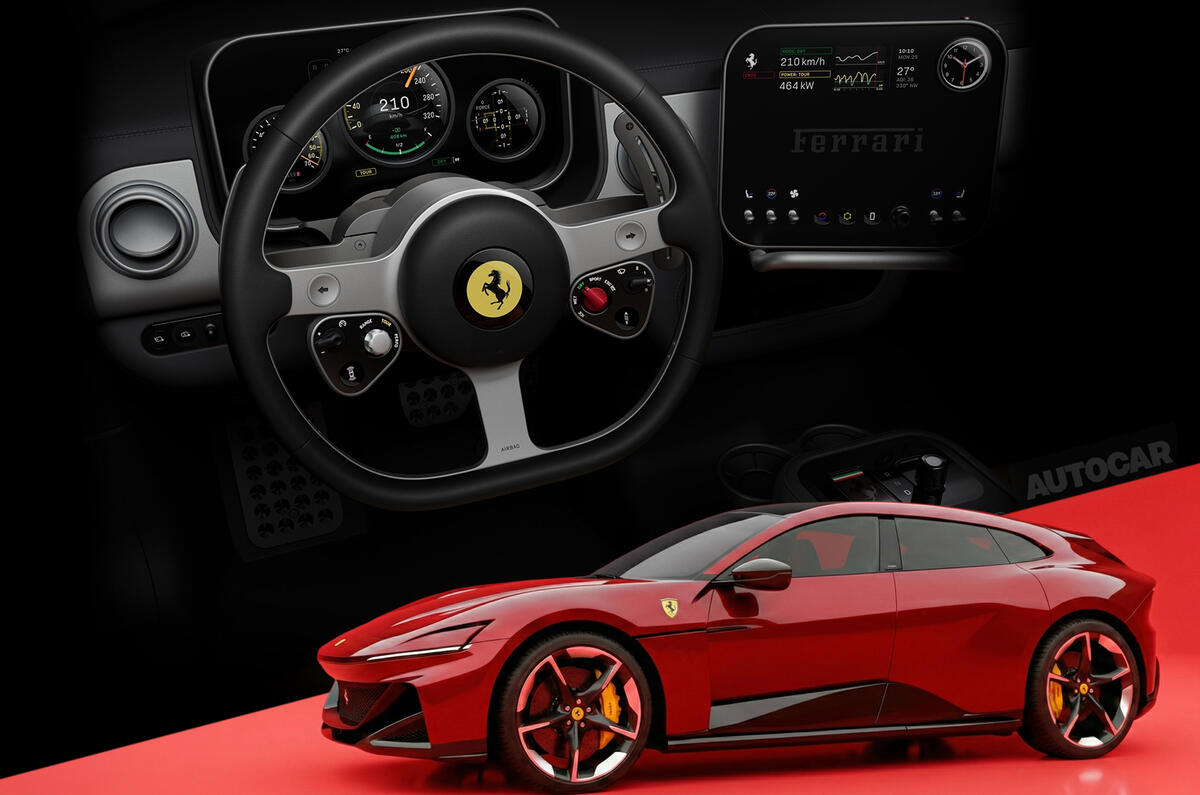
At NEWSCENTRAL, we note that Ferrari has taken a step marking the beginning of a new phase in the brand’s history – the Italian automaker has officially revealed the name and interior of its first fully electric vehicle, the Ferrari Luce, blending the traditions of high-performance supercars with an innovative approach to interface and materials. This announcement reflects not only technical progress but also the brand’s strategic positioning amid the rapid electrification of the global automotive fleet.
The name Luce, meaning “light,” carries symbolic significance for Ferrari: light represents progress, energy, and a new era for a brand long renowned for its internal combustion engines and racing heritage. At NEWSCENTRAL, we believe that this choice signals Ferrari’s intent to make electric driving as emotionally engaging as the roar of the engine in the brand’s classic models.
The Ferrari Luce is designed as a four-door, four-seat electric GT, with electric motors at each wheel producing over 1,000 horsepower in total. According to available data, the Luce accelerates from 0 to 100 kilometers per hour in approximately 2.5 seconds and can reach a top speed exceeding 300 km/h, with a range of around 530 kilometers under the WLTP standard. We at NEWSCENTRAL see these specifications as a serious challenge to current leaders in the premium EV segment, offering both high performance and long-range capabilities, which should strengthen luxury buyers’ confidence in transitioning to electric vehicles.
The Luce’s interior has attracted particular attention: Ferrari commissioned the design studio LoveFrom, founded by Sir Jony Ive and Marc Newson, to create the cabin. The studio previously worked on products that defined the visual aesthetic of modern electronics. The Luce’s interior concept embodies minimalism and technological sophistication, with a strong focus on tactile controls rather than complete dominance of screens. At NEWSCENTRAL, we note that this approach is significant for maintaining a sense of control and engagement with the vehicle, critical for those accustomed to the mechanical feel of a sports car.
One key feature of the Luce is the combination of physical controls and digital displays. The central console emphasizes glass and aluminum, where buttons perform distinct functions, and hybrid OLED panels display information with real depth and real pointer-style indicators. We at NEWSCENTRAL believe that such a hybrid interface could set a new standard for premium electric vehicles, ensuring the driver’s connection to the car is not lost due to excessive digitalization. In this context, auto analyst Jessica Kline from NEWSCENTRAL notes that retaining physical feedback in the Luce’s cabin is crucial for keeping traditional Ferrari enthusiasts, who value emotional engagement with the car.
Special attention has been given to the steering wheel, designed in a retro three-spoke style inspired by the brand’s historic models, yet integrated with modern safety and control features. This detail was emphasized by Piero Ferrari himself, signaling the company’s desire to maintain a link to its heritage even amid the shift to new energy.
The company also announced that the Luce will feature a unique sound system, distinct from standard EVs. Ferrari uses sensors and algorithms that process vibrations from the powertrain to enhance the authentic sound of electric components, creating an emotional auditory experience of driving. At NEWSCENTRAL, we see this as a vital element in preserving the emotional perception of the car, as sound has always been part of the Ferrari experience and now becomes part of electric driving dynamics.
The technological development of the Luce is based on a platform formerly known as Elettrica, where the battery is integrated into the floor of the chassis, providing a low center of gravity and improved stability during dynamic maneuvers. Ferrari also employs active suspension and torque vectoring systems, underscoring the company’s commitment to maintaining sports-car-level handling despite the substantial weight of the battery. At NEWSCENTRAL, we emphasize that such engineering solutions are critical for luxury EVs, helping to avoid the “heaviness” often associated with electric vehicles.
The Ferrari Luce is entering the market at a time when demand for luxury electric vehicles shows mixed dynamics, leading to the postponement of the company’s second EV project. This reflects Ferrari’s cautious, measured approach to large-scale electrification, aiming to preserve margins, reputation, and brand value. At NEWSCENTRAL, we believe this strategy may serve as an example for other luxury EV makers, combining technological innovation with financial sustainability.
We at NEWS CENTRAL predict that the Ferrari Luce will be received by the market as an exemplar of high performance, premium design, and emotional engagement, setting a new benchmark for electrified supercars. In conclusion, the successful launch of the Luce will create a platform for further innovations in user interface and acoustic design within the luxury EV segment. Recommendations for future owners include carefully reviewing battery configurations, driving modes, and customization options to fully leverage the vehicle’s potential as an investment in the future of automotive engineering and design.