
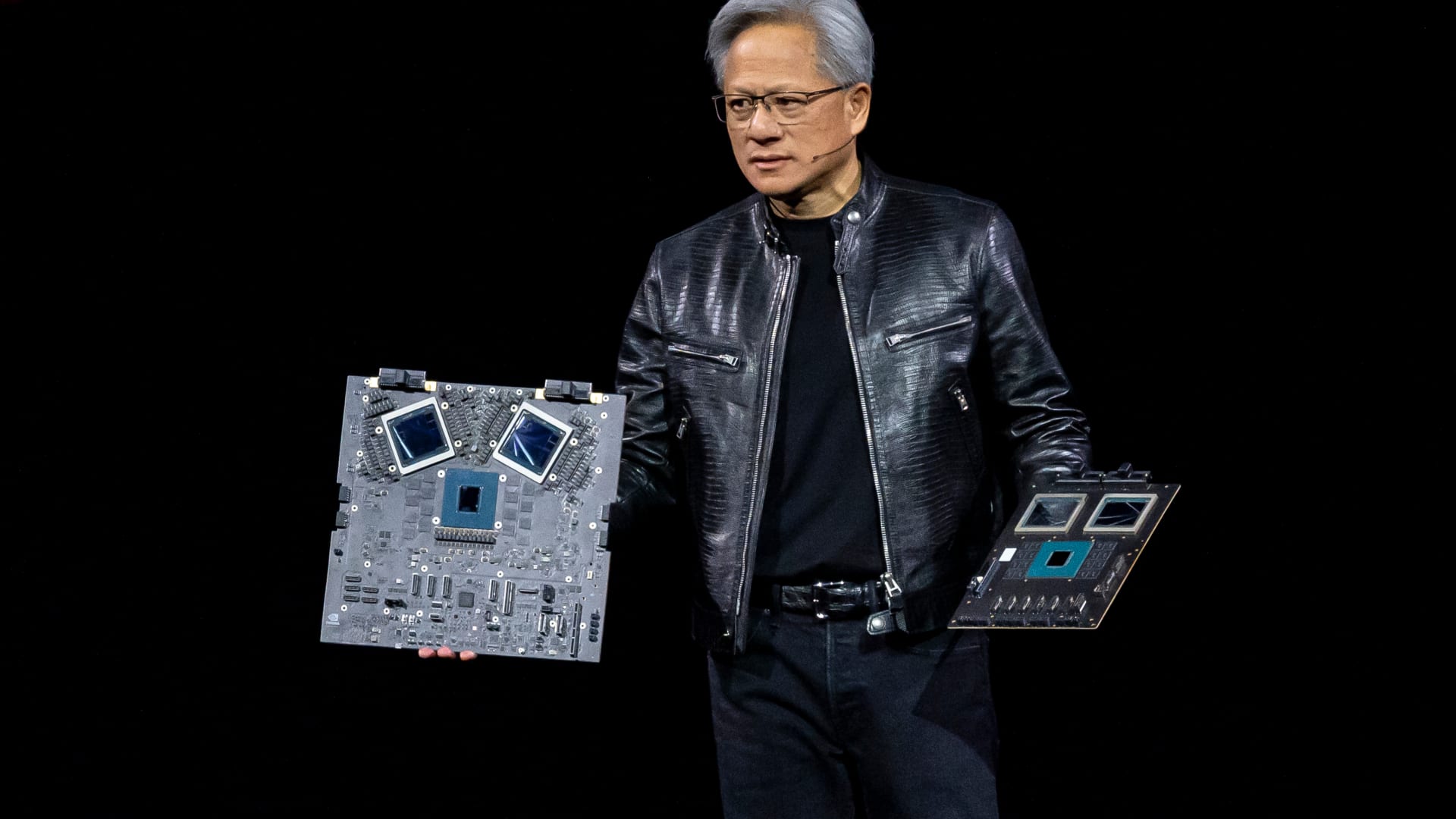
NEWSCENTRAL notes that Nvidia continues to confidently move towards innovation, unveiling its new generation of Vera Rubin chips at CES in Las Vegas. These chips promise to revolutionize computational power for artificial intelligence, increasing performance fivefold compared to previous models. However, with growing competition from giants like Google and AMD, Nvidia faces a challenging road ahead to maintain its leadership.
At NEWSCENTRAL, we believe Vera Rubin is not just another step in chip evolution, but a strategic platform capable of transforming the cloud computing and IT infrastructure market. The platform will include both graphics and central processors that can be integrated into computational clusters, offering incredible flexibility and scalability for processing large data sets and complex AI tasks.
The introduction of new data architecture and contextual memory opens new horizons for working with language models and chatbots, significantly improving user interaction and reducing response times. At NEWSCENTRAL, we emphasize that this technological breakthrough will enable Vera Rubin chips to handle multitasking and high-demand applications more efficiently.
On one hand, Nvidia’s technological superiority remains intact, but competition is fierce. AMD has already introduced its solutions, which could pressure Nvidia, while Google is actively developing its own AI chips. At NEWSCENTRAL, we see this as a serious threat to Nvidia, especially considering that Google is increasingly focusing on creating an independent hardware platform for cloud solutions, which could undermine Nvidia’s monopoly in the IT market.
Lucas Grant, a semiconductor industry analyst and manufacturing strategy expert at NEWSCENTRAL, points out that Vera Rubin is not just another chip upgrade, but a complete overhaul of the entire AI computing architecture. He emphasizes that innovations in manufacturing processes and the integration of contextual memory will allow Nvidia to not only improve performance metrics but also reduce costs in building high-performance computing systems. This combination of innovations, according to Grant, will be critical in the competitive battle with AMD and Google, both of which are actively developing their own AI solutions.
However, despite the intense competition, Nvidia continues to hold a dominant position in cloud computing and big data processing, thanks to its innovative developments. At NEWSCENTRAL, we predict that Vera Rubin chips will solidify Nvidia’s leadership in AI for the next 5-10 years, provided the company actively develops new technologies and strengthens partnerships with major players in the market, such as Microsoft and Amazon.
Thus, despite increasing competition, Nvidia is poised not only to maintain its position but also to elevate the IT solutions market to a new level. According to analysts, the company will remain at the forefront of AI chip development in the coming years, ensuring its demand among cloud providers and large corporations focused on data processing and machine learning.
In conclusion, Lucas Grant stresses that it is critical for Nvidia to maintain its leadership in semiconductor technologies, especially given the constant changes in the global chip industry. Forecasting a significant strengthening of the company’s market position, he notes that innovations in manufacturing strategies will help reinforce Nvidia’s competitive edge in key areas like cloud computing and high-performance AI computing.
At NEWS CENTRAL, we believe that the company’s upcoming innovations will not only be relevant to the IT market but will also influence the future development of technologies in machine learning and artificial intelligence.