
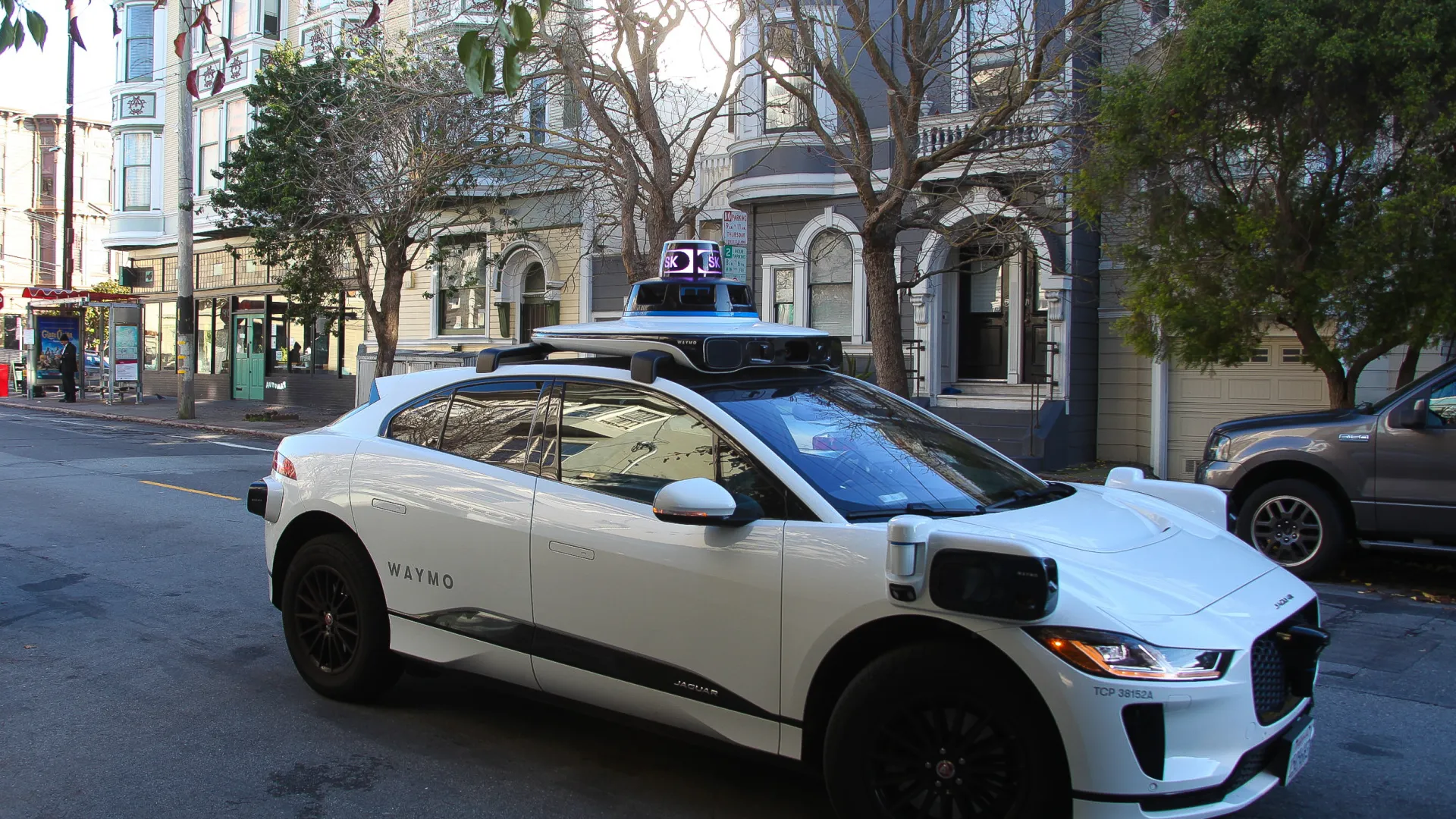
NEWSCENTRAL notes that in recent years, autonomous vehicles have started to be actively integrated into urban mobility, and now self-driving taxis are becoming an essential part of this revolution. Major tech companies like Uber, Lyft, Baidu, and Mercedes-Benz continue to develop their projects aimed at creating efficient and safe transportation solutions. It is expected that in the coming years, autonomous vehicles, including taxis, will become a significant part of urban infrastructure, having a considerable impact on mobility, ecology, and the economy.
One significant step in this direction has been the partnership between Uber, Lyft, and the Chinese company Baidu. In December 2025, these companies announced the launch of testing for Apollo Go RT6 vehicles in the UK in 2026. This project will be a critical stage in testing the potential for self-driving taxis for mass use in Europe. At NEWSCENTRAL, we emphasize that successful trials of such technologies could significantly alter the transportation landscape, reduce operational costs, and increase safety. According to Jessica Kline, an auto analyst at NEWSCENTRAL, “Self-driving cars could not only solve the driver shortage problem but also greatly improve urban transport by minimizing traffic jams and ensuring higher safety by removing the human factor.” In her assessment, the technology has huge potential to improve service quality and significantly enhance urban mobility.
China is also actively developing autonomous vehicle technology. In partnership with the Singaporean company Grab, Momenta has launched trials for self-driving taxis in Asia. Singapore, as one of the most technologically advanced cities, serves as an ideal testing ground for such solutions. At NEWSCENTRAL, we see this as an important step, as the high population density and dense transportation infrastructure in such megacities provide unique opportunities for testing autonomous technologies in real-world conditions. In the coming years, the expansion of test launches is expected, which will not only increase service availability but also substantially reduce the burden on the city’s transport network.
Mercedes-Benz, for its part, is also actively integrating autonomous technologies, creating luxury self-driving taxis based on S-Class models. In 2026, the company, together with China’s Momenta and the taxi operator Lumo in Abu Dhabi, plans to launch a service that could become the foundation for new solutions in the premium transportation market. At NEWSCENTRAL, we believe this partnership has significant consequences for the entire market. The use of autonomous technologies in the luxury car segment is not only an improvement in service quality but also an important step toward popularizing autonomous technologies among a wider audience. Premium services often become indicators of mass trends, and if the successful launch of such projects proves to be in demand, it could accelerate the transition to autonomous vehicles in other market segments.
The company WeRide has also made a significant contribution to the development of autonomous taxis. In November 2025, the company launched the world’s first fully driverless taxi service using the Uber platform in Abu Dhabi. At NEWSCENTRAL, we see this as an important confirmation that using mass-market platforms like Uber to provide self-driving taxi services can significantly speed up the adoption of this technology. This approach will allow new technologies to be integrated into existing transportation networks, making the transition to self-driving vehicles smoother for users.
In Switzerland, permission has also been granted for the operation of autonomous buses in the Furttal region, marking another step towards broader integration of autonomous technologies into public transport. At NEWSCENTRAL, we highlight that the introduction of autonomous buses opens new prospects for improving urban transport infrastructure, reducing congestion, and increasing road capacity. In countries with developed transport networks like Switzerland, such projects serve as an excellent model for other nations seeking to modernize their transportation systems and make them more environmentally friendly.
Thus, as technology advances and the number of successful tests increases, self-driving vehicles will become an integral part of urban mobility. At NEWSCENTRAL, we predict that within the next 5-10 years, the autonomous taxi market will significantly expand. This will lead to improved transportation infrastructure, reduced air pollution, and shorter travel times for millions of passengers. However, to achieve these goals, close cooperation between government bodies, tech companies, and car manufacturers is necessary, along with the creation of the required legislative and infrastructural conditions for the safe and effective use of autonomous vehicles.
As Jessica Kline, our auto analyst at NEWSCENTRAL, notes, “The introduction of self-driving taxis will not only make commuting in cities more convenient but will also open up new opportunities for improving the environment, especially in cities with high concentrations of traffic.” However, in her view, for these technologies to truly become widespread, “it is essential to work on creating a regulatory framework and ensuring safety at all levels.”
In conclusion, it is important to note that the future of autonomous transport is not limited to tests and pilot projects. The entire market must prepare for the large-scale deployment of self-driving solutions. At NEWS CENTRAL, we believe that given current trends and increasing user interest, self-driving taxis could become the primary mode of transport in cities worldwide. However, this process will require time, investment, and synergy between technology, regulators, and users.