
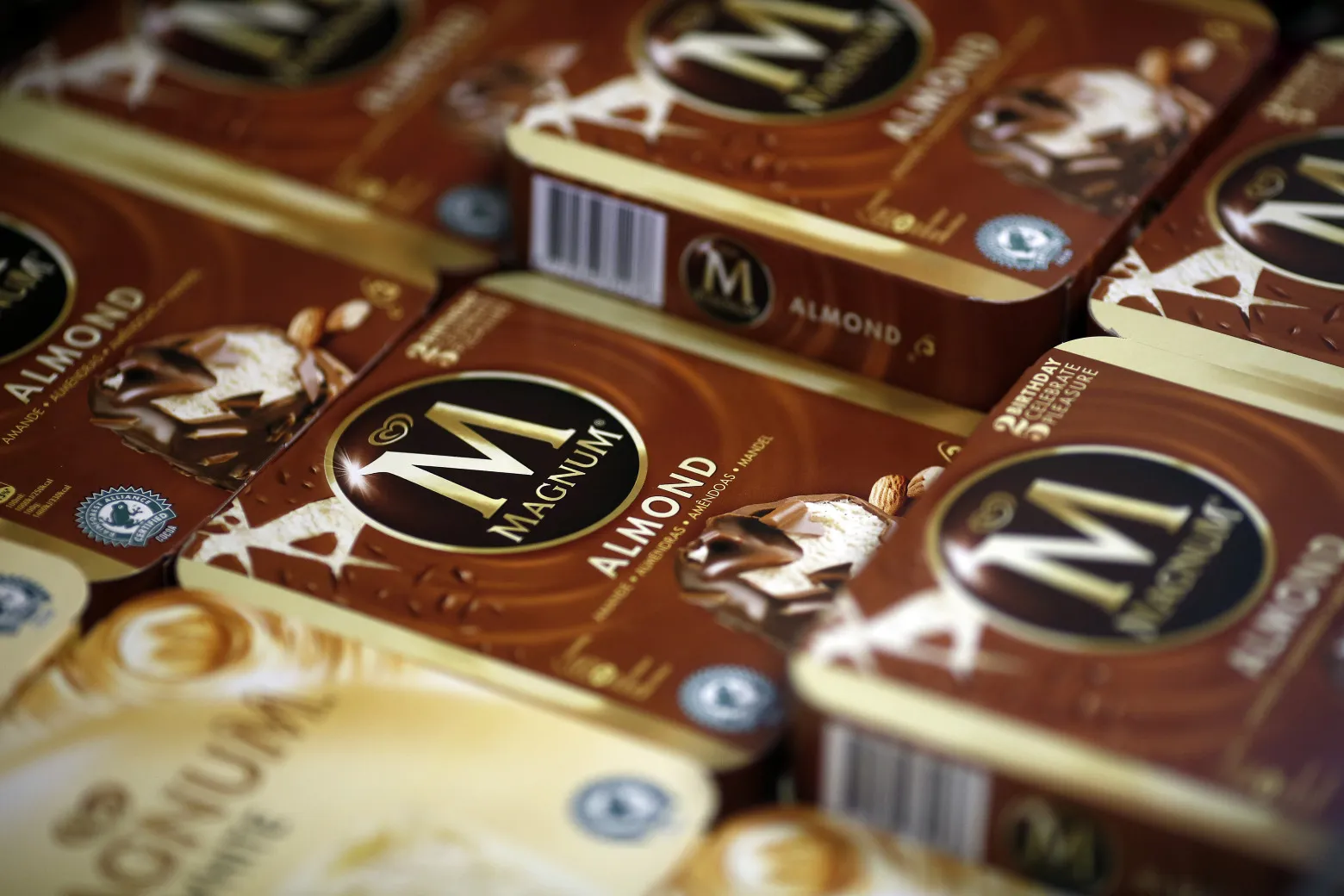
At NEWSCENTRAL, we note that the recent IPO of The Magnum Ice Cream Company could serve as a test for investors in the consumer goods sector, while also confirming the demand for a specialized ice cream business. This decision is based on the belief that a standalone company can operate with the focus and agility necessary to manage brands and logistics in the frozen dessert segment. According to our senior analyst Freddy Miller, this event highlights the strategic importance of spinning off the ice cream business into a separate publicly traded entity.
The company’s shares began trading on Euronext Amsterdam at €12.20 per share, giving the company a market capitalization of approximately €7.8-7.9 billion and making it the largest publicly traded company exclusively in the ice cream segment. The shares have also been listed on the London and New York exchanges, broadening geographic reach and liquidity.
Magnum’s brand portfolio includes globally recognized names such as Magnum, Wall’s, Cornetto, and Ben & Jerry’s. The company operates in roughly eighty markets, controlling about 21% of the global ice cream market. In 2024, the Ice Cream division generated revenue of around €7.9 billion, underlining the scale and importance of this business within the global portfolio.
Management presented a strategy targeting organic sales growth of 3-5% per year starting in 2026, an EBITDA margin improvement of 40-60 basis points, and free cash flow of €0.8-1.0 billion by 2028-2029.
Spinning off the ice cream business into a separate public entity makes strategic sense. The specifics of cold-chain logistics, seasonal demand, and the high costs of frozen products require a dedicated approach. As an independent business, the company gains the ability to optimize supply chains, respond flexibly to demand changes, and focus on product development.
Ahead of the IPO, Magnum issued €3 billion in bonds, with demand significantly exceeding supply, signaling creditor confidence in its growth and modernization strategy.
However, there are notable risks. The initial valuation fell short of many analysts’ expectations, who had anticipated a market cap above €10 billion and a share price over €20. A low starting price may reduce interest from investors expecting a quick premium. At the time of listing, the shares were not included in major stock indices, limiting inflows from index and passive funds and potentially increasing volatility. The company also stated that dividends in 2026 are unlikely, reducing appeal for income-focused investors.
Another key risk relates to the Ben & Jerry’s brand and its associated charitable foundation. During the spin-off, insufficient financial and management controls were identified. For the company, this means that corporate responsibility and ESG reputation issues could become sources of reputational costs and limit trust among some investors.
At NEWSCENTRAL, we forecast that if the strategy to maintain market share, control costs, optimize logistics, and manage the product range flexibly is successfully executed, the company could realistically reach free cash flow of around €1 billion by 2028–2029. This would provide a foundation for potential dividend payments, strengthen financial resilience, and create resources for further brand development and market expansion.
However, in the next 12-24 months, high volatility is possible. Limited interest from index funds, absence of dividends, seasonal demand, and external macroeconomic and consumer factors could lead to sharp share price fluctuations.
For growth-oriented investors willing to take on higher risks, Magnum may be an attractive bet on the global frozen treats market, with well-known brands and growth potential. Those preferring stable returns and minimal risk would be better served by waiting for the first quarterly reports, confirmation of margin sustainability, and potential dividend initiation.
At NEWS CENTRAL, we emphasize that Magnum’s success as a public company will depend on management discipline, the ability to adapt to a changing market, and maintaining efficiency amid rising competition and shifting consumer preferences. With a realistic strategy, it has the potential to establish itself as a leader in the global ice cream segment, but in a less favorable scenario, valuation corrections and heightened volatility are possible.