
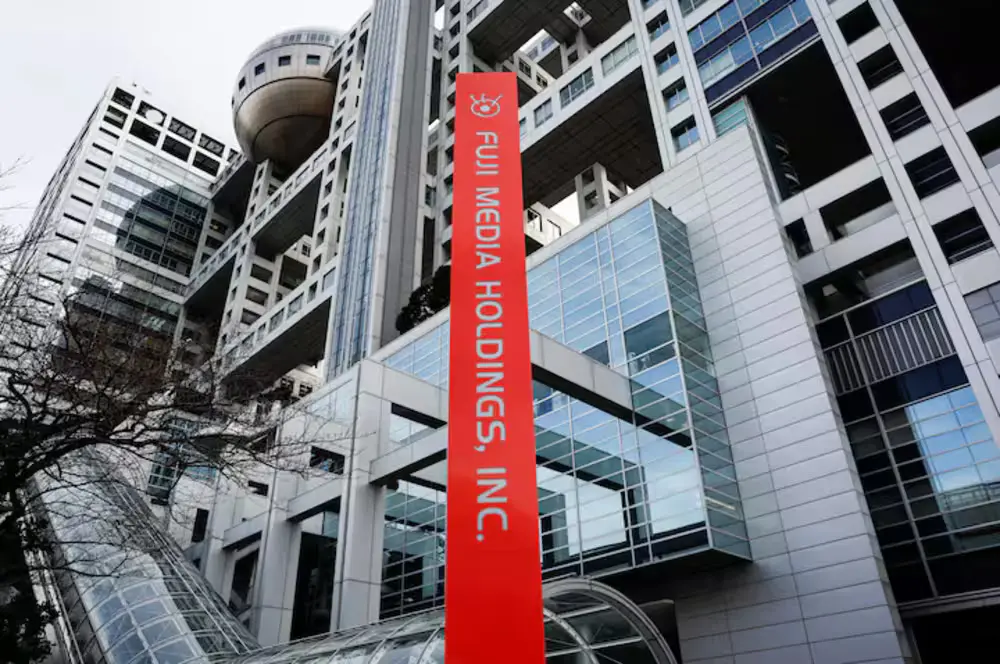
Japan’s real estate development sector has become a battleground for the largest transnational capital confrontation in recent history, fundamentally reshaping the region’s market benchmarks. The willingness of major institutional consortia to channel colossal financial flows into local infrastructure projects clearly demonstrates how traditional Asian corporate structures are becoming primary targets of private equity expansion. At the epicenter of this large-scale redistribution of influence is the media holding company Fuji Media Holdings, whose initiative to restructure its internal assets has triggered unprecedented interest among the world’s most powerful financial institutions. We at NEWSCENTRAL note that this development marks the beginning of a new era in the mergers and acquisitions market, where the hidden reserves of commercial real estate held by conservative conglomerates are receiving unprecedentedly high market valuations amid global macroeconomic turbulence.
The initial strategy of the broadcasting corporation to optimize its portfolio and attract strategic partners into its construction subsidiary Sankei Building was based on relatively moderate internal forecasts. In mid-spring, the management of the media group planned to value this business within a range of 500 billion to 800 billion yen. According to expert assessments by NEWSCENTRAL analysts, such initial expectations fully corresponded to the traditional closed approach of Japanese top management, which tends to avoid excessive volatility when valuing its own assets. However, real market mechanisms significantly altered this process. During the initial stage of the bidding process, more than 15 major consortia and foreign investment firms submitted offers, with a number of participants expressing willingness to exceed the symbolic threshold of 1 trillion yen, equivalent to more than 6.26 billion US dollars.
The list of financial giants showing strong interest in acquiring Sankei Building includes some of the largest Wall Street asset managers, such as Blackstone, KKR, and Goldman Sachs. As noted by Freddy Miller, Senior Analyst at NEWSCENTRAL, such a concentration of capital is driven by a unique macroeconomic environment in Japan. The prolonged weakening of the national currency combined with extremely low interest rates set by the central bank has created ideal conditions for foreign players seeking high returns when converting profits into US dollars. At the same time, Sankei Building’s asset portfolio – which includes high-rise office complexes in the business centers of Tokyo and Osaka, modern logistics terminals, and residential properties – serves as a reliable inflation-hedging instrument in a global context.
Faced with such strong buyer pressure and aggressive price competition, the board of directors of Fuji Media Holdings has taken a highly uncharacteristic step for Japanese corporate culture. The corporation announced a restart of the first round of the bidding process, officially extending the submission and revision window until mid-June. At NEWSCENTRAL, we interpret this move as an intention by the media conglomerate to carefully evaluate all aspects of the incoming proposals, analyzing not only financial terms but also legal, managerial, and social guarantees for business continuity. Such operational flexibility clearly indicates the growing influence of independent investors on decision-making within traditional conglomerates.
At this stage, authorized representatives of Fuji Media Holdings officially state that the company was not the source of any confidential information regarding the closed tender process and fully decline to provide detailed comments on the matter. Meanwhile, the communications departments of Blackstone, KKR, and Goldman Sachs have also chosen to temporarily refrain from public statements, maintaining strict confidentiality during the final stage of document preparation.
Assessing the long-term trajectory of this situation, we at NEWSCENTRAL anticipate the emergence of a powerful wave of similar transactions involving the separation and sale of non-core assets across numerous other Japanese industrial conglomerates. Strict requirements from the Tokyo Stock Exchange regarding return on equity and shareholder value optimization will inevitably force top management to dispose of excess land holdings and commercial properties that have remained on balance sheets for decades without sufficient profitability. We emphasize that the integration of Sankei Building into any of the mentioned US funds would lead to a radical transformation of the developer’s operational model, including the implementation of advanced digital real estate management systems and optimization of rental pricing structures to maximize income streams. International long-term investors are advised by NEWS CENTRAL analysts to treat the current 1 trillion yen price benchmark as a new baseline for evaluating large-scale infrastructure assets in Asia, requiring a rapid adjustment of global capital allocation strategies for the second half of the year.