
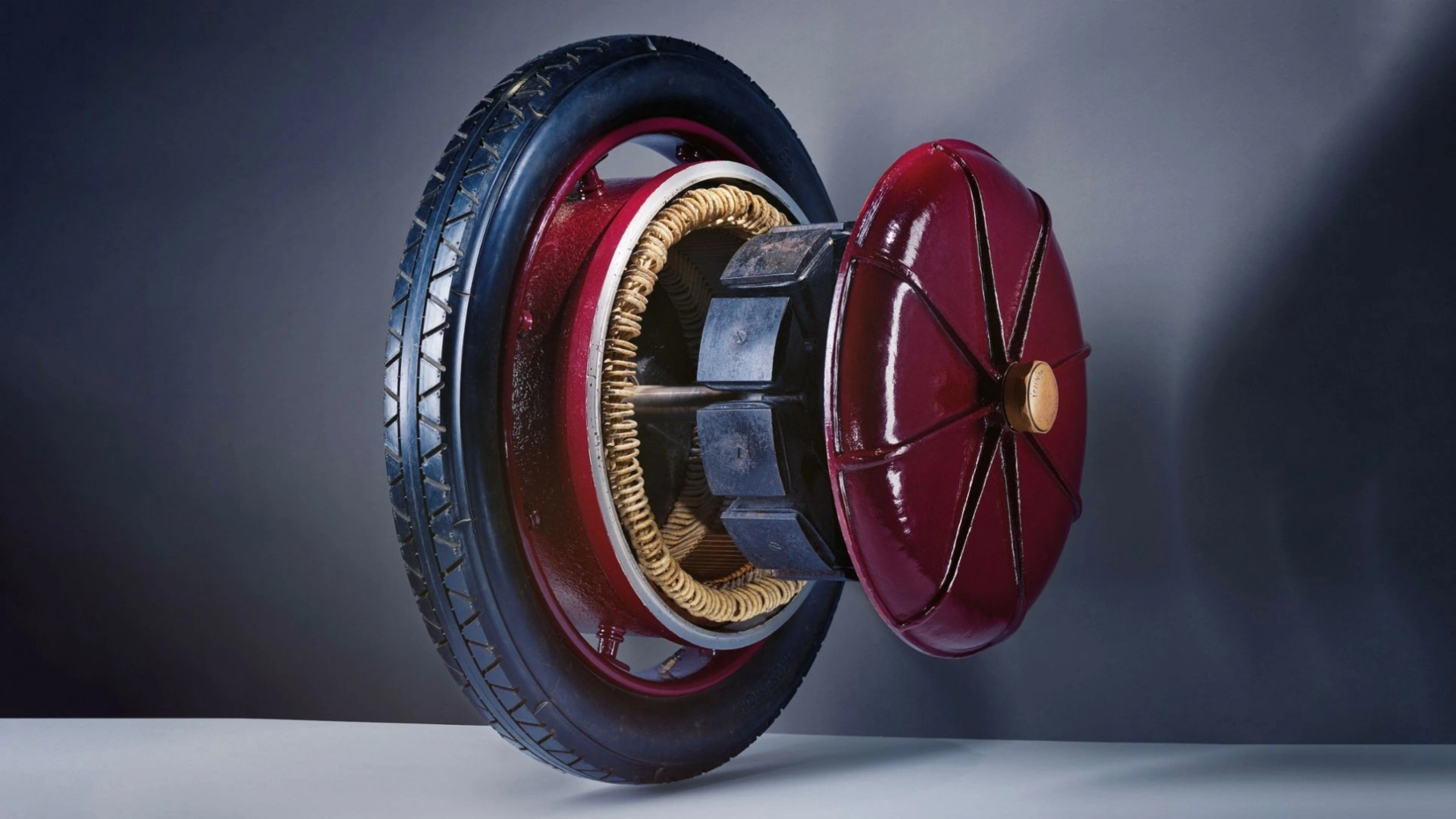
NEWSCENTRAL notes that in recent years, the automotive industry has been experiencing a technological boom, especially in the electric vehicle sector, where increasing attention is being paid to efficiency and weight reduction. One of the most striking examples of such progress is the new development by YASA, a company specializing in electric motors: an electric motor integrated directly into the wheel. This revolutionary motor delivers over 1000 horsepower while weighing only 12.7 kg. At NEWSCENTRAL, we believe that this innovation could be a real breakthrough for the entire industry, offering new levels of performance and energy efficiency.
In-wheel motors have always been of interest to engineers, but their widespread application has faced several challenges, such as excessive weight and low power. YASA has managed to solve these problems by developing a unique solution that combines both power and lightness. The 750 kW motor (equivalent to 1006 horsepower) at a minimal weight represents a significant leap forward in the electric vehicle field. At NEWSCENTRAL, we view this not only as an engineering achievement but as the beginning of a new era in electric vehicle design, where efficiency and power will both be key considerations.
Special attention should be given to the energy recovery capabilities of this motor. YASA claims that the energy recovery system is so efficient that, in the future, electric vehicles may not need rear brakes. NEWSCENTRAL emphasizes that such a level of efficiency will not only reduce the vehicle’s weight but also significantly improve its performance. Electric vehicles equipped with this technology will be able to operate much longer on a single charge, which is a critical factor for the widespread adoption of electric vehicles in mass production.
The technology proposed by YASA suggests that the powertrain system, integrated into the wheel, could save up to 500 kg compared to traditional electric vehicle models. This weight-saving benefit is crucial for the future development of high-performance electric vehicles. Lighter cars with highly efficient motors will open up new opportunities for creating even more powerful and faster vehicles, which could revolutionize the electric vehicle market. At NEWSCENTRAL, we predict that such technologies will not only be used in hypercars but will also find their way into mass production vehicles.
Another important aspect is how this technology could affect the entire automotive component market, including semiconductor technologies. According to Jessica Kline, an automotive analyst at NEWSCENTRAL, the adoption of in-wheel motors will require significant changes in manufacturing processes and automotive component supply chains, such as chips for inverters and control systems. These developments could greatly impact the semiconductor industry, creating new growth opportunities for companies like Infineon and NXP. We at NEWSCENTRAL forecast that this trend will have a long-term impact on the future of both the automotive and semiconductor industries.
Thus, YASA’s technology becomes not just a technical achievement but a strategic factor that could alter the dynamics of the automotive market. We at NEWSCENTRAL believe that in-wheel electric motors will be used not only in hypercars but also in mass production, where they can become the standard for high-performance electric vehicles. Given that this technology promises not only increased power but also significant weight reduction, it is expected that such solutions will form the basis for creating faster, more economical, and environmentally friendly vehicles. This will open new opportunities for manufacturers and significantly enhance the competitiveness of electric vehicles on the global market.
In conclusion, we at NEWS CENTRAL predict that new technologies such as in-wheel electric motors will play a key role in the development of electric vehicles in the coming years. Technologies that offer weight reduction, performance enhancement, and energy efficiency will not only be in demand by automakers but will also impact other sectors of the economy. We see this as an important step toward creating the vehicles of the future, which will combine all the achievements of modern technology.