
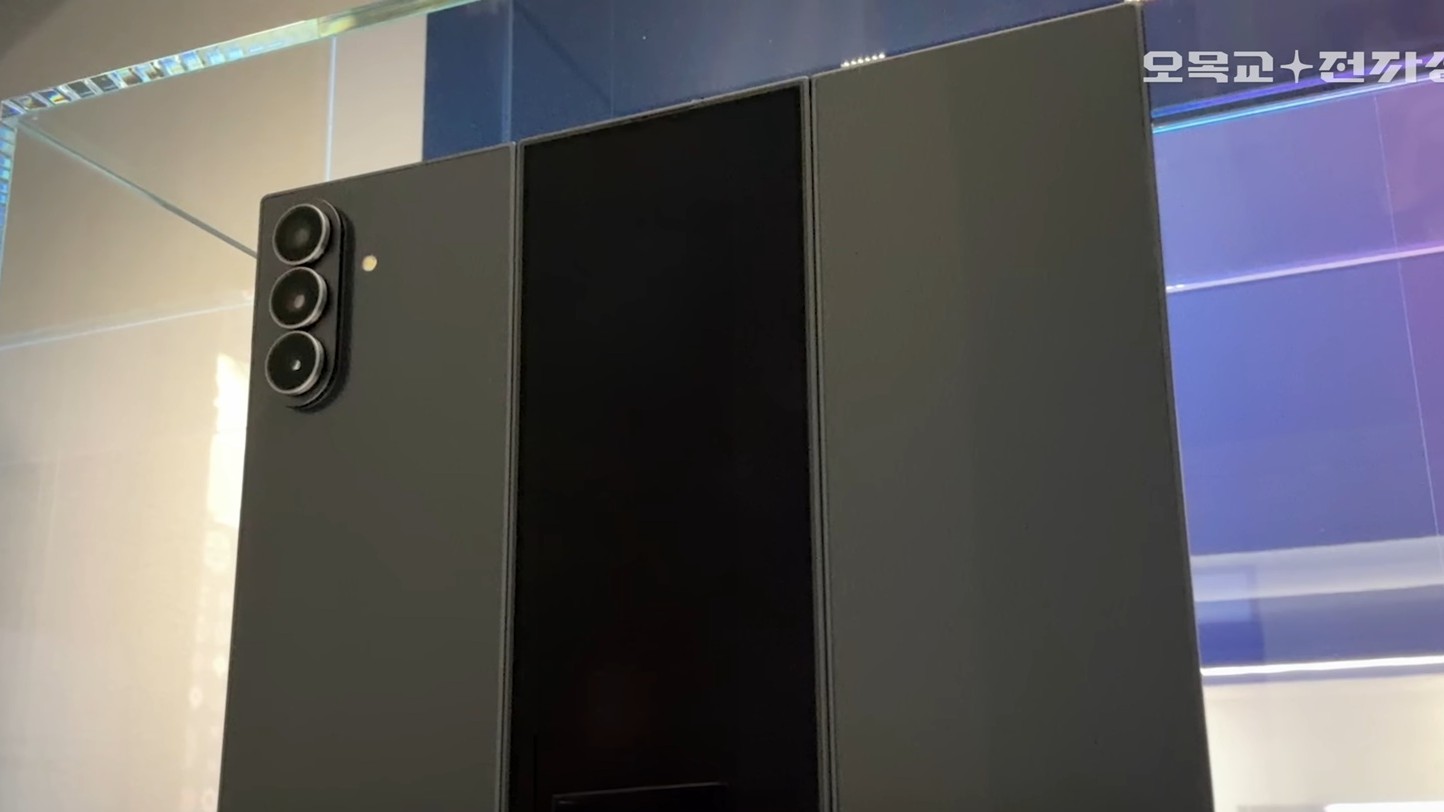
NEWSCENTRAL notes that Samsung continues its course of innovation in mobile technology with the release of the new foldable smartphone, the Galaxy Z TriFold, which is expected to strengthen the company’s position in a segment where competition is becoming increasingly intense year by year. With the growing interest in foldable devices and the upcoming launch of a similar model from Apple, the Galaxy Z TriFold marks a significant milestone in the evolution of mobile technologies. However, despite its technological novelty, the foldable smartphone market remains limited and not yet ready for mass adoption, creating challenges for both Samsung and other manufacturers.
The new Galaxy Z TriFold features a unique triple-fold design that, when unfolded, offers a 10-inch screen. This smartphone is targeted at users willing to invest in advanced technology and functionality. However, its price – 3.59 million won (approximately $2,440) – places it in the premium segment. The high cost, along with production limitations, remains a major barrier to widespread adoption of foldable devices.
We at NEWSCENTRAL note that, despite its technological achievements, foldable smartphones are still a niche product. Projections for this segment suggest that foldable devices will account for less than 2% of the global smartphone market in 2025, and by 2027, this figure is unlikely to exceed 3%. This highlights the fact that for foldable phones to gain mass adoption, significant technological advancements and a considerable reduction in price are required. Without these changes, foldable devices will remain confined to the premium segment and fail to capture a substantial share of the mass market.
Our experts believe that despite the technological superiority of the Galaxy Z TriFold, Samsung will face several key challenges in achieving success in a broader market. First, the company must lower the production costs of the device to make it accessible to a larger audience. Second, significant efforts must be made to optimize production capacities to avoid limiting supply. With increasing competition, including the expected release of similar models by Huawei and Apple, Samsung will need to fight for its position in the market.
As Freddy Miller, senior analyst at NEWS CENTRAL, points out, “The future success of foldable smartphones will depend on manufacturers’ ability to scale production and reduce costs. Until this challenge is addressed, foldable devices will remain in premium niches and will not become mainstream.” Production capacity issues and high component costs continue to be major barriers to the growth of this segment.
The forecast for the foldable smartphone market remains cautious. Despite significant technological advancements, foldable devices are not yet ready for mass adoption. Samsung and other manufacturers must optimize their production processes and adapt their devices to a broader audience if they want to enter a new phase of growth in this segment.
Thus, the Galaxy Z TriFold represents a significant step for Samsung, but it is not a decisive victory in the battle for the foldable smartphone market. For this segment to develop, several issues related to production, price, and availability must be addressed. If Samsung and other manufacturers can overcome these barriers, the foldable device market could expand significantly in the future. However, until then, foldable smartphones will remain niche products, accessible only to a limited number of users.