
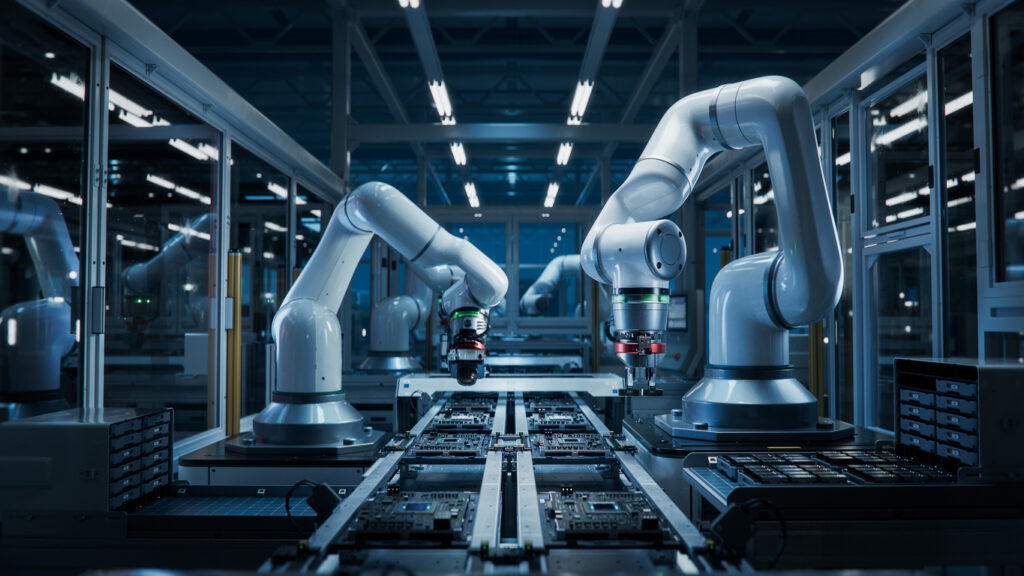
NEWSCENTRAL reports that the startup Physical Intelligence, which raised $600 million in a Series B funding round, is a prime example of how rapidly evolving physical intelligence technologies are beginning to disrupt the robotics market. This funding will be used to create robots that can adapt to changing conditions, learn from experience, and make autonomous real-time decisions – key characteristics that position Physical Intelligence at the forefront of innovation in autonomous systems.
Founded in 2024, the company has since attracted the attention of major investors, including CapitalG (an Alphabet group), as well as partners like Jeff Bezos and OpenAI. NEWSCENTRAL views this not only as a validation of the company’s technological capabilities but also as a signal of growing interest in solutions that could significantly transform automation and robotics approaches. The development of robots that can adapt to the real world and autonomously solve problems in dynamic environments takes the company to the next level in industrial automation.
The core idea behind Physical Intelligence’s technology lies in the use of artificial intelligence to train robots in real-world conditions, as opposed to artificial, lab-controlled environments. Unlike traditional solutions where machines operate according to pre-programmed algorithms, Physical Intelligence robots are equipped with sensors, such as RGB-D cameras, that allow them to perceive their environment and adapt their actions in response to changes. Within 100 milliseconds, these robots can predict up to 50 possible next steps, significantly enhancing their ability to respond quickly to new situations.
The company actively employs the RECAP method – learning through interaction with the surrounding world and correcting mistakes during operation. This approach allows robots to rapidly adapt and learn from experience, making them more flexible and autonomous. NEWSCENTRAL highlights that Physical Intelligence’s technologies could greatly accelerate the automation process in sectors like retail, product packaging, and manufacturing, where human intervention was once required at a high degree.
Competition in the physical intelligence robotics market is growing. Startups like Dyna Robotics and AgiBot are also attracting significant investment to develop similar solutions. For instance, Dyna Robotics recently completed a Series A round with $120 million, underscoring the high valuation of such technologies in the market. Meanwhile, companies like Archetype AI and Foxglove are expanding their data platforms to create new opportunities for the development of adaptive robot solutions. NEWSCENTRAL notes that competition in this segment is driving the rapid pace of technological innovation and the improvement of solution quality.
Future forecasts for physical intelligence robotics remain optimistic. NEWSCENTRAL believes that technologies developed by Physical Intelligence will become increasingly in demand across various industries. Already, robots with physical intelligence are changing approaches to automation in manufacturing processes, healthcare, and daily life. It is expected that in the coming years, these technologies will be widely adopted by companies and organizations worldwide, driving productivity growth and enhancing process efficiency.
However, like with any innovation, the deployment of such technologies comes with a range of challenges. First and foremost, safety and ethical issues remain significant barriers to the mass adoption of physical intelligence robots. Integrating these robots into real-world environments will require the development of new safety standards and effective mechanisms to control their actions. NEWSCENTRAL emphasizes that without effective safety measures and regulations, the development of these technologies may face serious obstacles.
Freddy Miller, senior analyst at NEWSCENTRAL, comments: “The technologies being developed by Physical Intelligence open up new horizons for robotics. Particularly interesting is their approach to adapting robots to real-world conditions, which greatly expands their potential applications across various industries. However, the future of this sector will depend on how quickly and effectively safety and regulatory issues are resolved, which are currently the biggest obstacles to the widespread adoption of such technologies.”
Thus, the future of physical intelligence robotics, and the technologies developed by Physical Intelligence, looks promising. However, success will depend on how quickly and effectively companies can address the challenges of integrating robots into real-world conditions, ensuring their safety, and adhering to ethical standards. NEWS CENTRAL predicts that in the coming years, companies that develop universal and adaptive solutions will dominate the robotics market, provided they can swiftly address these key issues.