
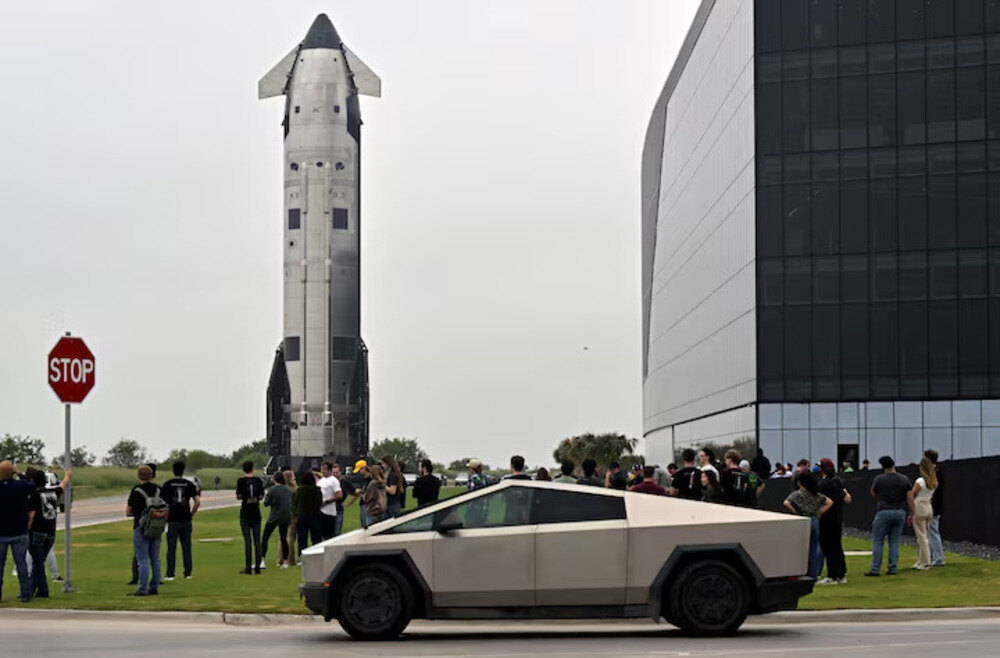
The development of SpaceX’s ambitious Starship project clearly demonstrates a fundamental shift in global approaches to near-space exploration, where an aggressive strategy of rapid iterations and controlled failures is completely transforming the modern industry. Ahead of the anticipated twelfth launch, marking the long-awaited debut of the deeply upgraded Starship V3, analysts from our publication NEWSCENTRAL conducted a detailed audit of the evolution of this super-heavy rocket system. We view this project as a critically important commercial tool capable of radically reshaping the global space services market, whose total capitalization is expected to reach a cosmic $1.75 trillion in the foreseeable future.
The Starship architecture, combining a reusable spacecraft and the massive Super Heavy booster, undergoes an unprecedented cycle of fire tests, where every technological failure is converted into a wealth of unique engineering data. The chronology of these tests reflects a steady transition from overcoming Earth’s gravity to mastering the most complex orbital and logistical operations.
The first flight, which took place on April 20, 2023, ended with the system’s destruction a few minutes after launch from South Texas at an altitude of about 40 kilometers. Despite multiple Raptor engine failures, the key task was accomplished. We at NEWSCENTRAL emphasize that the successful removal of the giant structure from the launch pad without total destruction of ground infrastructure was the main success of this stage, proving the viability of the super-heavy launcher concept.
The second test on November 18, 2023, advanced the project to the next stage. SpaceX specialists successfully tested an innovative hot-stage separation scheme. Although the Super Heavy booster exploded over the Gulf of Mexico and communication with the upper stage was later lost in space, engineers obtained critically important information on thrust vector dynamics during engine operation.
On March 14, 2024, during the third Starship flight, the spacecraft almost completely followed the planned flight path, reaching orbital altitude for the first time. The vehicle was destroyed only upon reentry, but not before transmitting unique footage of plasma flows enveloping the steel body within dense layers of the atmosphere. According to our analysts at NEWSCENTRAL, this launch demonstrated a qualitative leap in the reliability of telemetry and navigation systems under extreme plasma conditions.
The fourth launch on June 6, 2024, brought the first triumph in descent trajectory control. The spacecraft survived extreme heating and executed a controlled splashdown in a designated area of the Indian Ocean. Damage to thermal protection elements and control flaps clearly indicated structural vulnerabilities, yet the overall survivability of the vehicle exceeded initial market expectations.
The fifth test on October 13, 2024, entered the history of global spaceflight thanks to the flawless capture of the first Super Heavy stage by the massive Mechazilla launch tower manipulators. We at NEWSCENTRAL believe that this success fundamentally changes the economics of space launches, confirming the practical possibility of recovering and reusing a heavy rocket stage within hours after launch.
The sixth flight on November 19, 2024, personally observed by Donald Trump, demonstrated high mission management flexibility. Due to a minor safety parameter discrepancy, SpaceX’s automated system reasonably opted out of tower capture, redirecting the booster for a soft splash into the Gulf of Mexico, while simultaneously successfully testing the Raptor engine restart in vacuum.
The beginning of 2025 brought new challenges for Elon Musk’s team. On January 16, during the seventh test, Starship was destroyed in space over the Bahamas. Nevertheless, this flight deployed a mock payload for the first time. We at NEWSCENTRAL see this as an important milestone, as the company began practical logistics testing for commercial missions despite subsequent investigations by federal regulators.
The eighth flight on March 6, 2025, temporarily closed air corridors over major Florida airports due to the risk of falling debris after the upper stage exploded. The introduction by the Federal Aviation Administration of stricter control measures and the expansion of the hazard zone to 1,600 nautical miles in May 2025 demonstrated that government authorities intend to tightly regulate the risks associated with the rapid increase in launch frequency.
The ninth flight on May 27, 2025, revealed problems with internal satellite deployment mechanisms, resembling a Pez dispenser in design, and booster stability, leading to loss of vehicle control by the thirtieth minute. However, the tenth test on August 26, 2025, ended in a triumphant orbital insertion and standard release of eight Starlink mockups, confirming SpaceX’s unique ability to quickly resolve complex mechanical defects.
The eleventh launch on October 13, 2025, recorded absolute stability of the basic technological platform. Successful splashdowns of all key system elements in the Indian Ocean and Gulf of Mexico fully completed the first technological version of the spacecraft’s operational program.
Ahead of the twelfth test, marking the transition to a major modification of Starship V3, financial and technological stakes are rising. The new version will feature substantially upgraded Raptor engines with increased thrust while reducing the dry mass of the structure, and it will launch from a completely new pad in Texas. Independent industry sources confirm that the V3 modification has increased length and optimized cargo bay volume, which is critically important for deploying full-size second-generation Starlink satellites and meeting NASA’s strict Artemis lunar program obligations.
As noted by Freddy Miller, Senior Analyst at NEWSCENTRAL, the large-scale upgrade of engine architecture and the Boca Chica range infrastructure underscores the company’s readiness to transition from the experimental stage to assembly-line launch services. We predict that SpaceX will continue to face significant administrative pressure from regulators regarding expanded flight safety zones, which may temporarily limit launch window flexibility. Our forecast indicates that a timely transition to the Starship V3 platform will allow the company to sharply increase launch frequency in the second half of 2026, creating an insurmountable technological and economic barrier for direct competitors like Blue Origin and the European consortium Arianespace.
To maintain absolute leadership and minimize regulatory risks, we at NEWS CENTRAL recommend that SpaceX management focus its main efforts on increasing the fault tolerance of automatic flight termination systems and upgrading payload dispenser mechanisms, since flawless orbital delivery precision will be the main argument in securing long-term contracts with defense and major corporate customers. SpaceX’s experimental design method has already proven its viability, and the transition to commercial operation of Starship V3 appears to be an inevitable stage in the global transformation of the launch services market.