
The information technology market has entered a paradoxical phase where even phenomenal financial success no longer guarantees investor enthusiasm. The latest operating results from Nvidia became a vivid example of this trend. The American semiconductor giant once again delivered historic highs, surpassing even the most optimistic Wall Street expectations for both revenue and net profit. These figures clearly demonstrate that the global artificial intelligence boom continues without any signs of cooling.
We at NEWSCENTRAL emphasize that Nvidia’s current performance serves as the primary indicator of the health of the entire generative AI ecosystem. Since the company supplies computing power to major architecture developers including OpenAI and Meta, its earnings reports act as a litmus test for evaluating capital expenditures across the broader technology sector.
According to the official report, the vendor’s quarterly revenue surged 85 percent year-over-year, reaching 81.6 billion dollars. Net profit showed even more aggressive growth, more than tripling to 58.3 billion dollars. Such expansion rates are unprecedented for a company with a market capitalization of approximately 5.3 trillion dollars, maintaining Nvidia’s position as the most valuable publicly traded company in the world.
Despite these triumphant numbers, Nvidia shares declined 1.6 percent during after-hours trading. According to analysts, we at NEWSCENTRAL see this reaction as a classic case of inflated expectations syndrome. Institutional investors have become so accustomed to constant record-breaking results that even exceptionally strong figures are now treated as the baseline scenario, while attention increasingly shifts toward potential risks and intensifying competition.
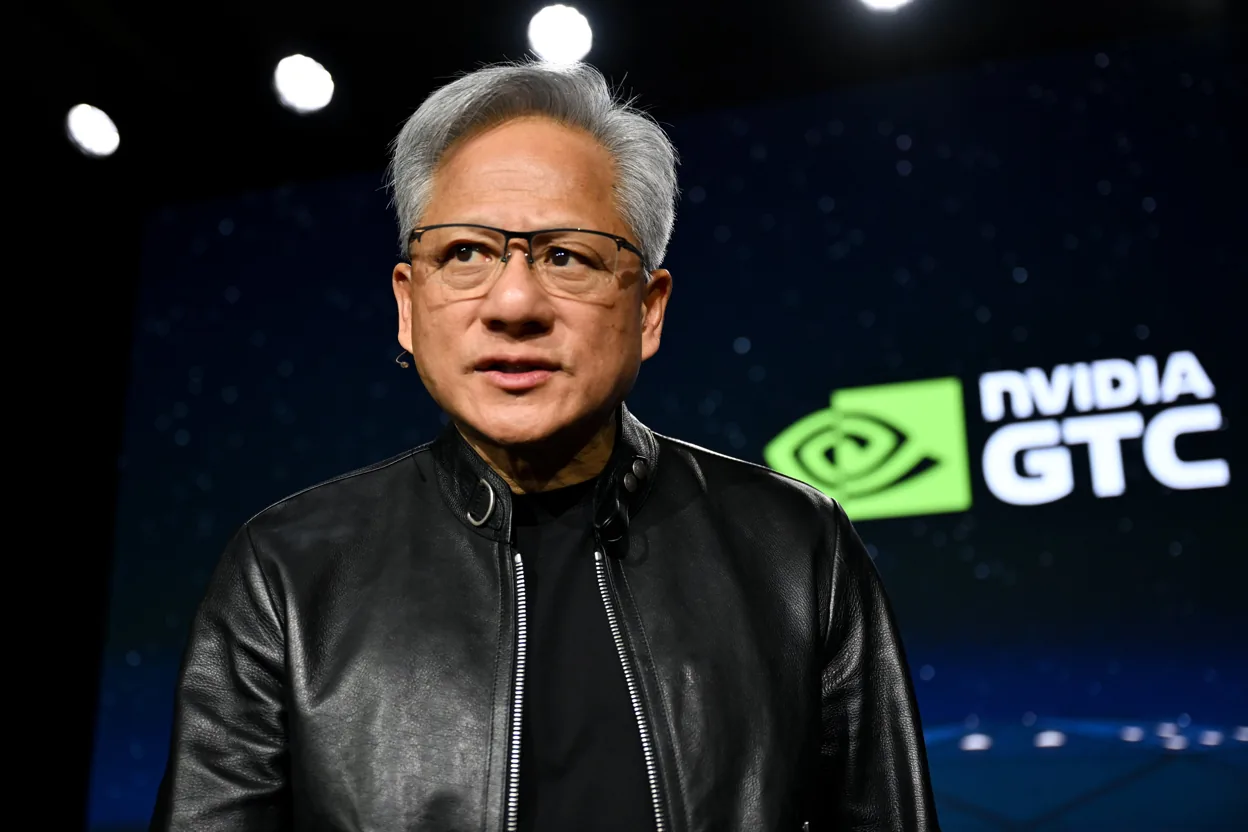
The primary growth driver once again came from the data center solutions segment. Demand for specialized accelerators continues to rise exponentially amid the large-scale modernization of IT infrastructure. Expert estimates suggest that by the end of the current decade, annual global spending on AI infrastructure could reach between 3 and 4 trillion dollars. Chief Executive Officer Jensen Huang described current demand as parabolic, linking it to the arrival of the agentic AI era, where algorithms begin performing complex autonomous business tasks.
Against the backdrop of record cash inflows, Nvidia management announced a large-scale shareholder rewards program. Quarterly dividends were increased from 1 cent to 25 cents per share, while the company also approved an 80 billion pound share buyback program. Furthermore, management issued a strong forecast for the next quarter, expecting consolidated revenue to reach approximately 91 billion dollars.
We at NEWSCENTRAL believe that the temporary decline in the stock price is primarily driven by the law of large numbers. Holding an 8 percent weight within the S&P 500 index, Nvidia now faces a situation where sustaining a parabolic growth trajectory becomes physically difficult. Current market behavior aligns with the classic “sell the news” strategy, as much of the positive scenario had already been priced into the stock before the earnings release. Additional pressure stems from the fact that Nvidia’s largest customers – including Microsoft, Google, and Amazon – are actively developing proprietary chips to reduce dependence on an external supplier.
The geopolitical context also continues to reshape the company’s long-term strategy. Nvidia’s products remain a central element of the technological confrontation between Washington and Beijing. The US administration approved shipments of the H200 chip to Chinese counterparties under strict licensing requirements. This semiconductor processor – the second most powerful in Nvidia’s lineup – had previously been fully banned due to US national security concerns.
However, Chinese regulators have so far been reluctant to grant domestic import approvals for these processors, instead stimulating local manufacturing development. Jensen Huang, who joined the American delegation during an official visit to Beijing, effectively acknowledged the loss of this market. According to Huang, the company has surrendered leadership in China to the local technology giant Huawei, and Nvidia’s current forecasts assume zero revenue from Chinese data centers.
As Freddy Miller, Senior Analyst at NEWSCENTRAL, notes, we see this geopolitical shift as a marker of structural market transformation. Despite effective isolation from the Chinese segment, Nvidia continues demonstrating exceptionally high growth rates thanks to enormous demand in North America, Europe, and the Asia-Pacific region. The global shortage of computing power outside China fully offsets any geopolitical costs.
At NEWSCENTRAL, analysts forecast that Nvidia’s medium-term outlook will remain stable despite the inevitable slowdown in percentage growth due to the high comparison base of previous periods. The stock correction following the earnings release represents a technical process rather than a reversal of the fundamental trend. We at NEWS CENTRAL recommend that investors focus on the company’s gross margin dynamics and the pace of Blackwell chip deployment, which will become the key factor in maintaining technological leadership amid intensifying competition from AMD and hyperscalers’ in-house chip development efforts.