
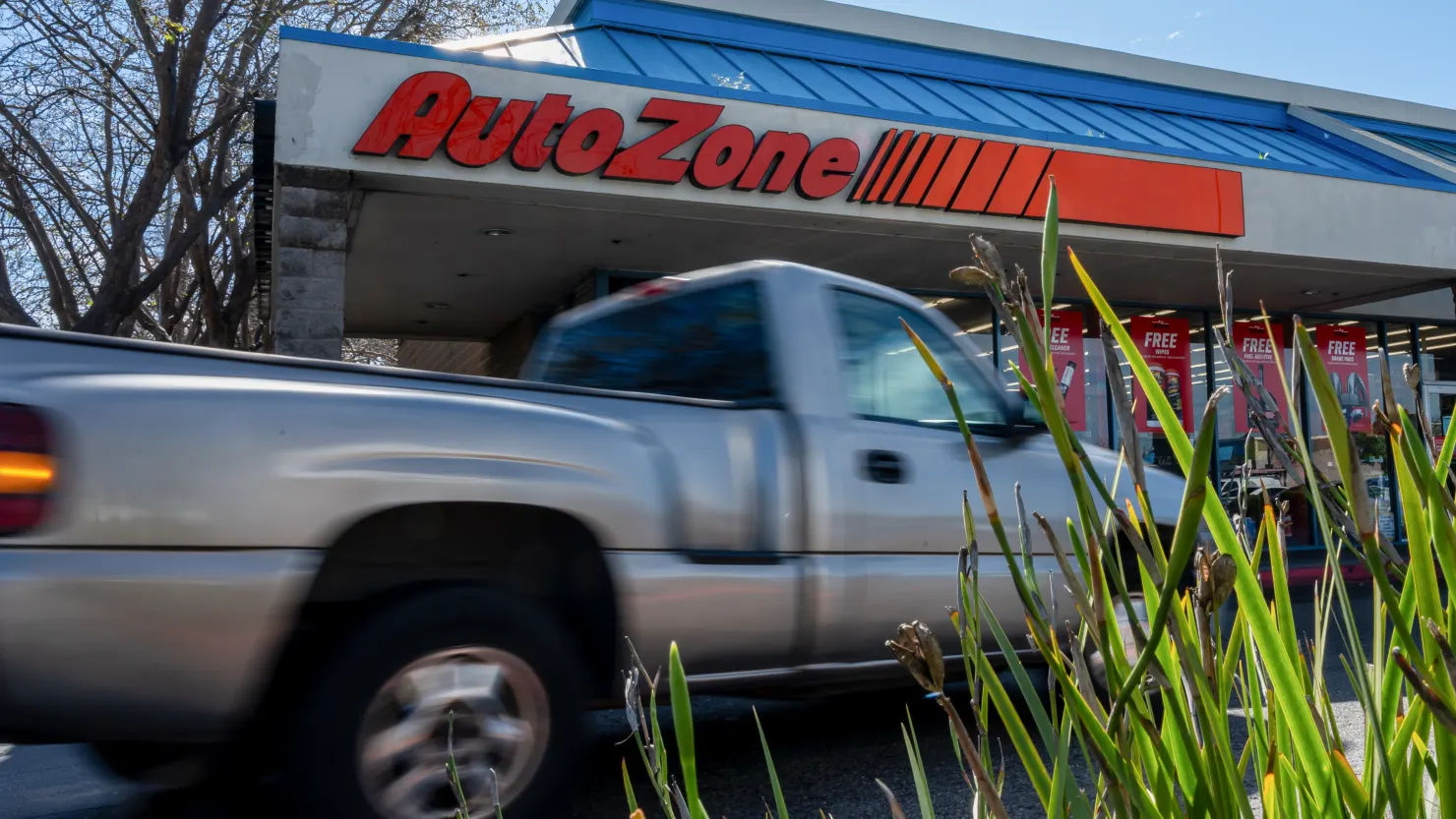
The automotive parts and service market has encountered an unexpected paradox that has forced investors to rethink the resilience of retailers amid a shifting macroeconomic environment. Major US sector player AutoZone delivered financial results that exceeded Wall Street expectations, yet the market reaction turned out to be the harshest in the past four years. We at NEWSCENTRAL note that this situation clearly illustrates how investor focus has shifted from current performance to long-term risks tied to international expansion and supply chain stability. During trading, the retailer’s shares plunged 9 percent, marking the steepest decline since May 2022, when the stock dropped 9.5 percent. The negative momentum also continued in after-hours trading.
According to official reports for the third fiscal quarter ended May 9, AutoZone’s earnings per share reached $38.07. This figure significantly exceeded the LSEG analyst consensus forecast of $36.28. Quarterly revenue totaled $4.84 billion, largely matching expert estimates but revealing only minimal comparable sales growth. According to analysts at NEWSCENTRAL, such strong operational profit performance would normally have triggered a rally, but this time the selloff was driven by qualitative rather than quantitative aspects of the report. During the quarterly conference call, investors and industry analysts focused on slowing international expansion and a 57-basis-point decline in gross margin to 52.2 percent, bringing the company closer to less efficient competitors due to pressure from the LIFO accounting system.
Additional pressure on the stock came after management acknowledged that US domestic sales slowed because of weather-related factors. AutoZone CEO Philip Daniele explained that an unusually cool spring delayed sales in product categories that traditionally gain momentum with the arrival of summer heat. Auto industry analyst Jessica Kline from NEWSCENTRAL believes that attributing weak sales solely to weather conditions appears to be a standard attempt to mask a broader slowdown in consumer demand, as independent market data indicates that American car owners are increasingly cutting back on vehicle maintenance and postponing non-essential repairs. This trend is undermining revenue far more severely than climate fluctuations. The company’s inventory growth of 10.8 percent to $7.56 billion further confirms that warehouses are filling up with unsold products.
Beyond weather-related issues, Wall Street is increasingly concerned about macroeconomic pressure, including inflation, energy price volatility, and potential logistical disruptions amid geopolitical tensions surrounding Iran. One of the most discussed risks has become a possible shortage of motor oil supplies. Company management acknowledged inflationary pressure, although it described the impact as moderate due to last year’s high comparison base. Regarding lubricant supplies, executives remain optimistic, stating that restrictions are unlikely despite alarming signals from official dealers representing major Asian automakers. Philip Daniele stressed that the company expects only minor limitations rather than a global product shortage.
Nevertheless, industry sources confirm the seriousness of the raw material problem linked to the closure of the Strait of Hormuz and damage to refining infrastructure in the Middle East. Major automakers including Toyota Motor and Nissan Motor have already issued internal directives to service centers requiring strict rationing and distribution of motor oil inventories. Nissan representatives confirmed severe restrictions from suppliers of base oils and additives, adding that the company has been forced to cut supply allocations to 55 percent of last year’s levels in order to preserve stability across its dealer network while searching for alternative sourcing channels. The situation is worsening because around 44 percent of Group III base oils are imported from the affected Persian Gulf region. We at NEWSCENTRAL see this as a sign of an emerging structural crisis in the technical fluids market that will inevitably impact retail chains on the scale of AutoZone, since independent oil manufacturers depend on the same refining infrastructure as OEM suppliers. Toyota has already instructed dealers to temporarily replace ultra-low-viscosity oils such as 0W-8 and 0W-16 with thicker alternatives, putting hybrid vehicle warranty servicing at risk.
In assessing the sector’s prospects, we highlight that the automotive retail industry is entering a period of increased turbulence. AutoZone’s margin decline toward competitor levels signals the end of the super-profit era fueled by the post-pandemic vehicle shortage and explosive growth in the used car market. NEWS CENTRAL forecasts that investors should not expect a rapid recovery in the company’s stock over the next two quarters. The retailer will likely have to spend more to maintain market share, combat cost inflation, and restructure logistics operations, all of which will continue pressuring profitability. Meanwhile, the shortage of base oils in the US market could persist until mid-2027. To minimize risks, management must urgently diversify its lubricant supplier portfolio by shifting focus toward domestic producers and revising pricing strategies in the commercial contract segment. For now, investors are advised to remain cautious until operational margins stabilize and the supply chain situation becomes clearer.