
The automotive giant Stellantis is unfolding a large-scale expansion strategy in the North American market, betting on a deep reset of its historical brands. We at NEWSCENTRAL have carefully analyzed the corporation’s presented development plan and note that the stated goal of increasing regional sales by 35% by 2030 looks both ambitious and pragmatic. In an environment where the global auto industry is undergoing a period of harsh transformation, Stellantis chooses a path of portfolio diversification, bringing back to life brands that have been in stagnation for a long time. This step demonstrates the conglomerate’s intention not just to maintain market positions, but also to form new consumer niches in the US and Canada.
The main driver of the stated growth should be the revival of the Chrysler brand, which over recent years has actually depended on a single model in its lineup. According to internal company plans, sales of Chrysler and Ram Trucks should grow by 60%. At the same time, a more modest growth of 10% is set for the Dodge sports brand, while a 15% increase in indicators is projected for the iconic Jeep brand. The targets for the Fiat and Alfa Romeo brands, whose presence in North America is currently minimal, management preferred not to disclose.
Analysts at NEWSCENTRAL emphasize that the bet on Chrysler is the riskiest but potentially highly profitable part of the strategy. For a long time, the brand was associated exclusively with the declining minivan segment, and its radical renewal requires surgical precision in positioning. The 60% growth for Ram looks more predictable, given the traditionally high demand for pickups in the US, but maintaining marginality in this sector will require serious technological innovation from the company.
The head of the Ram division, Tim Kuniskis, who coordinates the conglomerate’s American brands, outlined specific targets. Total sales of local brands should increase from last year’s 1.4 million units to 1.9 million vehicles by 2030. Notably, this growth is planned to be achieved against the backdrop of market stagnation, as total sales of the entire US automotive industry during this period are projected to freeze at around 20 million cars per year. The tool for expansion will be a 50% expansion of the model range, where the focus will shift to basic affordable platforms and high-performance versions.
As NEWSCENTRAL automotive analyst Jessica Kline notes, growth in a stagnant market is only possible through aggressive displacement of competitors. Expanding the model lineup by half is a colossal burden on production capacities and supply chains, yet it is precisely this diversity that will allow Stellantis to cover the maximum number of consumer demands and compensate for falling demand in individual segments.
The financial side of the matter is entrusted to CEO Antonio Filosa, under whose leadership a five-year restructuring plan worth 60 billion euros is being launched, which is equivalent to approximately 69.7 billion dollars. Management emphasizes that the company will not have to choose between volume and profitability; an simultaneous improvement of both indicators is planned. Stellantis plans include increasing revenue in the North American region by 25% by 2030 while maintaining an adjusted operating margin in the range of 8% to 10%.
We at NEWSCENTRAL believe that maintaining an operating margin of up to 10% with such investment volumes will require unprecedented platform unification. Filosa is betting on synergy within the conglomerate, and the success of the restructuring will depend on how effectively the company can distribute development costs between European and American divisions.
An important element of the new pricing policy will be the expansion of the lineup of affordable cars costing less than 40,000 dollars. Their number will grow from two to nine models by 2030. For the Chrysler brand, this means the appearance of three new crossovers, including offers priced below 30,000 dollars, which will allow the brand to emerge from the narrow niche of family minivans. At the same time, a multiple growth of the SRT high-performance vehicle segment is planned. The release of eight new models of this series should boost sales from a modest 3,000 units to 50,000 vehicles over the same period.
According to NEWSCENTRAL analysts, a simultaneous attack on the budget and premium sports segments reflects a balance strategy. Affordable Chrysler crossovers will provide the necessary mass sales volume and loyalty of a pragmatic audience. Meanwhile, the expansion of the SRT lineup is aimed at maximizing profit from each unit sold, because the marginality of such cars, which use a standard component base but sell at a significantly higher price, multiple times exceeds the indicators of mass market models.
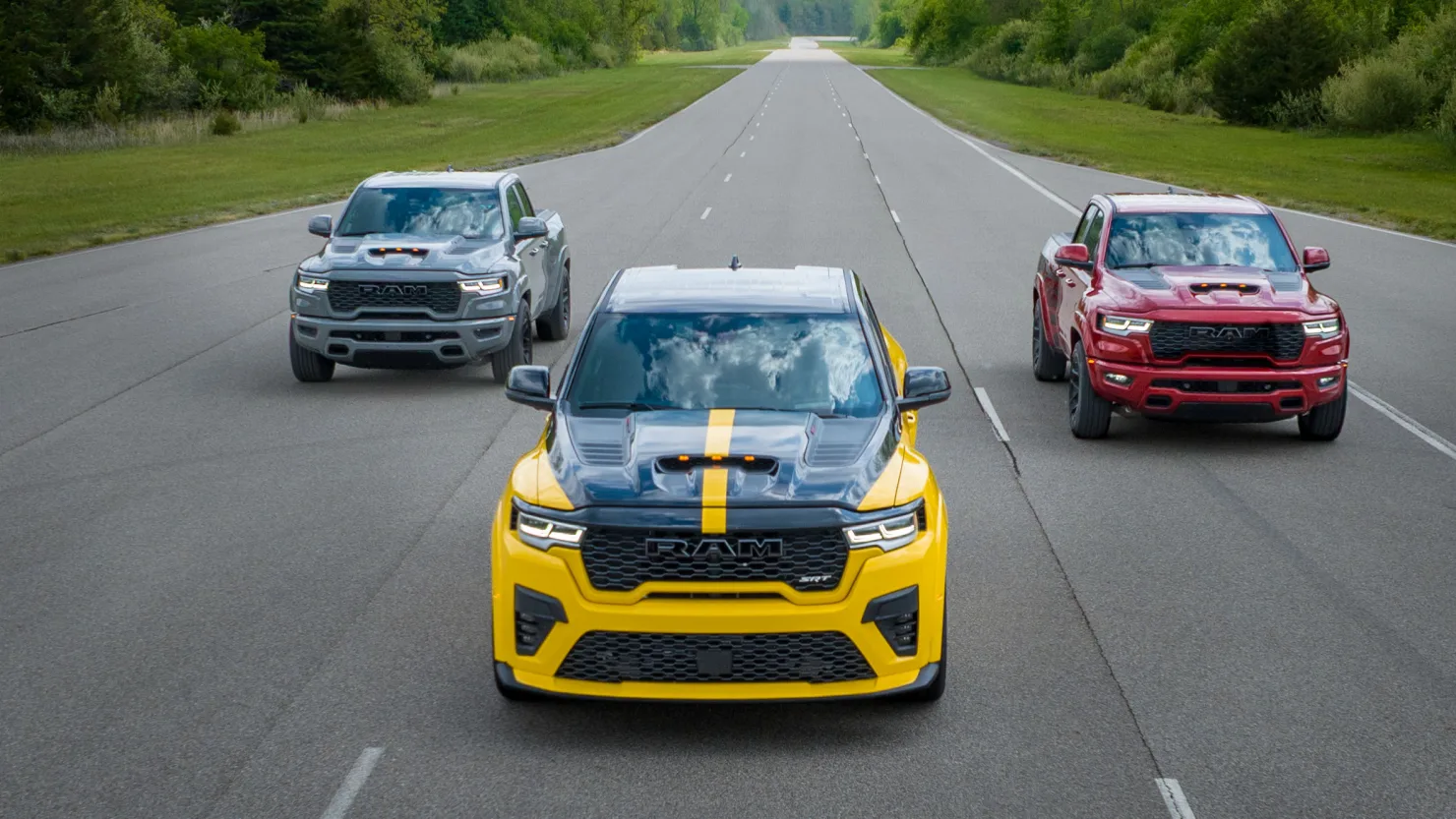
For the Ram brand, the release of a new mid-size pickup and a full-size SUV is planned. The Jeep lineup will receive scheduled updates, and Dodge will be reinforced with a new crossover. Special attention is paid to cars of the so-called halo lineup, which shape the image of the brands. An example of this approach was the introduction of the Ram Rumble Bee performance SUV series, equipped with V8 engines and unique design solutions. Leading this expansion will be the flagship SRT Hellcat with a 6.2-liter supercharged Hemi V8 engine producing 777 horsepower, capable of reaching speeds up to 170 miles per hour.
At NEWSCENTRAL, they project that retaining high-power V8 engines in an era of strict environmental standards will become a strong marketing trump card for Stellantis. While competitors are massively switching to small-displacement turbo engines and electric drive, Stellantis gathers an audience of automotive purists. SRT products attract young and financially successful buyers, creating an aura of exclusivity around the company’s quite standard engineering platforms.
Analyzing the presented strategy, we at NEWSCENTRAL come to the conclusion that Stellantis has chosen an aggressive but economically calculated development trajectory in the American market. The combination of budget Chrysler crossovers and ultra-powerful modifications of Ram and Dodge will allow the conglomerate to minimize the risks of cyclical demand fluctuations. At NEWS CENTRAL, they project that the key challenge for the company will be maintaining a balance between investing in traditional internal combustion technologies for the SRT lineup and global requirements for reducing the carbon footprint. For the successful implementation of the plan, the automaker needs to tightly control production costs at local plants. As a recommendation, the experts of our publication note the importance of maintaining a price advantage in the segment up to 30,000 dollars, since affordability will be the decisive factor in the struggle for the American consumer in the coming years.