
The global media market is undergoing a phase of deep structural realignment, where traditional distribution approaches are giving way to complex digital monetization ecosystems. The massive strengthening of entertainment giant Disney’s position in the advertising sector serves as a strategic response to the steady decline in cable television margins and the natural stabilization of organic subscriber growth across streaming services. On Wall Street, gross subscriber base figures are no longer viewed as the primary driver of market capitalization, giving way to metrics like average revenue per user (ARPU) and the operating profitability of digital platforms. Under these macroeconomic conditions, the corporation’s ability to consolidate fragmented media assets into a single end-to-end commercial offering becomes a fundamental survival factor. We at NEWSCENTRAL view this transformation through the prism of Rita Ferro’s integration strategy, whose years of executive experience are turning Disney’s advertising arm into the technological locomotive of the industry.
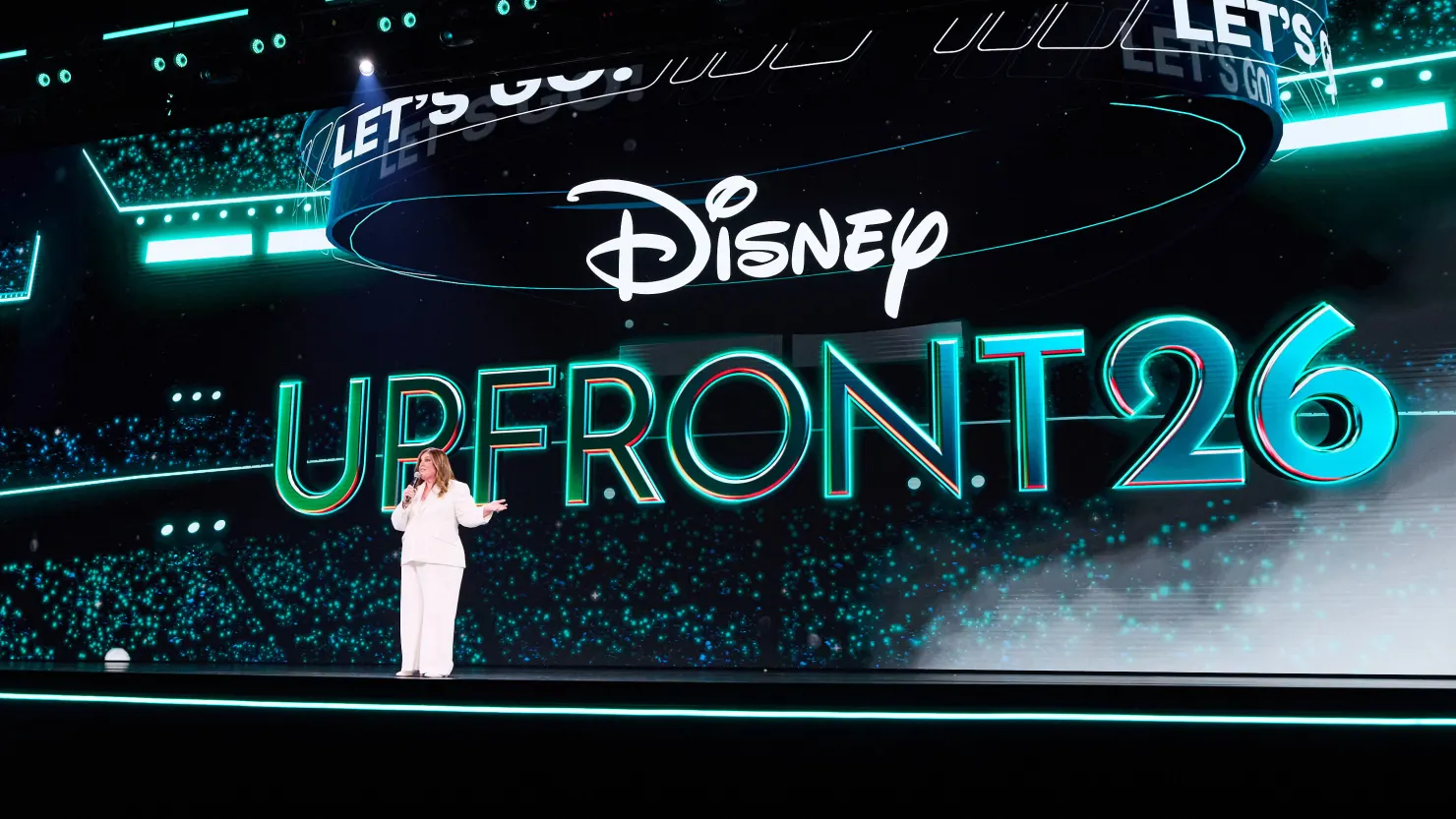
A striking demonstration of her influence within the professional community was the company’s recent annual industry event for key partners, where Ferro was invited onto the stage by actor Paul Anthony Kelly, known for his role as John F. Kennedy Jr. in the mini-series “Love Story” on the FX cable network. Their personal acquaintance at a past private gathering evolved into high professional trust, leading the top executive to invite the actor to personally introduce her at this business-critical presentation. From the stage, Kelly stated that Disney’s fundamental market advantage rests on a balance of trust, innovation, and unprecedented audience loyalty, calling it a direct result of the work done by the head of the global ad division. This episode reveals a calculated move to capitalize on institutional brand equity, where the synergy between the creative talent pool and top management translates into loyalty from advertisers, strengthening the conglomerate’s position ahead of tough upfront tariff negotiations.
With a 29-year tenure within the media giant’s structures, Ferro has navigated the corporation’s key transformational phases, heading at various times ESPN International, Disney Media Network’s kids and family broadcasting, as well as the later-dissolved digital arm Disney Interactive, which specialized in interactive products and mobile games. In 2018, she focused on the US domestic market, and in 2023, she assumed strategic leadership over all of the company’s global ad sales. Today, her expertise fully encompasses linear TV channels, digital media resources, and streaming services. As Freddy Miller, Senior Analyst at NEWSCENTRAL, notes, such a diverse background allows Ferro to effectively coordinate sales at the intersection of traditional and digital platforms – something critically important at a time when the industry is reimagining the value of advertising due to falling revenues from traditional content distribution.
Ferro’s personal trajectory also reflects the evolution of the industry. The daughter of Cuban immigrants who arrived in the US shortly before the Cuban Revolution, she grew up in Miami and originally planned a career as a copywriter and art director in New York. Realizing after her first courses at Florida International University that a creative major was not the right fit, she pivoted to fundraising for a production company representing Latino comedians. Ferro began her career in the advertising business in 1993 with the MTV Latin America team even before its official broadcast launch, essentially building the regional cable TV market from scratch in the absence of pre-existing templates. This experience of working in an unregulated and dynamic environment shaped her adaptive management style. Her current work schedule includes attending the CES tech show in Las Vegas, preparing for the Winter Olympics in Milano-Cortina, and conducting business meetings with ESPN Chairman Jimmy Pitaro. Pitaro notes that Ferro retains a unique ability to work directly in the field, combining strategic team leadership with personal involvement in deals with major brands – sets her apart from most top executives of a comparable level.
Amid massive personnel shakeups at Disney, the advertising strategy is becoming a key stabilizing factor. The recent appointment of Josh D’Amaro to the position of CEO concluded Bob Iger’s complex managerial cycle, who during his second term attempted to return film studios to a dominant position and modernize the theme parks. D’Amaro proclaimed a course toward integrating all divisions under the “One Disney” concept to create a seamless, personalized consumer experience. CFO Hugh Johnston confirms that management’s primary task is to maximize customer lifetime value to ensure cumulative growth in shareholder profit. Within this paradigm, advertising binds filmmaking, entertainment, and media platforms together, moving away from the outdated model of isolated sales for individual channels toward selling the comprehensive reach of the entire ecosystem.
Ferro’s areas of responsibility include high-profile broadcasts on the level of the Academy Awards and the Grammys, the streaming platforms Hulu and Disney Plus, as well as the entire sports portfolio represented by ESPN channels. Debra O’Connell, president of Disney Entertainment Television, characterizes the structure created by Ferro as a one-stop shop for advertisers, easing navigation through a massive portfolio of brands. This strategic solution is particularly relevant against the backdrop of a prolonged industry crisis, manifested in the shrinking cable TV subscriber base and fierce competition for viewer attention from social media platforms like TikTok.
The transition to streaming has made advertising the primary tool for achieving operating profitability. While in the early stages investors evaluated only gross subscriber growth, the launch of ad-supported subscription tiers has now become a key criterion for the commercial sustainability of platforms. Full control over the market pioneer, Hulu, transferred to Disney in 2025, and the flagship Disney Plus service introduced a similar, lower-priced ad-supported subscription at the end of 2022. According to the conglomerate’s latest financial reports, streaming revenue successfully offset the decline in linear TV earnings, demonstrating double-digit percentage growth in ad revenues on Disney Plus, which confirms the validity of the chosen path.
Live sports broadcasts remain the main generator of premium audiences and ad budgets, despite the skyrocketing cost of rights. Under the current 11-year NFL agreement worth 111 billion dollars and the newly launched 11-year NBA contract valued at 77 billion dollars, media companies are forced to maximize the monetization of these investments. For Disney, this means selling sponsorships on ABC and ESPN, including the upcoming Super Bowl, the rights to which returned to ABC after a twenty-year hiatus. The cost of a 30-second commercial during this broadcast is projected at a record 10 million dollars. An additional factor for commercial growth was the launch of the updated ESPN streaming app, which united all broadcast and exclusive content of the corporation’s sports wing – something highly valued by advertisers who require massive, simultaneous audience reach.
Technological superiority is becoming a key barrier for competitors in the global ad market. The corporation has significantly upgraded its tech stack, introducing tools for the seamless blending of streaming and linear broadcasts for ad buyers, expanding partner programs for effectiveness measurement, and creating Disney’s Audience Graph – its own proprietary first-party database on content viewing. In 2025, the company also presented a new methodology for calculating monthly active ad-supported users. At tech presentations during CES, the ad division announced new analytical tools, including an ecosystem of Data Clean Rooms, the Disney Compass integration platform, and the Disney Select AI Engine for precision targeting. Creating a data ecosystem independent of third-party platforms has allowed Disney to compete directly with Big Tech giants like Google and Meta in terms of targeting accuracy. Executive Vice President Josh Mattison points to Ferro’s personal role in deeply mastering digital tools for the global scaling of the company’s ad products and swift responses to market demands.
The next stage for the advertising division is international expansion, aimed at replicating the successes of the American model. The corporation has already recorded a reach of 157 million monthly active ad-supported users globally. Since the primary growth of new streaming audiences occurs outside the United States, D’Amaro states the intention to scale the advertising model in overseas markets by increasing investments in local content. For Ferro, this signifies a return to the international roots of her career. The top executive’s plans include getting acquainted with the VivaTech European technology exhibition in Paris, where a series of meetings with global brands is scheduled to discuss adapting American advertising practices to the specifics of regional markets.
NEWS CENTRAL believes that Disney’s chosen path toward technological independence, the development of ad-supported models in streaming, and the consolidation of sports rights will secure the company’s long-term leadership in the post-cable era. We see a stable commercial foundation in the integration of ESPN sports broadcasting and the Disney Plus ad model, which is least susceptible to cyclical market fluctuations. Media giants are advised to accelerate the development of their own data identification platforms and targeting algorithms, as reliance on external tech providers is becoming the main risk to media business margins in the long term, and the ability to control one’s own audience data dictates the real value of a company in the market.