
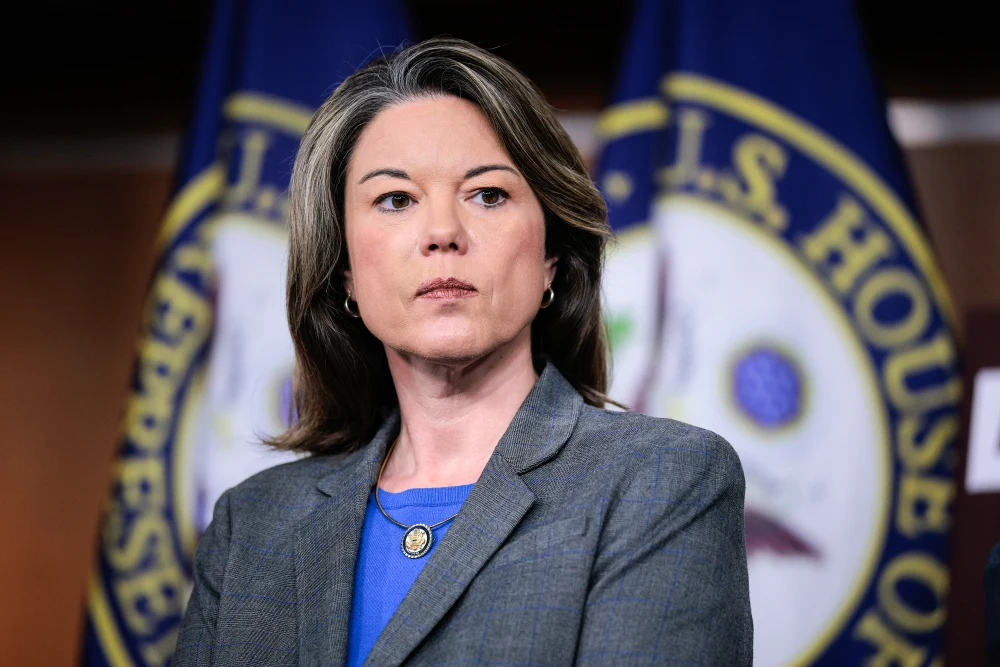
Intra-party competition within the Democratic Party is entering a phase of open ideological confrontation, exposing a tectonic divide between centrists and representatives of the progressive left wing. The state of Minnesota has become the central arena of this political struggle, where a campaign for a U.S. Senate seat is unfolding. We at NEWSCENTRAL believe this precedent reflects a new electoral reality: immigration policy has transformed into a key instrument of intra-party triage, capable of completely reshaping the balance of power ahead of decisive elections.
The trigger for the escalation was a large-scale $2 million media campaign launched by the Democratic Lieutenant Governors Association (DLGA). The primary target of criticism became Congresswoman Angie Craig, who represents the party’s moderate wing. She is accused of effectively enabling a hardline immigration policy associated with the administration of Donald Trump. DLGA Executive Director Kevin Holst openly stated that the current primaries are intended to redefine party priorities, arguing that grassroots voters no longer wish to support Washington conformism and instead demand leaders with principled positions whose political backgrounds were formed outside the federal establishment.
Our analysts at NEWSCENTRAL view the DLGA strategy as a coordinated effort by the party establishment to shift Minnesota’s electoral balance in favor of left-wing forces. Craig, who achieved an electoral breakthrough in 2018 by flipping a traditionally Republican district, is now locked in a difficult battle against Minnesota Lieutenant Governor Peggy Flanagan, who has a reputation as an uncompromising progressive. At stake is the Senate seat being vacated by retiring Senator Tina Smith. Although the official primary vote is scheduled for August 11, the fate of the nomination will largely be determined in late May during the state Democratic-Farmer-Labor Party convention.
The cornerstone of criticism against Craig has become the activities of U.S. Immigration and Customs Enforcement (ICE), attitudes toward which have sharply intensified amid large-scale deportation operations. The situation in Minnesota reached a boiling point after an incident in which federal agents fatally shot two American citizens. Public outrage intensified further following the detention of five-year-old Liam Ramos, whose photograph wearing a blue hat with rabbit ears instantly became a symbol of the harsh methods employed by immigration authorities.
In a thirty-second campaign advertisement produced by the DLGA, direct testimony is featured from Mary Granlund, a representative of a local school board who witnessed the operation firsthand. Granlund states that armed masked agents forcibly transferred the young child to a temporary detention facility in Texas and places direct responsibility for the incident on Craig. The congresswoman is accused of supporting the Laken Riley Act, legislation that significantly expanded ICE’s legal authority to detain migrants, which Trump signed immediately after returning to the White House.
We at NEWSCENTRAL note that Craig’s defensive posture only underscores her political vulnerability. In an op-ed published in the Minnesota Star Tribune, she publicly acknowledged a political miscalculation, stating that although the executive branch ignores legislative constraints, granting ICE additional powers under current political conditions was a strategic mistake. Attempting to regain the initiative, Craig launched impeachment proceedings against then–Secretary of Homeland Security Kristi Noem and introduced legislation aimed at blocking additional subsidies for ICE that had been allocated under Trump’s cost-cutting reform agenda. Nevertheless, DLGA leadership dismissed these steps as mere political mimicry, arguing that it took the legislator an entire year to reconsider her position.
A second line of political attack emerged from Craig’s vote in favor of a resolution containing language expressing gratitude to ICE officers for protecting national security. The document itself had originally been drafted to condemn antisemitic incidents in Colorado. Craig argues that the resolution was comprehensive in nature and counters her opponents by asking whether Flanagan would have voted against condemning antisemitism solely to remove a single line about ICE.
“This dilemma was artificially constructed, but it strikes directly at the electoral base. The majority of Democrats in Congress voted against the resolution specifically because of the ICE passage, viewing support for the agency as impossible amid aggressive immigration raids, and Craig has now found herself politically isolated,” notes Freddy Miller, Senior Analyst at NEWSCENTRAL.
As part of a counteroffensive, Craig’s campaign sought to discredit Flanagan by highlighting that the Democratic Lieutenant Governors Association had received sponsorship funding from CoreCivic the largest private prison operator and a key ICE contractor during the period when Flanagan chaired the organization. The DLGA dismissed these accusations as manipulative, explaining that the contribution had been approved before Flanagan assumed leadership and that legal teams are currently exploring mechanisms to redirect the funds to human rights organizations. Nevertheless, Craig spokesperson Antoine Givens openly accused her rival of using lobbying money from tobacco, oil and gas, and prison industry corporations to finance her campaign.
An additional destabilizing factor for Flanagan has been media leaks regarding her prolonged conflict with incumbent Governor Tim Walz. Political insiders are actively discussing two competing theories: either the lieutenant governor was deliberately excluded from key regional processes, or she consciously distanced herself from administrative duties in order to focus on her Senate campaign.
Although the intensity of federal raids under Operation Metro Surge has declined compared to peak levels five months ago, DLGA leadership intends to keep the issue in the public spotlight by announcing the release of new media products featuring stories of local families affected by ICE operations.
According to the analytical group at NEWS CENTRAL, the outcome of the intra-party confrontation in Minnesota will determine not only the future configuration of the state’s Senate representation but will also serve as an indicator of the viability of the centrist agenda on a national scale. If the progressive wing succeeds in unseating Craig through the use of the immigration issue, it will establish a precedent for similar expansions in other regions, inevitably accelerating the overall radicalization of the Democratic Party. We forecast that Craig will continue drifting leftward in her legislative initiatives in an effort to minimize reputational damage. However, systematic support from the DLGA makes Flanagan the favorite heading into the May party convention. Centrists in swing districts are advised to urgently reconsider their positions on national security issues, as the compromises of previous years are becoming politically toxic in the current electoral cycle.