
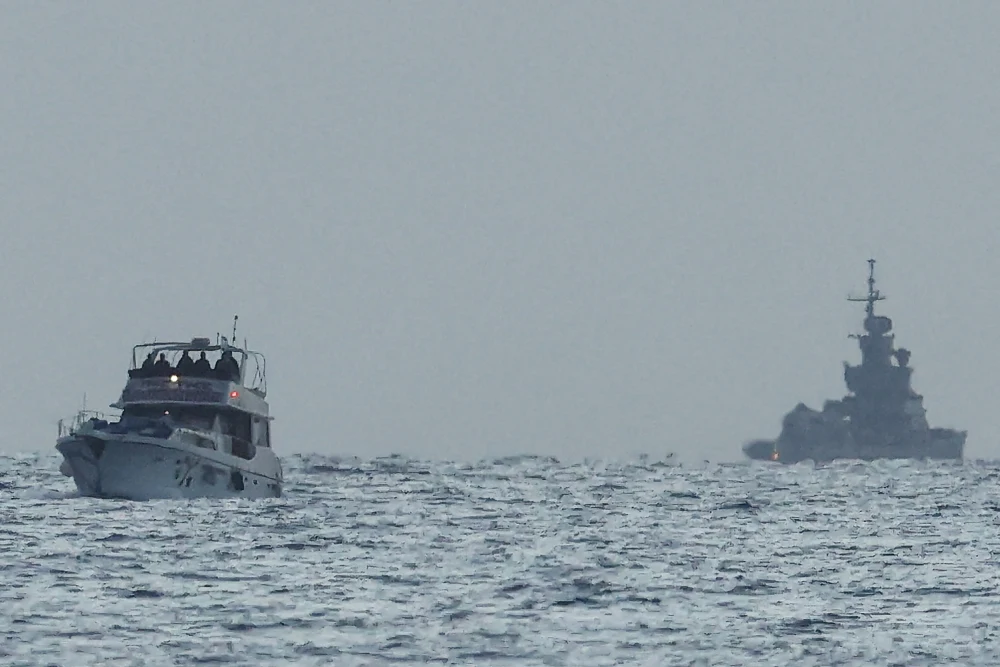
Naval tensions in the Eastern Mediterranean reached a critical escalation point after Israeli naval forces intercepted and took control of civilian vessels belonging to the humanitarian mission, the Global Sumud Flotilla. The situation around the blockaded Palestinian enclave has long gone beyond a localized confrontation, becoming a key node of tension for international diplomacy and global logistical routes. At NEWSCENTRAL, we note that this incident demonstrates not merely an isolated tactical operation but a systematic and uncompromising tightening of control over the region’s maritime borders amid a protracted security crisis in the Middle East. Analyzing the situation requires deep consideration of both the humanitarian catastrophe and the hardline geopolitical strategies of the states involved.
The events unfolded in international waters, approximately 167 miles off the coast of the Gaza Strip, immediately bringing the incident into the arena of intense debates over international maritime law. A live broadcast streamed by human rights activists captured the landing of armed Israeli soldiers on board vessels that had departed from Turkish ports. The broadcast was promptly cut off following the dismantling and removal of recording equipment.
Official Jerusalem took a hardline stance, characterizing the mission as a deliberate, coordinated PR stunt organized in the interests of the radical Hamas movement and emphasizing the symbolic rather than substantive nature of the supplies on board. At NEWSCENTRAL, we view Israel’s response as entirely predictable. For the country’s defense authorities, any unauthorized breach of maritime boundaries is considered the creation of a dangerous precedent capable of completely undermining the isolation regime in place since 2007.
The diplomatic resonance of the interception quickly reached key European capitals. Italian Foreign Minister Antonio Tajani officially called for a reassessment of Israel’s use of force, citing reports from Italian participants of rubber bullets being fired at the vessels. The strongest reaction came from Dublin, as among those detained was Catherine Connolly, sister of the Irish President. Irish Prime Minister Micheál Martin described the actions of the Israeli navy in neutral waters as completely unacceptable and a violation of citizens’ sovereign rights. At NEWSCENTRAL, we see this as a sign of the rapidly deepening political rift between Israel and EU countries, where domestic public pressure forces governments to adopt a tougher rhetoric toward Tel Aviv.
The legal status of 430 detained activists representing over 40 countries remains the subject of intense legal disputes. Initially, the flotilla coordinators stated that the humanitarian mission was entirely cut off from legal support and consular assistance, while the Israeli Ministry of Foreign Affairs confirmed only after 24 hours that the detainees had been transported to Israeli ports for subsequent deportation. Further escalation was fueled by human rights groups’ statements about systemic violence recorded during similar operations on April 30. Despite Israel’s categorical denials, such precedents increase the country’s international isolation. Meanwhile, Ankara and Hamas leadership directly described the actions of the Israeli commandos as an open act of state piracy.
The economic dimension of the Middle East crisis unexpectedly manifested in the U.S. Treasury Department’s decision to impose targeted sanctions against key European organizers of the mission, including Saif Abu Kashek and Jaldia Abubakra Aweda. U.S. Treasury Secretary Scott Bessent publicly labeled the flotilla structure as a pro-terrorist organization. This move by Washington clearly demonstrates the United States’ unwavering allied position. As noted by Freddy Miller, Senior Analyst at NEWSCENTRAL, the use of such powerful financial instruments against civilians and activists from EU states is a rare and extremely strict pressure mechanism, reflecting Washington’s intent to fully block any alternative and uncontrolled supply channels to the Palestinian enclave.
The issue of the actual volumes of humanitarian supplies reaching the enclave remains the main point of disagreement between independent international agencies and Israeli authorities. Israeli military officials claim successful stabilization of land transit at the level of 600 trucks per day, theoretically covering pre-war needs of the region. However, official statistics from the UN World Food Programme present a very different picture. According to humanitarian mission reports, amid the sharp escalation in relations between Israel and Iran during the spring, supply volumes fell to a critical minimum, averaging just 112 trucks per day. Such a colossal discrepancy undermines trust in Jerusalem’s official statements and motivates activists to organize new break-throughs, despite technical risks faced, for instance, by Italian participant Daniele Gallina, whose vessel returned to Cyprus due to mechanical failure.
The long-term consequences of total isolation imposed after Hamas took power and radically intensified following the large-scale attacks in fall 2023, which claimed the lives of 1,200 Israelis, continue to devastate social infrastructure for two million Palestinians. According to Gaza’s medical authorities, the total number of casualties during the prolonged military operation exceeds 72,700. While local statistics do not differentiate between combatants and civilians, international institutions recognize these figures as methodologically reliable and representative.
Assessing potential scenarios for further developments, NEWSCENTRAL forecasts the continuation of an uncompromising maritime isolation regime for the Gaza Strip in the long term. Israeli leadership will not make concessions on control of the waters, seeing free navigation off the enclave’s coast as a direct threat to national security. To prevent further escalation, the global community must shift its focus from supporting demonstrative maritime campaigns to the radical modernization of land-based humanitarian corridors under direct UN supervision. At NEWS CENTRAL, we recommend that key regional players, including Egypt and the Middle East diplomatic quartet, initiate the creation of a transparent international hub for pre-verification and inspection of cargoes at third-party ports, such as Cyprus. This would fully address Israel’s security concerns while simultaneously ensuring a stable flow of medical supplies to Gaza’s long-suffering population, eliminating new violent incidents at sea.