
Kentucky Fried Chicken, the Yum Brands-owned chain whose identity has been inseparable from its original bone-in fried chicken recipe since Colonel Harland Sanders opened his first franchise in 1952, is pursuing one of the most substantive operational and menu transformations in its history. The company announced Monday the global rollout of what it describes as its next chapter – an initiative that touches its menu architecture, restaurant design, beverage offering, and brand positioning across more than 34,000 restaurants in over 150 countries. A new KFC restaurant currently opens somewhere in the world roughly every 3.5 hours. The strategic pivot is deliberate and commercially motivated: same-store sales declined for six consecutive quarters through the end of 2025, while competitors built around boneless, sauce-forward chicken formats have captured a growing share of the quick-service chicken category. NEWSCENTRAL reads this not as a brand refresh but as a structural repositioning of a legacy fast-food giant confronting a generational shift in how consumers prefer to eat chicken.
The most consequential element of the transformation is the move away from bone-in chicken as the primary product. KFC Chief Concept Officer Christophe Poirier stated that the chain is shifting its focus to chicken tenders, engineering a completely overhauled recipe designed to produce the largest, most succulent, and crunchiest tenders available in the quick-service restaurant market. A new format called the Dunked Range features pre-sauced chicken tenders coated in bold flavors including Fiery Texas BBQ Sauce, expanding into a category that Chick-fil-A, Raising Cane’s, and Wingstop have built dominant positions in while KFC’s original product positioning remained anchored to the bone.
The sauce strategy is central to the rebrand. KFC is introducing a global sauce portfolio featuring more than 20 varieties, tailored to local tastes across markets. Examples announced for various markets include Chimichurri Ranch and Hot Honey Habanero. The company is explicitly targeting the consumer behavior pattern that has driven growth at Wingstop and similar chains: the desire for customizable, sauce-intensive meals that feel interactive rather than standard. Alongside the sauce expansion, KFC is accelerating its KWENCH by KFC beverage platform – a lineup featuring boba refreshers, milkshakes, sparkling lemonades, and iced coffees – from a pilot program to permanent menus in Australia and Canada this year, with broader global rollout to follow.
Freddy Miller, Senior Analyst at NEWSCENTRAL, observes that KFC’s competitive challenge is not simply one of menu relevance but of brand positioning in a market where the chicken segment has fractured into highly specialized formats. Raising Cane’s built a major business on a menu so narrow it has one chicken item. Wingstop built one around sauced wings and the ordering-in-advance model. Chick-fil-A built one around service culture and sandwich quality. KFC’s historical breadth – buckets, tenders, sandwiches, sides – is simultaneously its asset and its liability, because it positions the brand as everything to everyone at a moment when consumer behavior rewards distinctive identity. The rebrand attempts to resolve that tension by anchoring on tenders and sauce, but the executional challenge of transforming the menu experience at 34,000 locations across 150 countries simultaneously is formidable.
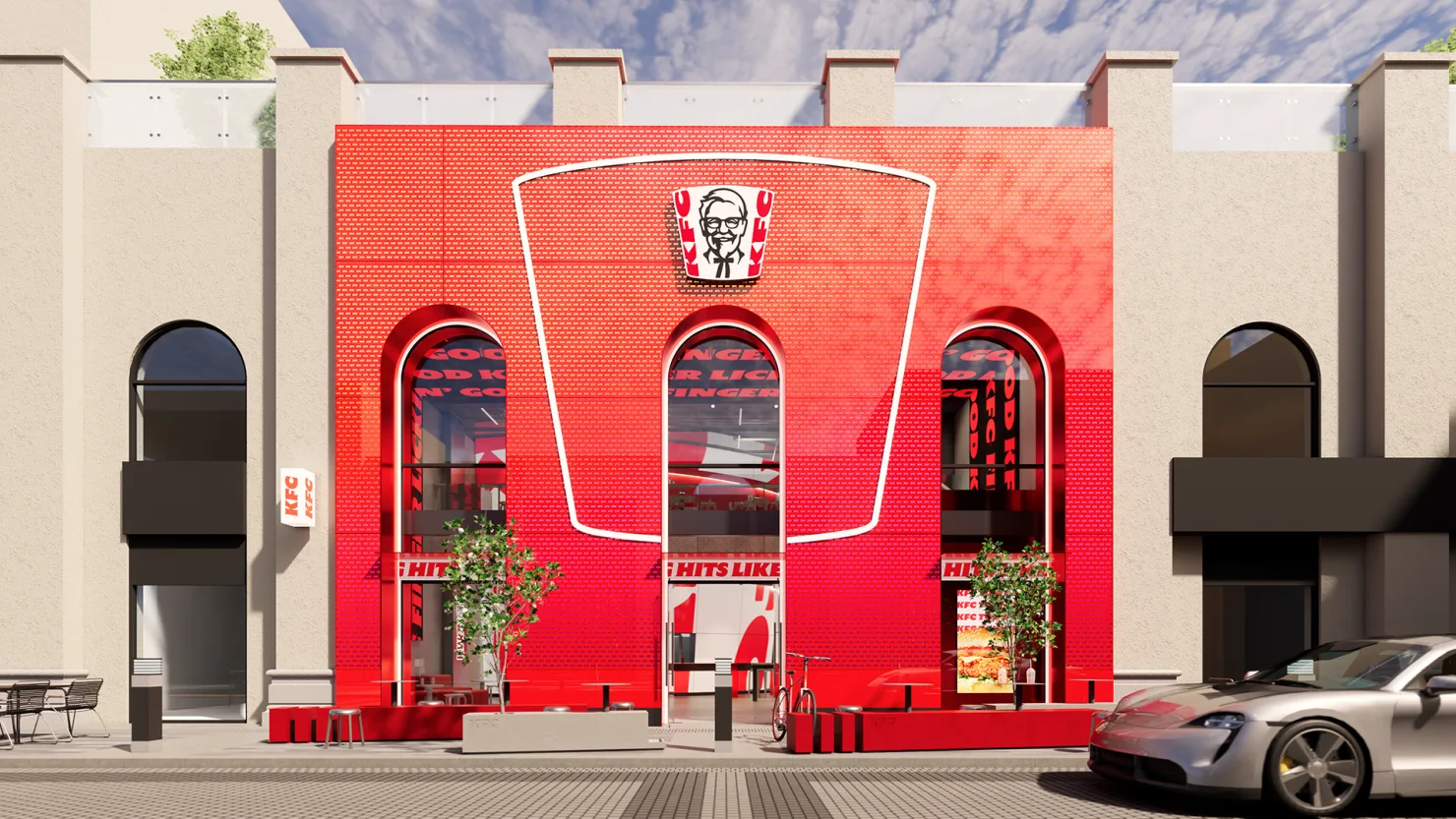
The restaurant design component of the initiative is intended to reinforce the new positioning physically. KFC is rolling out open-concept store formats that it describes as immersive, beginning with locations in the UK and Ireland before expanding to Australia and subsequently the United States and other markets. The visual and spatial redesign is meant to signal the brand shift to consumers who associate existing KFC locations with the traditional bucket-and-counter format. That rollout will be gradual given the scale of the global estate, meaning the full consumer impact of the design changes will lag the menu changes by months or years in most markets.
The competitive context for this transformation also includes the World Cup, which KFC’s parent Yum Brands is treating as a marketing platform for the rebrand launch. The timing is deliberate: major sporting events create accelerated consumer exposure windows that brand campaigns can leverage for disproportionate awareness gains. As we in NEWS CENTRAL note, the strategic logic of the KFC overhaul is sound – the chicken category is growing globally, boneless formats are taking share, and the sauce-customization trend has demonstrated commercial durability across multiple markets. The execution risk lies not in the strategic direction but in whether KFC’s franchisee network, which operates the vast majority of its global locations, will adopt the new formats, recipes, and beverage platforms consistently enough to produce a coherent brand experience across markets where operating conditions, labor costs, and consumer preferences vary enormously.