
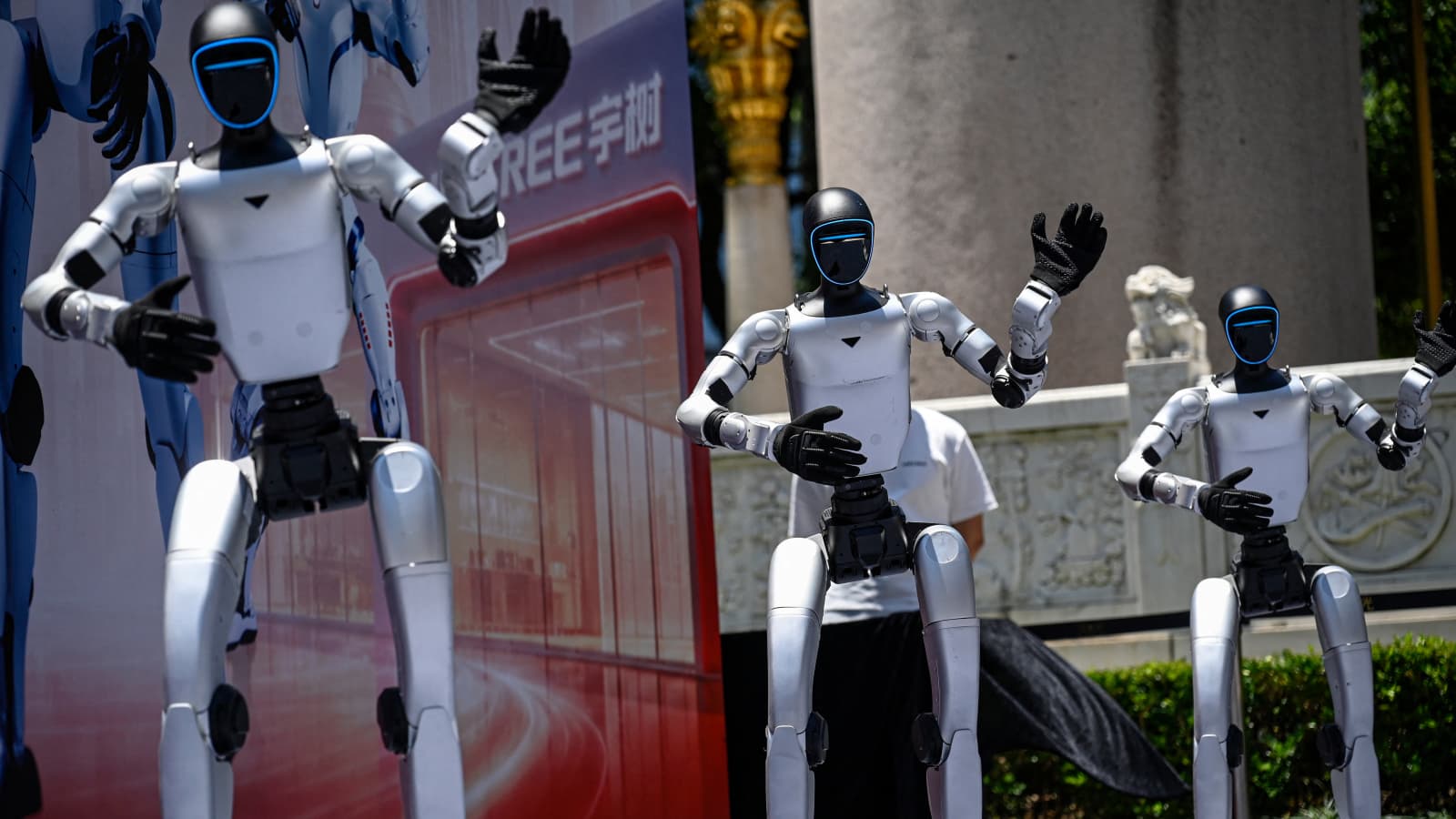
The global capital market is undergoing a tectonic shift comparable in scale to the dawn of the personal computer era. The development of physical artificial intelligence is moving robotics from the category of niche industrial manipulators into the status of a fundamental driver of the global economy. We at NEWSCENTRAL note that the integration of anthropomorphic machines over the next decade will radically reshape the structure of industrial production, logistics chains, and the commercial real estate sector. The ongoing technological convergence, where software neural networks are finally gaining a flexible physical embodiment, marks the beginning of a new investment era. This will inevitably lead to a massive redistribution of liquidity in the stock markets, opening up unprecedented opportunities for long-term capital.
The scale of the upcoming changes is confirmed by a recent statement from Softbank CEO Masayoshi Son, who on CNBC called physical AI and robotics the space for the emergence of the next corporation with a capitalization exceeding a trillion dollars. Our analytical division at NEWSCENTRAL views this forecast as a natural evolution of the IT industry, since the digital environment has become too cramped for algorithms. Real value add is now being formed at the intersection of software and mechanics. Companies capable of creating a standardized operating system for autonomous hardware will gain market influence exceeding the positions of today’s software giants. The practical contours of this trend are already visible today in the form of robotic baggage handlers in Japan’s hub airports and Tesla’s ambitious program to integrate Optimus humanoids into its own auto assembly plants.
The financial parameters of this transformation are staggering. According to Barclays estimates, the current volume of the global humanoid robot market barely reaches two or three billion dollars, but by 2035 it is projected to show explosive growth to two hundred billion dollars. We are talking about a hundredfold increase in the sector’s capacity. Analysts at NEWSCENTRAL emphasize that the key factor behind this dynamic is the transition to third-generation automation. Previous stages of robotization required isolating machines in special safety zones and hard-programming them for a single task. The current generation of androids, however, is being designed for existing human-centric infrastructure, eliminating the need for capital restructuring of factories and warehouses.
The macroeconomic trigger for such rapid technology adoption is a critical labor shortage caused by demographic decline in developed industrial countries. An aging population, rapid urbanization, and tectonic shifts in employment structures are creating systemic gaps in the labor market. Humanoid robots are designed to replace humans in routine, dangerous, and physically demanding areas. Currently, machines are successfully mastering basic logistics operations, such as moving boxes and sorting cargo on conveyor lines, solving the shortage of frontline personnel.
As multimodal models qualitatively improve and sensor data processing latencies decrease in real time, the geography of android applications will begin to expand rapidly. As Freddy Miller, Senior Analyst at NEWSCENTRAL, notes, the emergence of commercially viable physical agents in the service sector could eliminate the prolonged stagnation of labor productivity in European and American economies, where over 70% of gross domestic product is generated precisely in the service industry.
According to current forecasting models, the expansion of androids will develop in waves. The first phase, projected up to 2030, will focus on heavy industry, distribution hubs, the agricultural sector, and capital construction. The second wave, expected after 2030, will be marked by the entry of robots into the consumer market, healthcare, elderly care, education, and the hospitality business.
In a geographical context, China is becoming the key point of concentration for technological capacity, having turned into the planet’s main innovation laboratory. China currently accounts for about half of all industrial robots in the world. The country has commissioned around three hundred thousand industrial machines, while the United States installed only thirty-four thousand during the same period. The density of robotization in Chinese manufacturing has increased by an unprecedented 600% since 2016, reaching five hundred robots for every ten thousand jobs.
In the segment of anthropomorphic systems, China holds absolute leadership, accounting for about 85% of global installations over the past year. At the same time, Beijing’s main economic weapon is cost. Chinese companies manufacture equipment roughly two times cheaper than their Western opponents, keeping the average cost of a commercial android within fifty thousand dollars. NEWSCENTRAL predicts that this dumping by Asian suppliers will trigger a fierce price war, forcing American and European developers to shift their focus from hardware sales to monetizing proprietary software and subscription services under the robot-as-a-service model.
Representatives of major investment institutions, including the leadership of the Asian Income fund at Jupiter Asset Management with assets exceeding three and a half billion dollars, agree that in ten years the landscape of everyday life will change cardinally. The high rate of market saturation will lead to humanoid robots becoming an integral part of government institutions, defense departments, manufacturing sites, and private households.
Under such large-scale capital deployment, investors are looking for the most effective entry points into the sector. A number of managers are forming strategic positions in the Asian technology cluster, buying up shares of giants like TSMC, MediaTek, Samsung, Foxconn, ST Engineering, and Singtel. The logic behind this strategy is that the main beneficiaries of robotization at this stage are the suppliers of complex component bases, sensors, and computing chips. Analysts are intentionally reducing exposure to classical consumer sector companies, shifting capital into technology holdings. It is expected that in the coming years, the structure of discretionary consumer spending will shift from traditional durable goods toward purchasing personal robots and ecosystem gadgets.
Simultaneously, major American investment banks, including Wedbush Securities, evaluate the humanoid robot industry as one of the most fundamental market opportunities within the ongoing technological revolution. Experts see colossal financial potential in projects like Tesla’s Optimus. In specialized funds focused on artificial intelligence, the bulk of investments is still held by semiconductor and high-speed memory manufacturers, including Nvidia, Micron, Broadcom, and AMD.
At the same time, the most technologically advanced startups specializing exclusively on creating anthropomorphic platforms still remain private, non-public companies. The current balance of power demonstrates a clear advantage for China in terms of product time-to-market speed, while American corporations are forced to play catch-up.
We predict that within the next decade, the total capitalization and capacity of this market will reach trillion-dollar values, which will inevitably require governments and the corporate sector to develop new regulatory standards. Such a profound breakdown of habitual economic models carries not only a colossal growth in business margins, but also serious systemic risks for employment stability, cybersecurity of critical infrastructure, and personal data protection.
Based on a deep analysis of macroeconomic trends, we at NEWS CENTRAL recommend that investors build portfolios with two key vectors of physical AI development in mind. The first vector involves buying shares of companies that control the production of advanced microelectronics and lithography equipment, which are vital for processing neural network algorithms onboard robots. The second vector requires concentrating capital in Asian manufacturing holdings that possess ready-made supply chains for cheap mass engineering. The winners in the medium term will be structures capable of offering the market not just conceptual prototypes, but a scalable, commercially viable, and safe mechanical platform. The process of robotizing the global economy has passed the point of no return, and adapting to this reality will become the main economic trend of the coming decade.