
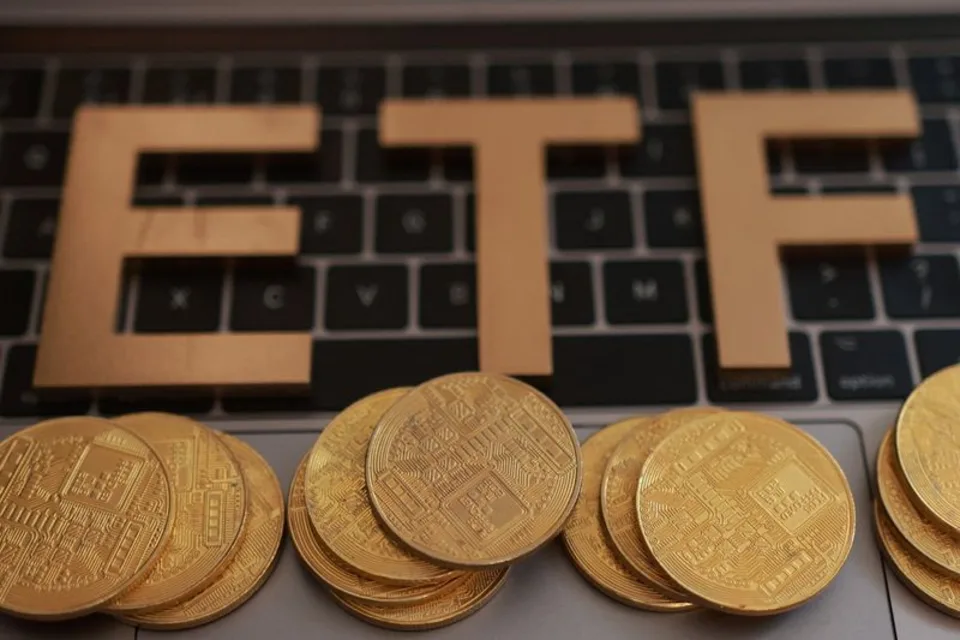
It took BlackRock, the world’s largest exchange-traded fund issuer, more than a decade to bring its first 300 products to market. Corgi Investments, a venture-capital-backed asset manager spun out of an AI-powered insurance company, intends to match that milestone in under twelve months. The firm executed two of the largest single-day ETF launches in industry history in rapid succession – 34 funds in early May 2026, immediately followed by a new record of 35 in June – and has filed with regulators for hundreds more. The pace is deliberate and the pricing is aggressive: Corgi’s leveraged ETF suite carries expense ratios of 0.45%, against a peer-group average of 1.12%, and select funds are priced as low as 0.20%. We at NEWSCENTRAL assess this as a genuine disruption to a product category that has accumulated significant fee inertia, rather than a novelty launch unlikely to survive its first redemption cycle.
The June batch consisted of 34 leveraged 2x Daily ETFs alongside the Corgi Inside Ownership 100 ETF, all listed on the Cboe BZX Exchange. The leveraged products offer 200% of the daily return of their respective reference assets, spanning U.S. and international equities across market capitalizations, sectors, themes, and development stages. The Inside Ownership 100 ETF tracks the 100 companies with the highest levels of ownership by their own corporate insiders – a governance-quality strategy built on the premise that executive and director skin-in-the-game is a durable signal of long-term business quality. Both the fee structure and the thematic breadth of the product lineup reflect a deliberate attempt to occupy as much of the addressable market as possible at a cost point incumbents cannot match without restructuring their own economics.
Corgi is not a traditional asset manager. It is the investment arm of the Corgi Company, which describes itself as an AI financial infrastructure firm, and its ETF business is cross-subsidized by Corgi Insurance, a startup insurance provider that operates on the same technology platform. That insurance-backed structure allows the ETF business to operate profitably at asset levels that would be financially unsustainable for standalone issuers who pay third-party white-label providers to develop their products. Edward Rumell, the ETF industry veteran leading the product launch operation, has noted that his nine-person team deploys AI models to scan social media platforms for real-time thematic demand signals, sourcing product ideas from retail investor conversations in real time. That feedback loop has produced first-to-market funds covering categories including semiconductor photonics, beauty industry companies, caffeinated beverage businesses, and corporate insider ownership. The Corgi Lithography and Semiconductor Photonics ETF surpassed $150 million in assets under management within two weeks of its May launch. Freddy Miller, Senior Analyst at NEWSCENTRAL, notes that the AI-driven product development loop is the element of Corgi’s strategy most likely to prove durable: a proprietary real-time demand signal that no incumbent has built gives the firm an identification advantage for thematic opportunities before they become crowded.
The commercial obstacles are equally real. Corgi remains unknown to the financial advisors who direct the majority of assets into ETF products, and brand trust in asset management accumulates over years of consistent performance rather than months of product launches. Industry observers have pointed out that the firm’s leveraged and buffer ETFs, while priced competitively, do not break new conceptual ground – they are better-priced versions of products that already exist. The firm’s thematic offerings, where it has demonstrated genuine first-mover capability in several niche categories, are more differentiated but also more subject to the boom-bust dynamics of retail thematic interest. The practical risk for a firm that has launched nearly 90 funds in under two months is concentration of operational risk: a large number of small funds that fail to attract enough assets will face mandatory closure, creating reputational noise that could offset the marketing value of the launch velocity.
Corgi’s overall AUM recently crossed $610 million – a credible early-stage milestone for a firm that did not exist in its current form a year ago, but a fraction of the threshold at which sustainable economics become secure for a broad product suite. The self-directed retail market that Corgi is explicitly targeting has been estimated at over $12 trillion in the United States alone, and the structural trend toward direct index investing and low-cost thematic exposure has continued to accelerate. Nathan Clark, Enterprise IT and Systems Architecture Analyst at NEWSCENTRAL, highlights that Corgi’s underlying technological infrastructure – AI-driven product ideation, automated regulatory filings, real-time social sentiment analysis – is building an operational capacity advantage that compounds with scale. The question is whether the distribution problem can be solved before the capital constraints of operating at break-even economics at current AUM levels begin to bind. The company’s insurance business backstop provides a runway that most standalone ETF issuers would envy, but it is not unlimited, and the pace of filing without proportional AUM growth will eventually require resolution.
For NEWS CENTRAL, Corgi is the most analytically interesting entrant in the ETF market in years – not because its products are definitively superior, but because its business model rests on cost and speed advantages that the incumbent firms cannot replicate without dismantling revenue structures they have spent decades building. Whether that is sufficient to build a durable business at the scale it is targeting is the question that the next eighteen months of asset accumulation data will begin to answer.