
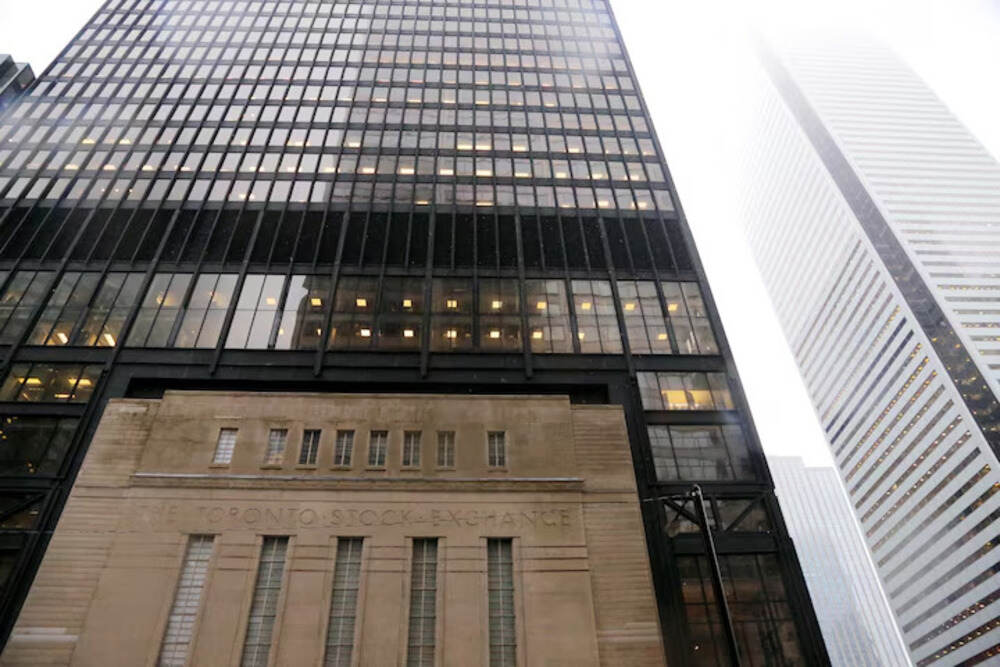
Global financial markets once again faced harsh geopolitical reality, which instantly corrected investor optimism and interrupted a steady upward trend. Canada’s main stock index declined, retreating from the historical highs recorded in the previous trading session. We at NEWSCENTRAL note that the key trigger for profit-taking and a localized risk-off move was a new escalation of the Middle East conflict, caused by a series of US military strikes on targets in southern Iran, including missile positions and minesweepers in the Bandar Abbas area. This move effectively erased hopes of a near-term diplomatic settlement and de-escalation in the region, despite ongoing talks in Qatar.
During the first half of trading, the Toronto Stock Exchange’s S&P/TSX Composite Index fell 0.6 percent, falling to 34,612.32 points, ending a four-day streak of uninterrupted gains. Tehran has already characterized Washington’s actions as a direct violation of the ceasefire that has been in effect for the past seven weeks. The situation was further exacerbated by US Secretary of State Marco Rubio’s statement that the conflict resolution negotiation process could be delayed indefinitely. We believe that the protracted nature of the standoff is forcing institutional investors to price Canadian assets with a long-term geopolitical risk premium, temporarily slowing the inflow of foreign capital.
The most pronounced decline was recorded in the materials sector, where shares of leading mining corporations lost about 1.4 percent amid falling global precious metal prices. As noted by Freddy Miller, Senior Analyst at NEWSCENTRAL, despite its traditional status as a safe-haven asset, gold came under pressure due to renewed investor concerns about persistent inflation and the prospect of sustained high interest rates from major global central banks. High borrowing costs reduce the attractiveness of non-yielding assets such as gold, which triggered a wave of selling in the TSX mining segment.
The overall trading picture looked quite pessimistic: nine out of ten major industry sectors of the index ended up in the red. The only exception was the energy sector, whose capitalization increased by 0.7 percent following rising oil prices. According to NEWSCENTRAL experts, new US strikes have escalated tensions around the Strait of Hormuz, a critical transport artery for global commodity supply. Strikes and uncertainty regarding the timing of the restoration of safe shipping create significant supply shortage risks, which traditionally benefit Canadian oil and gas companies, whose shares acted as a natural defensive mechanism for the local market.
In parallel with geopolitical factors, the Canadian market is preparing for important internal corporate catalysts. This week, leading financial institutions in the country are expected to present their quarterly reports. It is anticipated that the combined profit of Canada’s six largest banks will show growth in the range of 10 to 25 percent year-over-year for the reporting period ending April 30. We emphasize that these strong results are projected despite rising macroeconomic pressure, deterioration in consumer finances, and stagnation in the national real estate market. The Canadian banking sector maintains high operational efficiency, but elevated investor expectations may create conditions for short-term volatility if actual results fall slightly short of forecasts.
An additional long-term planning factor for businesses remains the external trade agenda. Next Monday, the first round of official discussions on updating the free trade agreement between the US, Mexico, and Canada is set to begin in Mexico. At NEWSCENTRAL, we expect these negotiations to become a source of significant medium-term pressure on the Canadian dollar and export-oriented stocks, as Washington’s trade policy continues to show clear elements of protectionism requiring careful diplomatic maneuvering from Ottawa.
Current market dynamics indicate a certain psychological fatigue among traders from constant geopolitical noise. Nevertheless, the Canadian investment community demonstrates an intention to adhere to long-term growth strategies, focusing on fundamental business performance and corporate sector resilience rather than short-term political crises.
We forecast continued elevated volatility on the Toronto Stock Exchange over the coming weeks as markets adjust to a new phase of the Middle East conflict. We at NEWS CENTRAL recommend that investors temporarily reduce exposure to high-risk cyclical stocks and increase allocation toward quality energy assets capable of generating stable cash flow in an environment of expensive oil. The local correction in the S&P/TSX Composite index opens up attractive entry points in Canadian banking dividend stocks, which, despite macroeconomic challenges, maintain a strong margin of safety and are ready to confirm their leading positions with solid operational results. The market’s ability to fully recover will depend directly on the stability of key trade corridors and the trajectory of Bank of Canada monetary policy amid inflation risks.