
Silicon Valley’s technology sector has long focused on developing commercial humanoid platforms designed to automate everyday tasks such as making coffee or sorting laundry. However, geopolitical challenges are reshaping investment priorities, directing capital toward defense technologies. At NEWSCENTRAL, we observe a fundamental shift in the robotics industry, where the primary growth driver is no longer the consumer sector but the military-industrial complex. Amid escalating global tensions, startups are beginning to openly embrace military applications – a stance that was previously considered toxic for attracting venture capital.
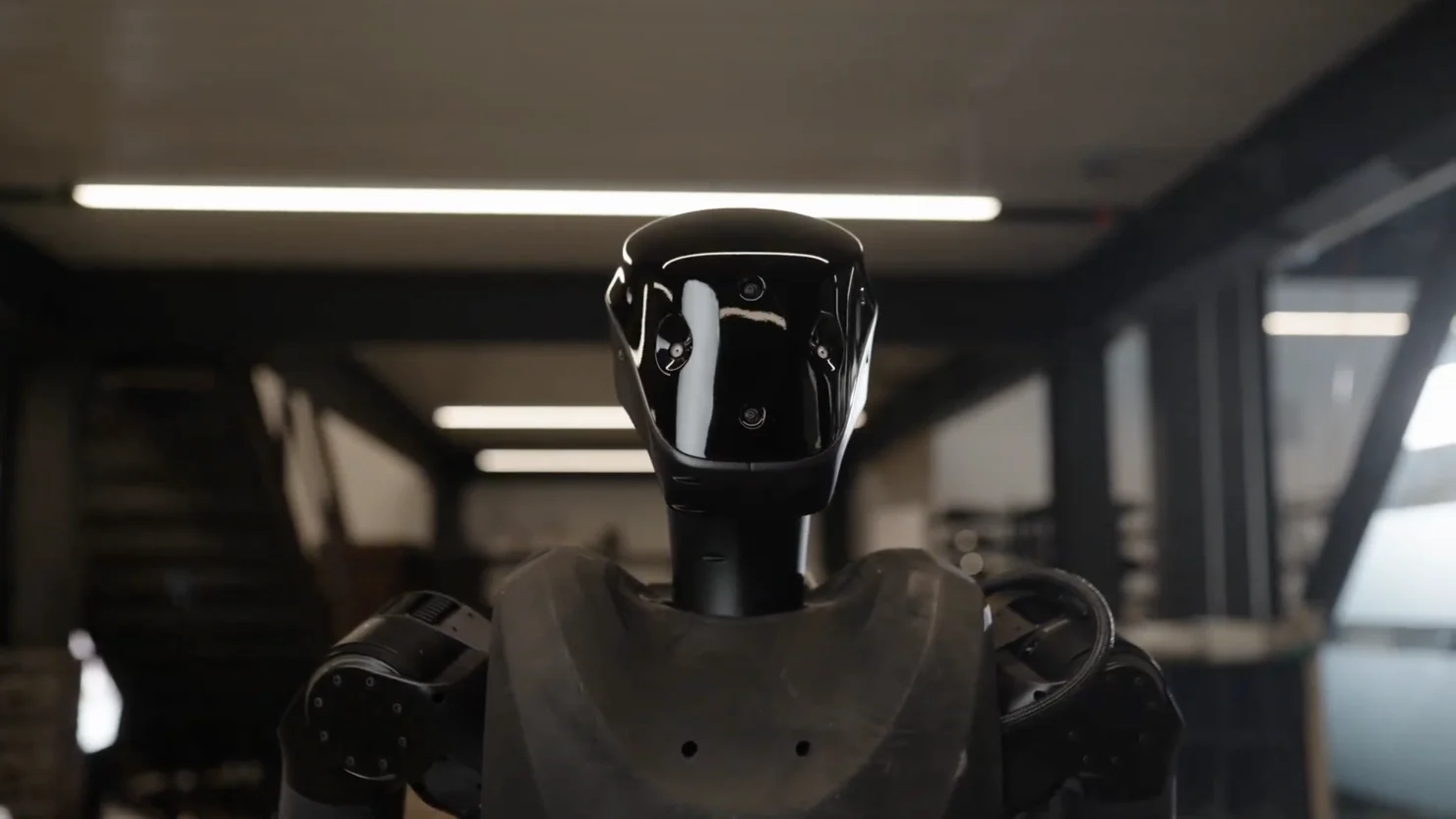
A striking example of this transformation is San Francisco-based robotics company Foundation Future Industries. The startup develops autonomous dual-purpose humanoid robots designed for both heavy industry and combat-related missions. While most competitors publicly distance themselves from defense contracts, Foundation’s leadership is making a direct bet on the militarization of technology.
The transition from theoretical models to real-world deployment is happening much faster than experts predicted. Early versions of Foundation robots, known as Phantom MK-1, are already undergoing testing in Ukraine. We view this development as the starting point of a new era, as it marks the first documented instance of integrating humanoid systems into an active military conflict. Current trials, conducted with US logistics support, focus on supply and logistics operations in high-risk zones. The war in Ukraine has become a leading global testing ground for autonomous systems, with artificial intelligence already controlling unmanned aerial vehicles and ground platforms.
Analyzing the technical specifications of the Phantom MK-1, NEWSCENTRAL experts emphasize that the current version remains far from the concept of a universal robotic soldier. Standing approximately 180 centimeters tall and weighing 80 kilograms, the robot features 29 degrees of freedom and can move at speeds of around 6 kilometers per hour. Its payload capacity is limited to 20 kilograms, it lacks full waterproofing, and its energy efficiency does not yet support prolonged autonomous missions. Nevertheless, the startup plans to deploy an upgraded model, Phantom 2, to the conflict zone. The new version is expected to feature double the carrying capacity and significantly improved mobility.
Foundation’s strategic expansion in the U.S. market is being supported by substantial government funding. The company has already secured $24 million in government research grants to evaluate the effectiveness of its robots within the U.S. Army, Air Force, and Navy. CEO Sanket Pathak, who previously led the fintech company Synapse before its bankruptcy in 2024, is now focused on scaling production to thousands of units. Market analysts report that the startup is raising a major $100 million funding round at a $1 billion valuation, underscoring strong venture capital interest in the sector.
An important catalyst for the company’s lobbying capabilities has been the appointment of Eric Trump, son of the current U.S. president, as Chief Strategic Advisor. According to Freddy Miller, Senior Analyst at NEWSCENTRAL, bringing in a figure of this profile will inevitably increase the political sensitivity of defense contracts and trigger strong opposition from political rivals, some of whom have already raised concerns about favoritism. Company representatives explain the partnership as part of a shared commitment to bringing manufacturing capacity back to the United States.
In the broader context of global economic competition, Foundation positions its products as a key element in countering China’s technological expansion. Beijing continues to actively subsidize its own humanoid robot programs, although they are officially intended for civilian use. We predict that the race between Washington and Beijing to develop humanoid systems capable of performing military missions will become one of the defining technological trends of this decade.
The advantage of humanoid robots in modern warfare lies in their adaptability. Urban environments – including staircases, narrow corridors, and damaged buildings – were historically designed around human anatomy. Tracked or quadrupedal platforms often struggle in such settings, potentially giving humanoid systems a significant advantage. The company’s proprietary actuators, which combine hydraulic power with the efficiency of electric motors, are intended to address the challenge of maintaining stability under extreme operational loads.
However, both the financial and engineering aspects of the concept continue to face skepticism from industry analysts. Manufacturing and maintaining bipedal robots remains extremely expensive. Each unit is assembled by hand from more than 500 components, including titanium skeletal structures and tendon-based finger control systems. Experience from modern conflicts suggests that warfare increasingly depends on mass-produced, inexpensive, and easily replaceable technologies, as demonstrated by commercial drones. A costly humanoid robot could prove to be a highly vulnerable and economically unjustifiable asset on the battlefield.
Another major obstacle involves the ethical implications of delegating lethal decision-making authority to artificial intelligence. Foundation’s leadership acknowledges that in situations where reaction speed is critical, robots may eventually need to make decisions entirely autonomously, without direct human intervention.
Assessing the future of the industry, NEWS CENTRAL expects automated systems of various types to gradually replace human personnel in the most dangerous operational environments. Nevertheless, the widespread deployment of humanoid robots within frontline assault units remains unlikely in the near term due to ongoing limitations in power supply, endurance, and platform stability. Defense agencies are advised to diversify their investments rather than focusing exclusively on humanoid form factors, prioritizing simpler and more specialized unmanned systems capable of performing logistics and reconnaissance missions at significantly lower cost. Defense technology startups, meanwhile, must demonstrate clear economic viability before transitioning to large-scale government procurement programs.