
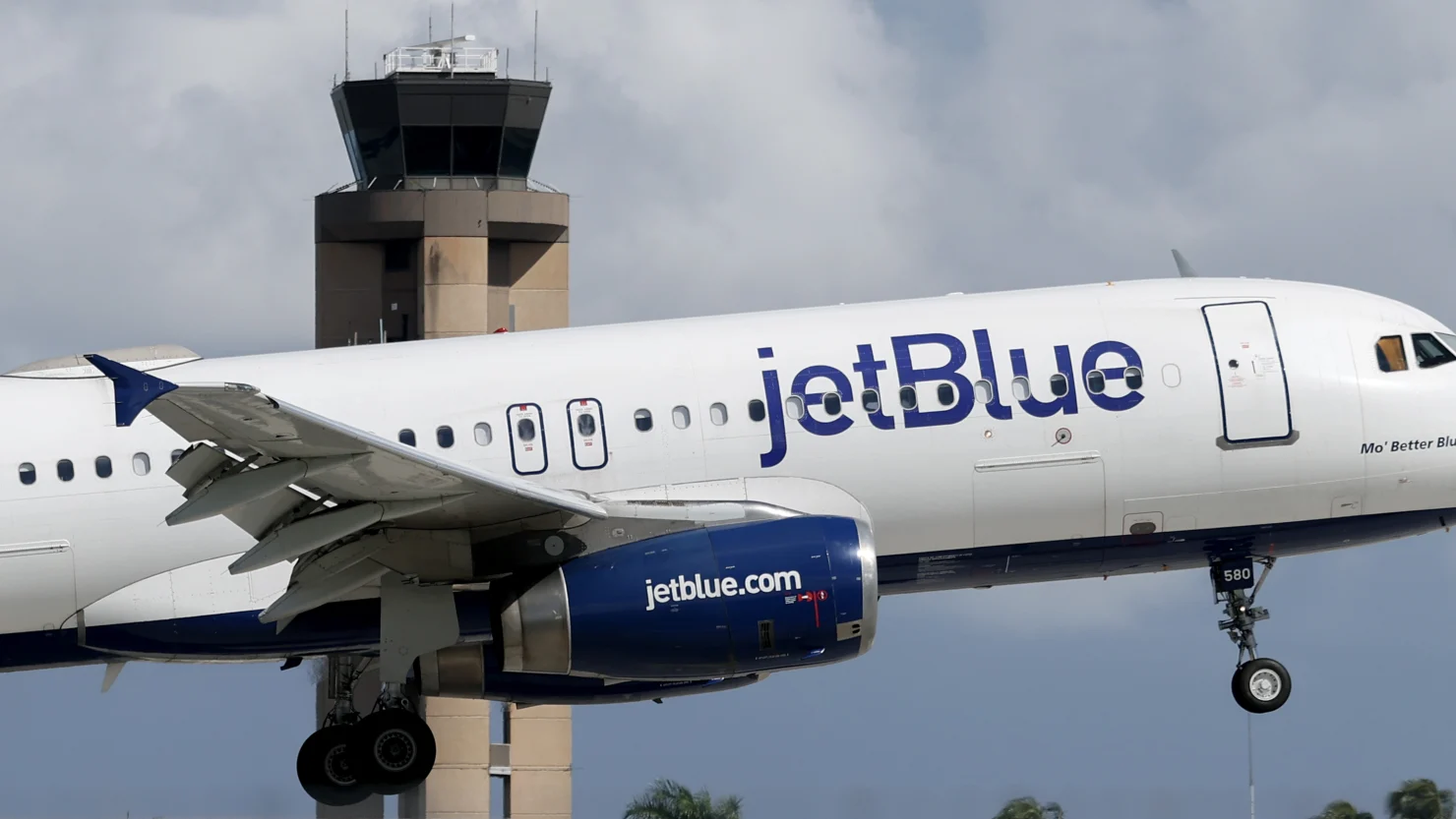
The collapse of Spirit Airlines – which ceased all operations on May 2, 2026, after years of debt accumulation and compounding operational failures – has created one of the more significant competitive vacuums in recent American aviation history. The primary beneficiary of that vacuum is JetBlue, which has moved with considerable speed to absorb Spirit’s former position as the dominant carrier at Fort Lauderdale-Hollywood International Airport. The airline now commands a 36% share of capacity at the airport, up from approximately 24% a year earlier, and is on course to increase its overall operations there by more than 50% across 2026. NEWSCENTRAL sees this as a strategically coherent opportunistic expansion – but one that carries structural risks that deserve equal attention alongside the evident competitive gains.
The numbers are striking. JetBlue’s average daily schedule at Fort Lauderdale has climbed to roughly 106 departures per day, compared to 68 in the prior year, and the airline intends to scale that figure to approximately 150 daily departures during peak winter travel periods, including Presidents Day weekend and spring school breaks. The carrier has added 11 new destinations from the airport, launched a loyalty status match program explicitly designed to convert former Spirit Free Spirit members, and confirmed plans to open a dedicated airport lounge – a decision its president has characterized as a natural fit for the carrier’s evolving commercial ambitions. The expansion is the largest in JetBlue’s history at any single location and represents a deliberate architectural shift: Fort Lauderdale is being repositioned from a focus city into something resembling a true hub, complete with banked connection structures.
“Spirit’s exit did not reduce underlying travel demand in South Florida – it simply removed the capacity that was servicing it,” argues Freddy Miller, Senior Analyst at NEWSCENTRAL. “JetBlue is capturing genuinely stranded demand, and the 36% market share figure reflects real customers who needed alternatives, not a paper accounting gain. The speed with which the airline moved to announce new routes within hours of Spirit’s collapse tells you this expansion was not improvised – it was a prepared contingency now being executed.”
The competitive landscape, however, is not without friction. Fort Lauderdale operates in the long shadow of Miami International Airport, which serves as a dominant hub for American Airlines and draws substantial premium and corporate traffic from the same South Florida catchment area. JetBlue’s core customer profile – leisure-oriented, price-sensitive, Caribbean- and Latin America-focused – aligns reasonably well with Fort Lauderdale’s existing passenger base, but the airline’s planned investment in a domestic first-class cabin and airport lounge signals an ambition to move upmarket that will require sustained execution discipline. Critics have noted that JetBlue carries high operating costs relative to its positioning and lacks the corporate travel relationships that anchor hub economics for legacy carriers.
“The lounge investment is a meaningful signal because it represents a capital commitment to the premium segment at a time when JetBlue is simultaneously trying to integrate a massive capacity expansion,” cautions Freddy Miller. “The risk is that the airline overextends both financially and operationally before the Fort Lauderdale market has had time to stabilize post-Spirit. Concentration of this magnitude at a single airport introduces exposure to localized disruption that a more geographically distributed network would mitigate.”
The conclusion NEWS CENTRAL draws is that JetBlue’s Fort Lauderdale strategy is sound in its directional logic but requires disciplined execution at a scale the carrier has not previously attempted. The absence of Spirit has created a rare and time-bounded window in which a mid-tier carrier can secure a structurally dominant position at a top-tier airport without direct confrontation with a legacy incumbent. Whether JetBlue can convert that market share into durable profitability – particularly as it pursues premium product investments and lounge infrastructure simultaneously – will determine whether this expansion becomes the strategic inflection point the airline needs or an overreach that strains a balance sheet still recovering from the turbulence of recent years.