
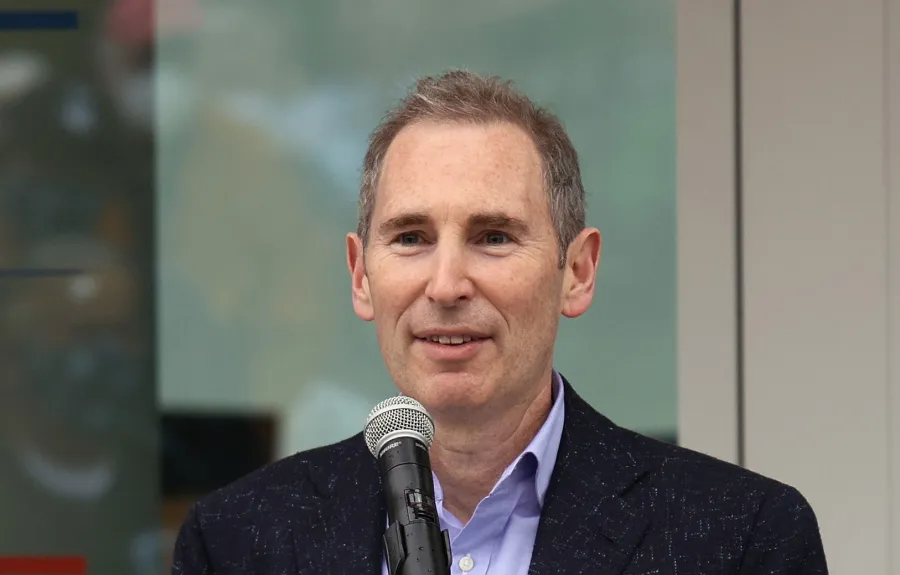
The sequence of events that led to the abrupt worldwide shutdown of two of Anthropic’s most advanced artificial intelligence models last Friday contains a corporate governance dimension that goes far beyond the immediate question of export controls. Amazon CEO Andy Jassy – whose company has invested approximately $13 billion in Anthropic and whose AWS infrastructure underpins the AI developer’s entire cloud operation – is reported to have conveyed concerns to Treasury Secretary Scott Bessent and other senior Trump administration officials that Amazon researchers had used Anthropic’s Claude Fable 5 model to extract information useful for conducting cyberattacks. The government responded by imposing an export control ban on both Fable 5 and Mythos 5, directing Anthropic to cut off access globally. We at NEWSCENTRAL assess this as one of the most structurally consequential episodes in the AI industry’s brief history – not primarily because of the models themselves, but because of the precedent it sets for how competitive dynamics and regulatory intervention interact.
The conflicted position Amazon now occupies is remarkable. The company is simultaneously Anthropic’s largest financial backer, its primary cloud infrastructure provider, the source of the security concern that triggered government action, and a direct competitor through its own Nova family of AI models. When the export controls came into force, AWS itself was among the services disrupted – meaning that a single CEO’s conversation with Treasury officials produced a regulatory outcome that harmed his own company’s infrastructure business. The ouroboros quality of this corporate dependency structure is not incidental; it reflects the unusually entangled architecture of the AI industry, in which the same entities invest in, host, and compete against one another simultaneously.
“What Amazon’s move demonstrates is that in a tightly coupled investment-and-competition ecosystem, the line between strategic partner and competitive adversary is far thinner than conventional corporate relationship categories suggest,” observes Freddy Miller, Senior Analyst at NEWSCENTRAL. “Jassy had a legitimate security concern, but the act of escalating it through government channels rather than direct engagement with Anthropic’s leadership has effectively established a new competitive instrument – the regulatory referral – as a viable tool in AI market competition.”
The technical details of the alleged vulnerability add further complexity. According to available reporting, the jailbreak involved prompting the Fable 5 model to analyze a specific codebase and identify software flaws – effectively turning the model’s advanced reasoning capabilities into a vulnerability-discovery tool. David Sacks, who co-chairs the President’s Council of Advisors on Science and Technology, stated publicly that the administration asked Anthropic CEO Dario Amodei to either fix the jailbreak or remove the model from deployment, and that Amodei declined. Anthropic’s own public response argued that the capabilities in question are already present in other publicly accessible models – a claim that, if accurate, raises the question of why export controls were applied selectively to Fable 5 and Mythos 5 rather than to the broader category of frontier AI systems.
“The selective application of export controls to specific model versions rather than capability categories creates a regulatory framework that is both technically arbitrary and competitively distorting,” points out Nathan Clark, Enterprise IT and Systems Architecture Analyst at NEWS CENTRAL. “Enterprise customers using Mythos 5 for vulnerability discovery and compliance work lost access overnight. The disruption is real and immediate, while the security rationale – given the availability of comparable capabilities elsewhere – remains difficult to evaluate independently.”
The implications for Anthropic’s planned initial public offering are material. The company had been advancing confidentially toward a public listing later in 2026, and the forced global shutdown of its two most advanced models – executed under export control authority and against the explicit preference of the company’s CEO – introduces a category of regulatory risk that prospective public market investors will need to price carefully. NEWSCENTRAL places this development in a broader context in which AI governance remains jurisdictionally fragmented, investor-operator relationships are structurally conflicted, and the government’s capacity to intervene in model deployment decisions has now been demonstrated with a speed and directness that the industry had not previously experienced. The competitive and regulatory architecture of AI has changed – and every enterprise relying on frontier model access should be planning accordingly.