
Japan’s automotive industry, long regarded as one of the most isolated and highly specialized ecosystems in the world, is preparing for a major tectonic shift. As major Chinese automakers face mounting tariff barriers in Western markets, the vector of their expansion is increasingly shifting toward previously inaccessible Asian regions. Automotive giant Chery, which has already secured international positioning through its Omoda and Jaecoo structures and is simultaneously exploring the integration of the legendary Freelander brand as a new export unit, has initiated the creation of a unique multilateral consortium. The initiative is aimed at deep penetration into the highly competitive niche of ultra-compact urban vehicles – a segment historically considered an area of absolute sovereignty for domestic Japanese manufacturers. At NEWSCENTRAL, we view this move as a carefully calibrated long-term strategy in which the Chinese parent company deliberately assumes the role of a hidden technological core while delegating frontline commercial operations to local partners in order to overcome the strict regulatory and cultural resistance of Japanese society.
The legal foundation for the project became the establishment of the Singapore-registered joint venture Electric Mobility Technologies, which will launch the specialized Emta brand. The ownership structure indicates the partners’ intention to create a sustainable system of mutual checks and balances. Chery Group retains 27.27% of the equity capital, exactly matching the stake held by Chinese manufacturing conglomerate Jiangsu Yueda. A decisive factor in adapting the business to the Japanese market was the inclusion of local stakeholders: the major automotive retail and servicing network Autobacs Seven, alongside energy storage systems manufacturer Gotion, each received 18.18% stakes, while Japanese engineering firm Anest controls the remaining 9.09%.
According to analysts at NEWSCENTRAL, this composition of shareholders effectively bypasses the key barriers traditionally faced by foreign automakers attempting to establish themselves in Japan, including the absence of an established distribution infrastructure and deep-rooted consumer distrust toward imports. We emphasize that Chery deliberately avoids overt operational dominance by handing over key leadership positions to managers with extensive regional experience. The company will be led by He Xiaoqin, who previously managed Changan Ford operations, while marketing strategy is overseen by Susumu Uchikoshi, formerly general manager of Nissan’s China division. Engineering specialists with experience at Honda and Mazda have also been recruited into the project. Such positioning enables the brand to cultivate an internal Japanese identity while masking its reliance on Chinese platforms. We view the partnership with Autobacs Seven as a key commercial victory for the consortium, as the company’s extensive network of filling stations immediately resolves the issue of warranty and maintenance. A clearly defined division of responsibilities Gotion supplies battery cells, Anest ensures compliance with strict quality standards, and Yueda provides manufacturing capacity makes the project highly resilient to market volatility.
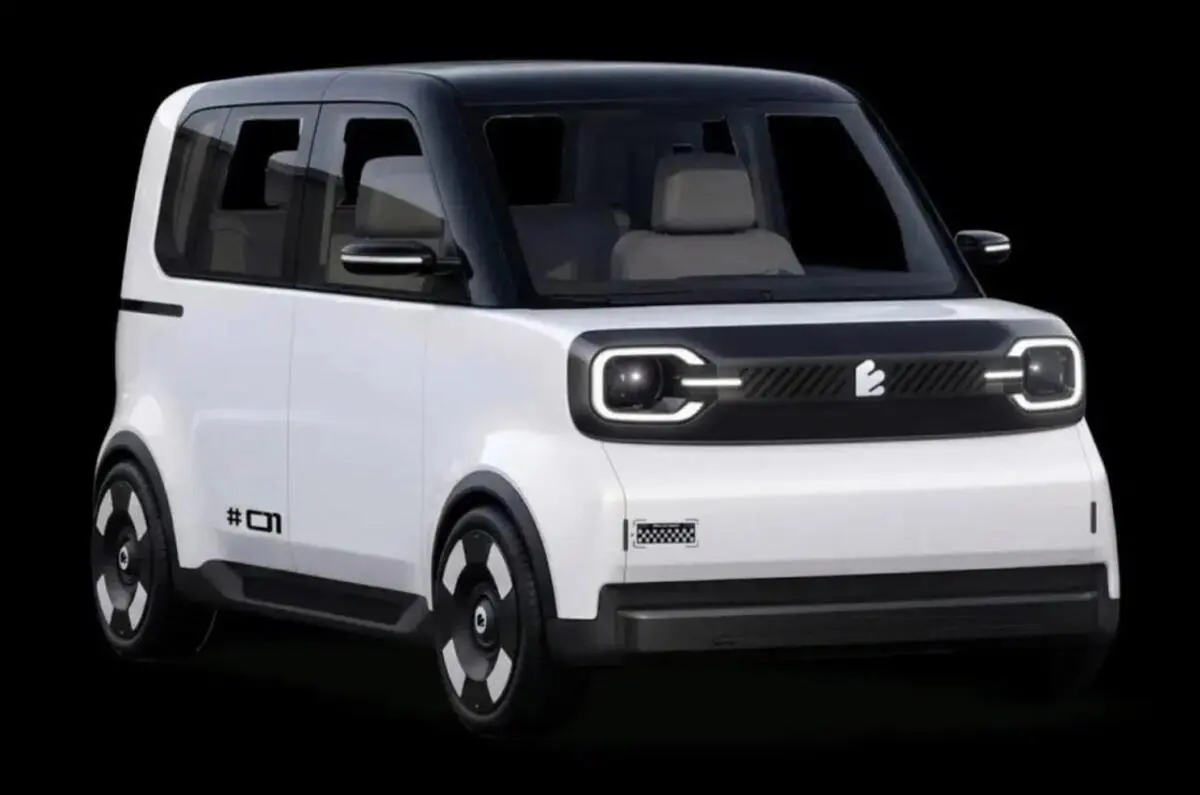
The consortium’s first model will be an angular five-door electric vehicle measuring 3.4 meters in length and 1.48 meters in width, dimensions carefully engineered to comply with Japan’s kei car regulations. The EV, currently carrying the working index #01 on its body panels, is scheduled for commercial launch in the second half of 2027. Technically, the city car is based on the architecture of Chery’s affordable micro-EV, the QQ Ice Cream. The entry-level version will feature a 27-horsepower front-mounted electric motor and a Gotion battery pack, delivering an estimated range of approximately 100 miles on a single charge – fully sufficient for the daily mobility needs of Japan’s urban population. As Jessica Kline, automotive analyst at NEWSCENTRAL, notes, the use of already scaled Chinese components significantly reduces initial development costs and enables aggressive pricing, although the 27-horsepower powertrain will require substantial recalibration of its control electronics to operate effectively within the challenging terrain of Japanese metropolitan areas. We believe the alliance will also need to place particular emphasis on passive safety systems and advanced driver assistance technologies (ADAS) in order to satisfy the strict demands of Japanese regulators, who have repeatedly stressed the necessity for compact vehicles to achieve crash-test standards comparable to full-size automobiles.
During the initial phase, manufacturing will be organized in China at Yueda’s facility in Yancheng, where Kia-branded vehicles are produced and where premium HiPhi X crossovers for the now-defunct startup Human Horizons were previously assembled. According to the brand’s roadmap, the consortium plans to establish a network of 100 dealerships by 2029 and expand its lineup to four electric vehicles across different segments. Following the debut kei car, the market will receive an electric supermini hatchback, a compact crossover, and a family-oriented minivan. If projected sales volumes are achieved after 2030, consortium leadership intends to evaluate relocating production operations directly to Japan.
This strategy closely mirrors the approach of BYD, which continues to expand its presence in Japan with its compact EV Racco and is considering exports to Europe should legislation regarding affordable electric transportation become commercially favorable. We believe the small-car segment, which accounts for more than one-third of Japan’s automotive market, has become vulnerable to foreign expansion due to the reluctance of domestic manufacturers to accelerate electrification within this category. Major Japanese automakers deliberately restrained the rollout of battery-powered kei cars because of low profitability, thereby creating ideal conditions for competitors with access to low-cost Chinese components.
At NEWS CENTRAL, we forecast that relocating manufacturing to Japan after 2030 will become the decisive condition for maintaining long-term competitiveness, since without local production status the brand will be unable to qualify for government subsidies that are critical for competing against established bestsellers such as Honda N-Box, Nissan Sakura, Daihatsu Tanto, and Suzuki Hustler. Sales dynamics will directly depend on the flexibility of Autobacs’ marketing strategy and its ability to position Emta as a domestic product created with international expertise. We recommend that alliance leadership focus on corporate fleet sectors, including delivery services and short-term rental operators, which would ensure stable order volumes during the launch phase while visibly demonstrating platform reliability to private consumers. For the investment community, this project serves as an important indicator of the emergence of a new expansion model for Chinese automakers – one based on technological donor strategies and risk-sharing mechanisms that minimize direct reputational and sanctions-related exposure for parent brands.