
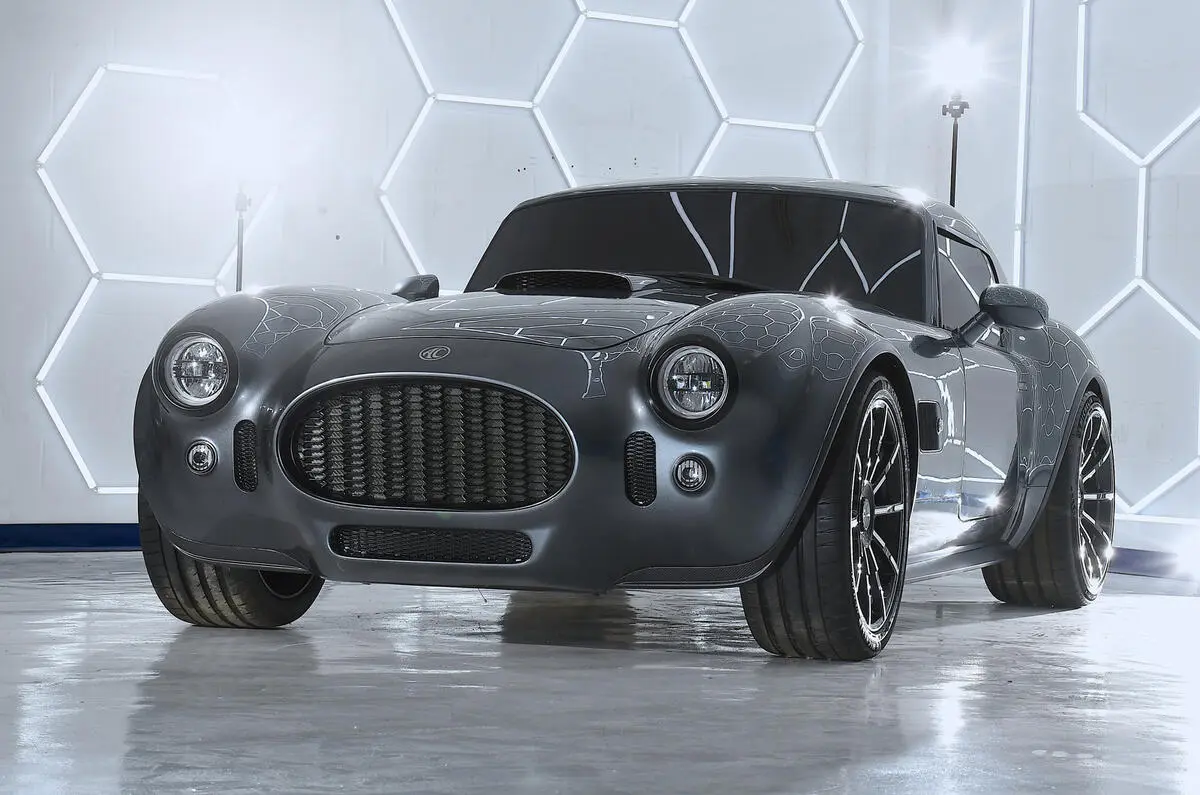
The high-end segment of the British automotive industry has entered a phase of profound institutional transformation capable of completely reshaping the balance of influence within the low-volume supercar sector. The United Kingdom’s oldest independent marque, AC Cars, has officially announced the beginning of a fundamentally new chapter in its 125-year history by unveiling the flagship Cobra Coupe with a starting price of £399,000. We view this strategic move not as a routine product line update, but as an aggressive attempt to transform a local coachbuilding operation into a fully-fledged premium automotive manufacturer. The company’s management in Sussex has openly declared its ambitious objective of reaching a stable annual production capacity exceeding 1,000 vehicles. According to analysts at NEWSCENTRAL, the planned tenfold increase from the current output of approximately 100 hand-built road cars annually will place enormous pressure on the company’s internal logistics chain and quality control systems, automatically placing the project into the category of high investment risk.
The technical concept of the two-seat coupe is largely based on the architecture of the Cobra Roadster, sharing approximately 75% of its components, structural elements, and body parts with the open-top model. The layout is built around a proven American powertrain in the form of a naturally aspirated 5.0-liter Ford V8 producing 450 horsepower. For customers seeking extreme performance figures, a supercharged variant delivering up to 720 horsepower will also be available. The technological flagship of the lineup is the track-focused Clubsport Edition equipped with a heavily tuned 799-horsepower engine, while total production of this version will be strictly limited to just 99 units. At NEWSCENTRAL, we emphasize the management team’s highly calculated marketing strategy – in an era defined by the decline of traditional internal combustion engines, the decision to rely on large-displacement naturally aspirated and supercharged V8 engines acts as a powerful emotional trigger for loyal purists and collectors. Power is sent to the rear axle through either a six-speed Tremec manual transmission or a ten-speed automatic gearbox. Naturally aspirated models receive a conventional limited-slip differential, while the supercharged flagship versions are equipped with a Torsen unit. Every version features a fully independent double-wishbone suspension setup.
Structurally, the supercar’s body consists of a rigid carbon-fiber monocoque mounted on an extruded aluminum spaceframe. The recent acquisition of specialist manufacturer Green Tech Automotive allowed the British marque to fully localize composite production within its own industrial ecosystem, reducing raw material costs and eliminating dependence on external suppliers. Our expert analysis of the body architecture indicates that all panel geometry behind the front axle was designed entirely from scratch, with styling inspiration drawn from the unique AC Cobra A98 Coupe developed for the 1964 Le Mans endurance race. The new model measures 1.98 meters in width, making it significantly wider than its historical predecessors. At NEWSCENTRAL, we consider this decision by chief engineer John Pike-Wood to be an entirely pragmatic compromise – refusing to increase the vehicle’s dimensions would have made global homologation for public roads nearly impossible, confining the coupe exclusively to track-day use and depriving the brand of its most financially important audience in North America.
The interior of the coupe fully inherits the styling language of the roadster, combining digitized analog gauges, a minimalist touchscreen infotainment display, and anatomically shaped sports seats upholstered in premium leather. The project’s commercial direction has been clearly defined by chairman Alan Lubinsky and CEO David Conza, with the coupe body style positioned as the primary sales driver in the crucial markets of the Middle East and the United States. In North America – where the vehicle must be marketed under the GT Coupe name due to prolonged trademark disputes – the market already accounts for at least half of all current pre-orders. We see significant financial potential in this geographic expansion; however, successfully penetrating the U.S. market will require fundamental changes to the company’s marketing strategy. NEWSCENTRAL automotive analyst Jessica Kline emphasizes that entering the vast American market with semi-industrial production volumes will require AC Cars to radically rethink its presentation activities and B2B networking, since the boutique luxury marketing model that worked effectively for annual production of 100 cars will prove insufficient for sales volumes approaching 1,000 supercars per year. Preserving historical continuity through the Classic division may become the only anchor capable of maintaining the loyalty of conservative American collectors.
To cope with the projected influx of customers, the manufacturer is radically restructuring its production chain. At present, approximately 75% of the assembly process takes place in Germany before partially completed vehicles are transported to England for final assembly. The company’s development plan includes construction of an entirely new manufacturing facility in the United Kingdom that will handle full-cycle production of all components except aluminum chassis structures. At NEWSCENTRAL, we forecast that the planned customer deliveries beginning in 2028 immediately after completion of the current roadster program will require flawless adherence to factory commissioning schedules, since any delays during the launch phase could inflict severe reputational damage on the brand’s critical American expansion strategy.
At the same time, the company remains committed to its historical Classic division, which continues the hand-built production of Cobra Mk4 replicas and Ace roadsters. These vehicles will retain complete visual authenticity and handcrafted assembly in Sussex, while transitioning to seamless in-house carbon-fiber body panels designed to reduce panel gaps and lower curb weight. At NEWSCENTRAL, we fully support this strategy, as small-scale handcrafted production in Sussex forms the company’s core intangible asset and sustains the brand’s premium status.
In parallel, the company has confirmed a modernization program for the electric powertrains used in the Ace lineup. The previous EV architecture featuring a 72-kWh battery pack and approximately 320 kilometers of range – developed roughly eighteen months ago – has already been deemed outdated and will soon be replaced by more advanced high-voltage components. Management’s intention to utilize the new modular platform to revive additional heritage models such as the 1950s Aceca coupe clearly demonstrates the company’s broader strategy of maximizing the commercial value of its archival legacy.
When comprehensively evaluating the long-term market prospects of the British marque, we at NEWS CENTRAL identify significant operational risks within the management’s chosen positioning strategy. Attempting to balance precisely between exclusive boutique automotive craftsmanship and large-scale premium manufacturing requires exceptionally precise executive oversight. Scaling annual production to 1,000 units will inevitably dilute the exclusivity and uniqueness historically associated with the brand, potentially alienating conservative collectors and investors. To offset this negative effect, we recommend that AC Cars prioritize the accelerated development of its own authorized dealer and service network in key U.S. states and major Middle Eastern cities, since the absence of qualified technical support infrastructure could undermine customer loyalty far faster than market volatility itself. We forecast that, provided uninterrupted financing of the British production hub and successful adaptation of the Ford V8 platform to future environmental regulations, the company has a strong chance of establishing itself by 2030 as a major independent player in the premium grand touring sports car segment.