
The global automotive sector is undergoing the most profound transformation in a century, and the epicenter of these tectonic shifts has definitively moved to Asia. Traditional automotive giants from the US, Europe, and Japan are rapidly losing ground under the pressure of Chinese manufacturers, who today set the standards in electric mobility, software, and battery technologies. At the recent Auto China 2026 exhibition, China’s leadership was demonstrated with exceptional clarity. The scale of automation at production sites in Beijing and Hefei, as well as the unprecedented speed of software updates, forces foreign conglomerates to operate in a constant catch-up mode. We at NEWSCENTRAL emphasize that the current situation is not a temporary market imbalance, but a fundamental shift in roles within the global industry, where former technology donors are becoming recipients.
The catalyst for panic among Western top executives has been visits to highly advanced Chinese factories. Honda management openly acknowledges the superiority of highly automated plants in Shanghai, stating there is little chance of winning in traditional competition. Ford describes the situation as a fight for physical survival amid the global expansion of Chinese brands. As Freddy Miller, Senior Analyst at NEWSCENTRAL, notes, such sharp rhetoric stems from the recognition of a strategic miscalculation by Detroit and European planners, who for too long viewed China merely as an assembly base and a local sales market, missing the moment when an autonomous engineering ecosystem was formed. Developed countries made a critical mistake by treating this transition as a simple change of engine type. We believe the true essence of the process lies in establishing control over next-generation mobility technologies, where deep integration of software and hardware plays a key role.
The concept of a smartphone on wheels has become the main driver of Chinese dominance, the scale of which now extends far beyond finished vehicles. China’s economy now leads in exports across more than 300 industrial categories, almost twice as many as a decade ago. A significant share of this flow consists of electric vehicle supply chain components, including lithium materials and high-tech manufacturing equipment. Expert estimates show that the production cost of a compact electric crossover in China is at least 30% lower than in the EU or US. This gap is driven by cheaper batteries and the phenomenal density of related industries. We at NEWSCENTRAL see this as a direct result of a consistent state industrial policy under which Beijing has directed tens of billions of dollars into sector subsidies over many years. Despite strong criticism from Brussels and Washington regarding market distortion, these injections have achieved their goal, enabling Chinese players to scale and undercut competitors in foreign markets.
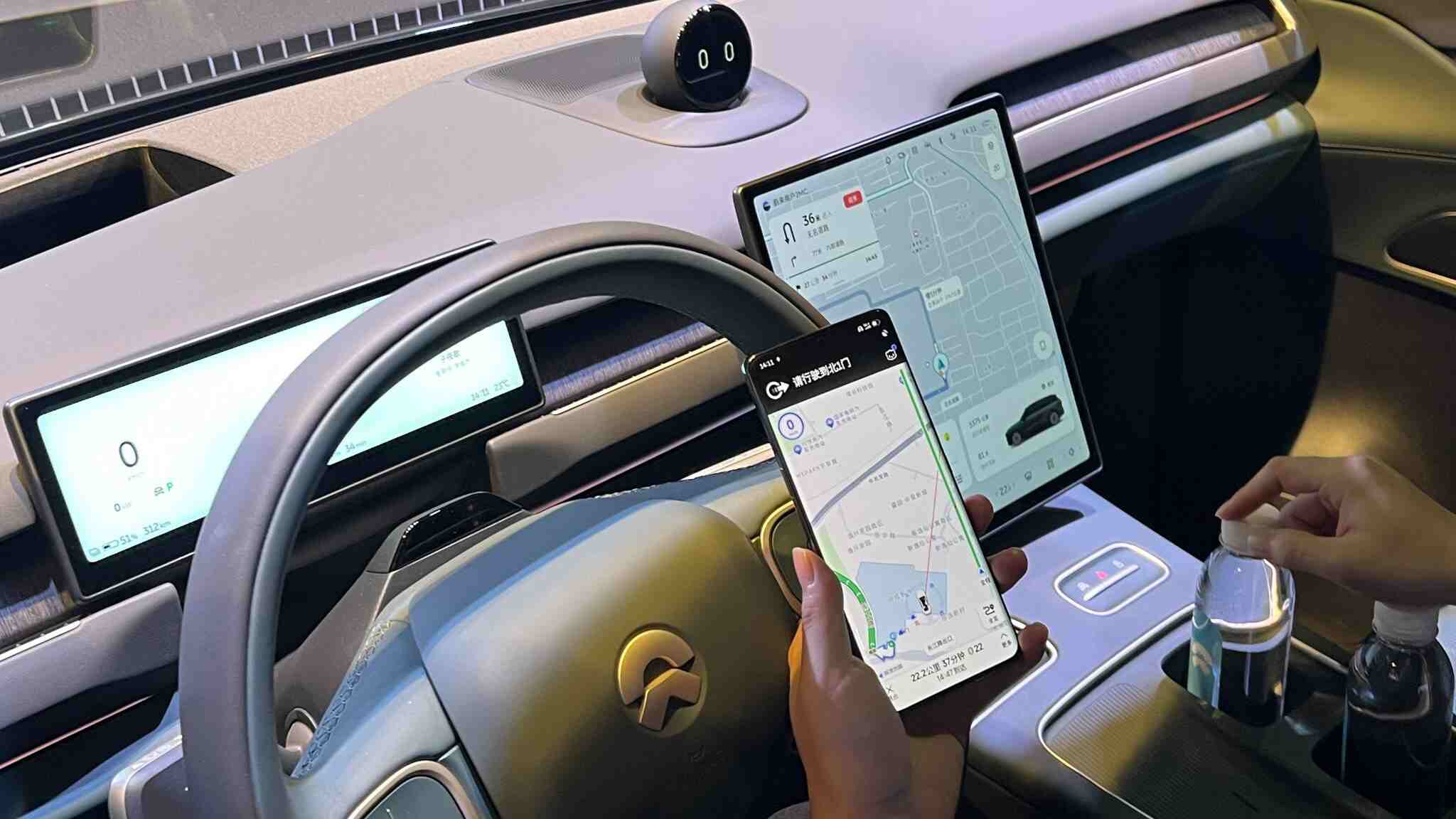
At the same time, intense internal competition within China has pushed innovation to a sub-molecular level. IT giants Xiaomi, Huawei, and Alibaba have entered the sector, transferring consumer electronics standards into automotive manufacturing. Local players no longer compete with Western industry – they are engaged in total war against each other. The growing importance of software, autonomous driving, and multimedia ecosystems gives Chinese companies an overwhelming advantage. At Xiaomi’s robotic factory in a suburb of Beijing, a new car rolls off the assembly line every 76 seconds. The brand, which only entered the automotive field in 2024, has instantly become a market leader thanks to seamless integration of vehicles with smartphone and smart home ecosystems. At Nio’s facilities in Hefei, automation has reached a level that eliminates the human factor in key stages. BYD has introduced ultra-fast charging technologies that restore 400 kilometers of range in five minutes, eliminating the last advantage of internal combustion engines. Meanwhile, XPeng leadership claims a transformation from automakers into robotics companies, focusing on humanoid robots and flying transport.
Such progress has triggered a painful reassessment of foreign brands’ presence in the region. Foreign conglomerates have long used China for export purposes, as seen in Shanghai-made Tesla Model 3 volumes or BMW’s electric Mini versions. However, their position within mainland China is rapidly deteriorating. The share of foreign automotive brands in the local market has fallen from 64% in 2020 to 32% today. This decline has severely impacted the financial results of General Motors and German automakers, which for decades derived their main profits from Chinese consumers. We at NEWSCENTRAL note that even the conservative premium segment has been hit. The Huawei Maextro S800 luxury sedan has taken the lead in the $100,000+ segment, overtaking long-time leaders such as Porsche Panamera and BMW 7 Series.
The historical parity, where foreigners provided technology and China provided factories, has been completely broken. Now the configuration of partnerships is reversing. Stellantis has invested over 1 billion euros in joint projects with Dongfeng to produce Peugeot and Jeep models in China for global export, and is also considering launching the Voyah brand in France. Volkswagen has allocated $700 million to acquire autonomous driving architecture and systems from XPeng, publicly admitting its inability to develop comparable software in Germany within a reasonable timeframe. XPeng executives describe this as a two-way learning process, though it is clear who acts as the lead engineer. Toyota, Hyundai, Ford, and Nissan are following similar paths, expanding R&D centers in China to absorb local expertise.
However, adaptation is proving painful. Audi is forced into aggressive discounting of its E5 electric model due to weak demand, while GM is writing off billions in losses amid a sales decline of more than 20%. Japanese brands, due to slow electrification, are losing not only China but also Southeast Asian markets. Volkswagen’s short-term return to the top of China’s sales rankings in early 2026 is seen by analysts as merely a result of temporary subsidy reductions for local manufacturers, which cooled their momentum. Meanwhile, China’s domestic market shows signs of overheating, with price wars reducing margins and pushing BYD, Chery, and SAIC toward expansion into Europe, despite EU tariffs of up to 45%. The Chery Jaecoo 7 is showing strong sales in the UK, although 100% US tariffs have completely isolated the American market from Chinese cars. According to forecasts by NEWS CENTRAL, the relocation of software and battery development centers to China will inevitably lead to deindustrialization of legacy automotive clusters in Europe, factory closures, and rising unemployment. Tariff barriers will not be a cure-all, as Chinese companies will quickly redirect trade flows to Latin America, Africa, and the Middle East. We predict that only those global alliances willing to engage in deep technological cooperation with China on its terms will benefit, while proponents of isolationism and tariff wars will ultimately be left on the sidelines of automotive history.