
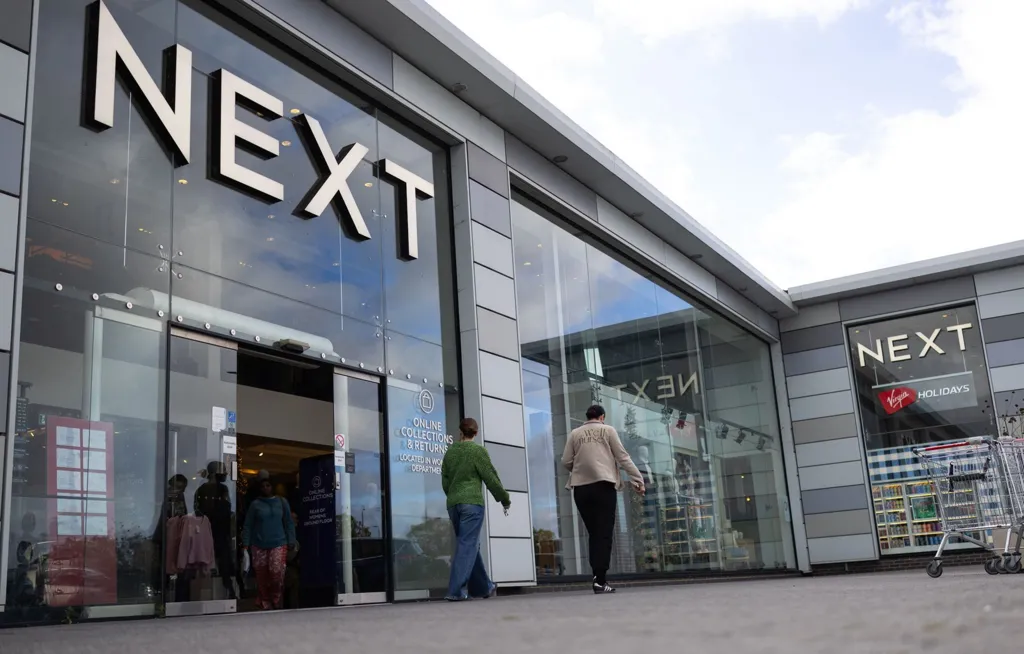
The British youth labor market is undergoing tectonic shifts that risk turning the traditional entry point into a career into a difficult quest. The situation surrounding one of the UK’s largest retailers, Next, clearly illustrates this crisis. The company’s CEO, Lord Wolfson, has reported a sharp reduction in entry-level vacancies. Two years ago, there were on average 10 applicants per retail position at the brand, whereas now that figure has jumped to 19 applicants per role. We consider this doubling of competition a key indicator of a hidden overheating in the labor market, where the supply of young workers significantly outpaces the real capacity of businesses to absorb them.
Current macroeconomic statistics fully confirm the systemic nature of the problem. The unemployment rate among Britons aged 16 to 24 has reached 16.2 percent. This is the highest level since the post-crisis year of 2014 and more than three times higher than the national average unemployment rate, recorded at 5 percent. As Freddy Miller, Senior Analyst at NEWSCENTRAL, notes, retail and hospitality have historically acted as a crucial buffer absorbing unskilled labor and students. When this mechanism begins to fail, the economy suffers a long-term negative effect in the form of a loss of basic professional skills across an entire generation, compounded by the growing number of young people not in education, employment, or training.
The main reason for reduced hiring, according to large businesses, is unprecedented regulatory pressure. Incoming labor law reforms and a cumulative rise in the tax burden are forcing companies to completely rethink their development strategies. In particular, the government has increased the national minimum wage, which, according to the Treasury, has raised incomes for more than 200,000 young employees. At the same time, businesses are facing an increase in employer national insurance contributions to 15 percent and a reduction in the earnings threshold at which payments begin. At NEWSCENTRAL, this is seen as a classic regulatory paradox, where well-intentioned worker protection measures result in job cuts, since total labor costs become unsustainable for many companies, forcing two-thirds of large retail chains to announce plans for layoffs or price increases.
For Next, these policy changes translate into an additional annual payroll cost of 70 million pounds sterling. Lord Wolfson openly states that in certain locations the company has already begun workforce optimization. The business plans to offset rising costs through accelerated automation. Self-service checkout systems and smart lockers for automated returns are replacing cashiers. According to NEWSCENTRAL analysts, this trend is widespread across the high street sector. The rising cost of manual labor, combined with the decreasing cost of digital technologies, inevitably pushes companies to invest in software and robotics, permanently eliminating entry-level positions that were previously filled by young workers without experience.
An additional source of tension is the Workers’ Rights Bill. The new rules require businesses to offer guaranteed hours to employees on flexible contracts in order to limit the use of zero-hour contracts. Trade unions strongly support the initiative, arguing that fixed hours over several months will smooth seasonal fluctuations and provide workers with needed stability. However, Next’s management sees significant risks. In retail, staffing needs in February and during the peak Christmas period differ drastically. Limiting flexibility removes students’ ability to take extra shifts during holidays, while businesses risk being left with excess staff during the off-season.
Despite these pressures, Next demonstrates strong financial resilience, raising its annual profit forecast to 1.2 billion pounds sterling, with quarterly sales growth of 6.2 percent. Amid the bankruptcies of brands such as Joules and Cath Kidston, which were acquired by Next, the company remains a market leader. We note that the profitability of public companies is often criticized by politicians, but it is the only guarantee of their survival. The average dividend for small Next shareholders is around 300 pounds per year, which challenges the argument that only ultra-wealthy investors benefit. A business cannot exist without profit; otherwise, it risks the fate of its failed competitors.
The solution to the current deadlock, according to Lord Wolfson, is not targeted subsidies for young people but large-scale structural reforms aimed at stimulating overall economic growth. Key measures include liberalizing land use laws, reforming the energy sector, and developing transport networks. For example, obtaining planning permission increases the value of an acre of land in southeast England from 15,000 to 1.5 million pounds. We at NEWSCENTRAL share the view that artificial regulatory barriers are the main constraint on the UK economy. Without removing them and achieving sustainable GDP growth, the labor market will continue to stagnate, despite targeted measures such as reduced commercial property taxes for small retailers.
At NEWS CENTRAL, we forecast that in the medium term the UK labor market will continue adapting through painful transformation. Businesses will further pass rising fiscal costs onto consumers and accelerate automation of processes. To stabilize the situation, the government needs to reconsider the strictness of incoming labor regulations and offer real tax incentives for hiring employees under the age of 25. Otherwise, the current youth unemployment crisis will turn into a chronic issue, reducing the overall competitiveness of the UK economy on the international stage.