
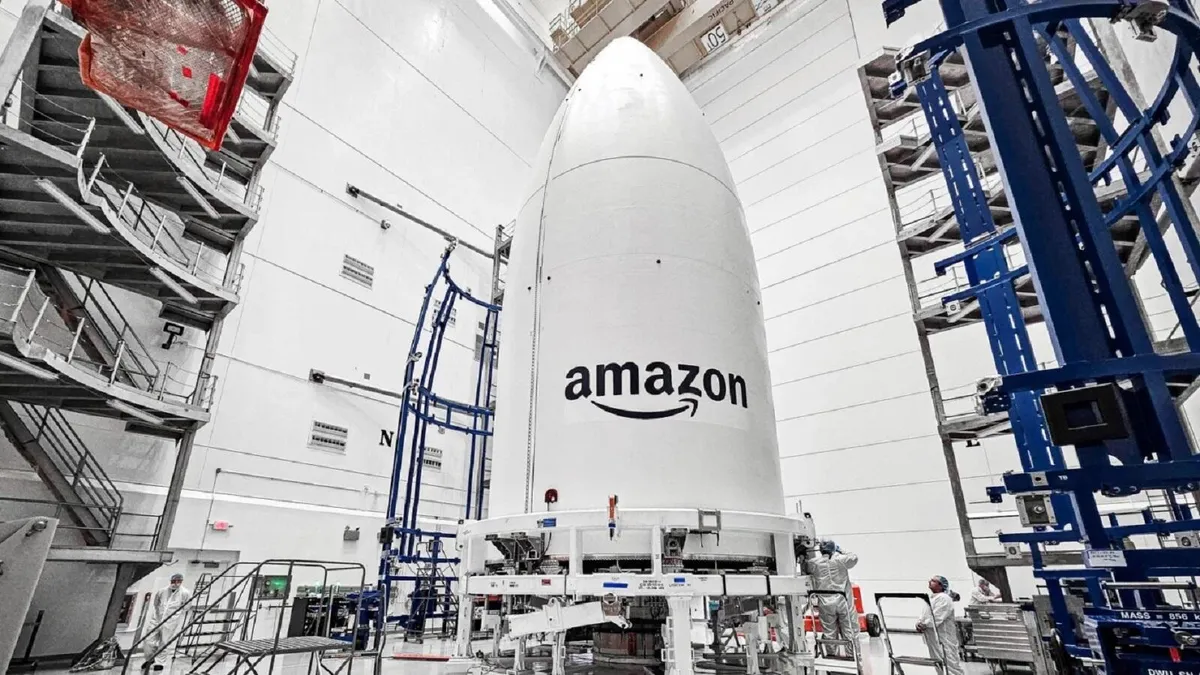
NEWSCENTRAL reports that Amazon and Delta Air Lines have entered into a significant strategic partnership that promises to reshape the satellite internet market for aviation. Starting in 2028, 500 Delta aircraft will be equipped with satellite terminals connected to Amazon Leo’s (Low Earth Orbit) network, challenging Elon Musk’s Starlink, which continues to dominate the market. This agreement underscores Amazon’s ambitions to take a leading position in satellite technology, particularly in aviation, and enhance the in-flight internet experience for passengers.
The demand for high-speed Wi-Fi on aircraft continues to rise, and airlines are striving to offer passengers stable and fast internet connections while in the air. For Delta, this partnership with Amazon Leo is a logical step in upgrading infrastructure and improving connectivity on board. The airline previously relied on satellite services from providers like Viasat and Hughes, but Amazon’s new low-earth orbit technology promises to reduce latency and improve the quality of the connection.
Amazon Leo is expected to become a competitive solution in the satellite internet market, as its low-orbit satellites provide not only more stable but also faster connectivity, which is crucial for aviation. However, Amazon faces several key challenges: quickly deploying its satellite network, managing in-flight connection quality, and ensuring coverage on all routes. According to Freddy Miller, a Senior Analyst at NEWSCENTRAL, “Amazon has the resources for large-scale network deployment, but competition with the already established Starlink system will require significant effort to quickly reach the required level.” This highlights the importance of deployment speed and connection quality, which will be crucial for the success of the project.
Meanwhile, Starlink continues to dominate the satellite internet services market. With more than 10,000 satellites in orbit and the use of reusable Falcon 9 rockets, SpaceX is rapidly deploying its satellite network, providing stable connectivity for airlines such as United Airlines, Alaska Airlines, and Hawaiian Airlines. This gives the company a significant advantage in infrastructure and readiness for quick expansion. However, Amazon Leo poses a serious threat to Starlink’s leadership, thanks to its lower latency and improved connection quality.
To date, Amazon has launched more than 214 Leo satellites and continues to expand its network. With ambitious plans to launch more satellites in the coming years, the company is focused on rapidly increasing coverage and improving connection quality. One of Amazon Leo’s key advantages is its ability to integrate with other Amazon technologies, such as Amazon Web Services (AWS). This opens up new opportunities for passengers, including video conferencing, streaming, and cloud services available directly on board aircraft.
NEWSCENTRAL notes that for Delta, the choice of Amazon’s satellite network is likely related to its existing collaboration with Amazon Web Services, enabling the integration of not just Wi-Fi but also other digital services, enhancing the passenger experience. As Freddy Miller pointed out, “Partnership with Amazon gives Delta a significant advantage, as the company can leverage not only satellite connectivity but also cloud solutions to improve passenger service and create new digital offerings on board.”
However, for Amazon Leo to succeed in the aviation sector, the company must address several issues, such as ensuring stable connectivity and expanding coverage. Unlike Starlink, Amazon has less experience in satellite deployment and may need more time to ensure the service reaches the desired level. Nevertheless, Amazon is actively ramping up satellite launches and forecasts that by 2028, the network will be fully operational, significantly improving the quality of service offered.
Competition in the satellite internet market for aviation is expected to intensify. Amazon Leo is a strong competitor to Starlink, thanks to innovative technologies and integration capabilities with other Amazon services. However, the key factor for Amazon’s success will be the speed of satellite deployment and the provision of stable internet on board aircraft. For Delta, choosing Amazon’s satellite network offers significant opportunities to improve passenger service and implement new digital services.
In the future, NEWS CENTRAL expects the decision between Amazon Leo and Starlink to depend on a variety of factors, including pricing, connection quality, and service availability. Airlines seeking to provide the best connectivity for their passengers will need to closely monitor the development of both technologies to select the optimal solution for meeting customer needs.