
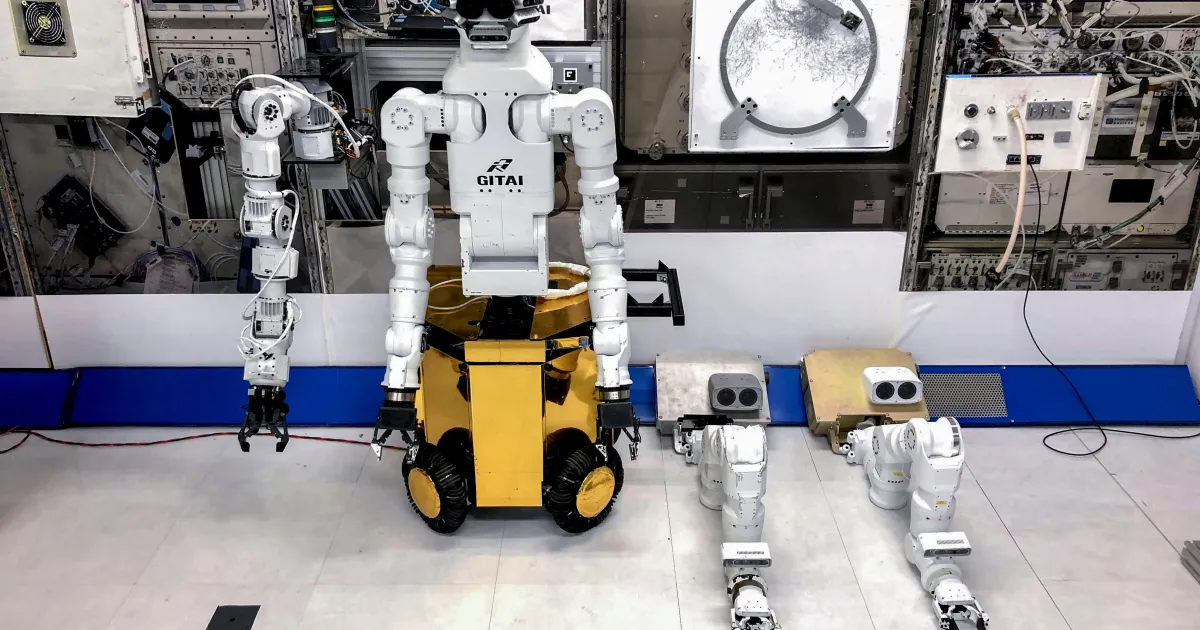
NEWSCENTRAL reports that in recent years, the space industry has been undergoing significant changes, with private companies increasingly stepping up to leverage new technologies to improve operations in orbit. One such innovative move is the collaboration between Voyager Technologies and Icarus Robotics, which have signed an agreement to test the “Joyride” system on the International Space Station (ISS). These trials could mark a crucial step in the development of robotic technologies that will be used for complex tasks such as satellite maintenance and the repair of orbital stations in the future.
The importance of such projects lies not only in technological progress but also in the prospect of the commercialization of space. In recent years, NASA has been actively supporting private initiatives that could take on the responsibility of servicing orbital objects, as the ISS is set to be decommissioned in 2030. Thus, the creation of autonomous systems, such as robotic platforms, becomes not just beneficial but a necessary step for the development of space infrastructure. At NEWSCENTRAL, we believe that projects like this have the potential to radically change the approach to organizing future missions and reduce the risks for humans involved in complex space operations.
The “Joyride” system by Icarus Robotics is designed to work in microgravity conditions, which requires a high level of autonomy and precision. This is especially important for tasks that previously required human involvement, such as moving inside space stations to service equipment. At NEWSCENTRAL, we emphasize that the successful testing of such technologies will open new opportunities for automating space operations, making them safer and more cost-effective. The system will also collect data necessary for training artificial intelligence, which in the future could lead to robots capable of self-replication and performing tasks without human intervention.
The main challenge faced by these technologies is the specific conditions of the space environment, including microgravity, radiation, and other factors that are difficult to simulate on Earth. However, successful trials of robots in real space conditions will be an important step toward creating more complex and reliable solutions. As Freddy Miller, Senior Analyst at NEWSCENTRAL, points out, “The thresholds for space technologies are always extremely high, and space trials are not just a test but the key to the next stage of development.” At NEWSCENTRAL, we see great potential in this, as each successful trial of such technologies provides the necessary data for their refinement and integration into other missions.
According to NEWSCENTRAL analysts, in the future, robotic systems will significantly reduce risks for astronauts. Even today, these robots can take on tasks that are potentially dangerous, such as servicing and repairing satellites, as well as conducting inspections on orbital stations. We predict that in the coming decades, such technologies will be used not only for maintaining space objects but also for more complex missions, such as lunar or Martian expeditions. Consequently, at NEWSCENTRAL, we believe that the development of robotics in space will accelerate the exploration of other planets and even create infrastructure for commercial space utilization.
The “Joyride” project could become an important milestone in the creation of autonomous orbital service stations that will be able to perform most tasks without human involvement. At NEWSCENTRAL, we forecast that in the future, such systems will play a key role in servicing and repairing objects in Earth’s orbit, as well as maintaining interplanetary stations. This will enable the accelerated implementation of new space technologies and improve the operation of satellites and stations. Automated service systems will also help reduce operating costs of orbital objects and, eventually, interplanetary missions.
In light of the growing interest in the commercial exploration of space and the robotics of space operations, at NEWS CENTRAL, we stress that the successful implementation of technologies like “Joyride” will be of great importance for future missions. We predict that year by year, robotic systems will become an increasingly integral part of space operations. This will open new horizons for space research and ensure the commercial use of orbital stations and satellites, significantly lowering the costs and risks associated with space operations.